Showing posts with label falls of the ohio state park. Show all posts

Monday, November 4, 2024

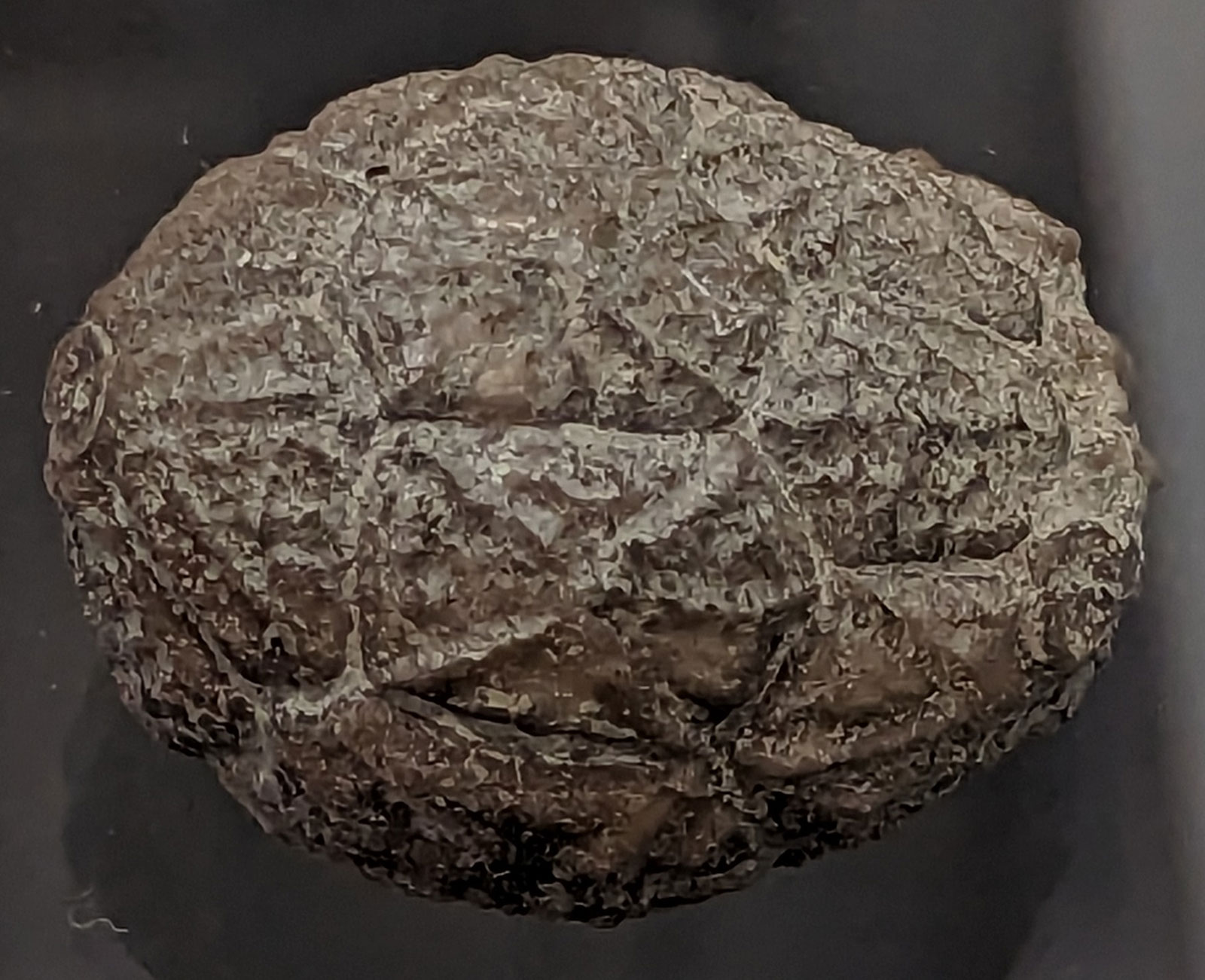
Aulacophyllum conigerum Coral Fossil


This picture is of an Aulacophyllum conigerum (Davis, 1877) coral fossil. It was found in the Beechwood Limestone of Charlestown, Indiana USA. It dates to the Middle Devonian Period.

This coral fossil was once part of the collection of southern Indiana paleontologist George K. Greene (1835-1917). It appeared that all of Greene's fossil collection was sold to American Museum of Natural History in New York City after his death but as it turns out there was one cabinet not sold and was past down to his descendants. 

This fossil is now on display at the Falls of the Ohio State Park Interpretive Center till at least September 2024 after that it should be transferred to the Indiana State Museum. George Greene's great-great-grandson William "Bill" Bishop passed away on November 29, 2023 and his wish that fossils be donated.

Sunday, November 3, 2024

Favosites globosus Coral Fossil


This picture is of a Favosites globosus (Greene, 1898) coral fossil. The name it is now known is Emmonsia eximia (Davis, 1887). It was found in the Beechwood Limestone of Charlestown, Indiana USA. It dates to the Middle Devonian Period.

This coral fossil was once part of the collection of southern Indiana paleontologist George K. Greene (1835-1917). It appeared that all of Greene's fossil collection was sold to American Museum of Natural History in New York City after his death but as it turns out there was one cabinet not sold and was past down to his descendants. 

This fossil is now on display at the Falls of the Ohio State Park Interpretive Center till at least September 2024 after that it should be transferred to the Indiana State Museum. George Greene's great-great-grandson William "Bill" Bishop passed away on November 29, 2023 and his wish that fossils be donated.

Saturday, November 2, 2024

Arachnophyllum striatum Coral Fossil


This picture is of an Arachnophyllum striatum (d'Orbigny, 1850) coral fossil. It was found in Beargrass Creek, Louisville, Jefferson County, Kentucky USA. It dates to the Silurian Period.

This coral fossil was once part of the collection of southern Indiana paleontologist George K. Greene (1835-1917). It appeared that all of Greene's fossil collection was sold to American Museum of Natural History in New York City after his death but as it turns out there was one cabinet not sold and was past down to his descendants. 

This fossil is now on display at the Falls of the Ohio State Park Interpretive Center till at least September 2024 after that it should be transferred to the Indiana State Museum. George Greene's great-great-grandson William "Bill" Bishop passed away on November 29, 2023 and his wish that fossils be donated.

Sunday, June 9, 2024

Pleurodictym wardi Fossil Coral

Last year, I wrote about the life of a southern Indiana paleontologist George K. Greene (1835-1917). That research pointed to that Greene's fossil collection was sold to American Museum of Natural History in New York City but as it turns out there was one cabinet that was not sold and was past down to his descendants. 

This picture is of two coral specimens named Pleurodictym wardi (Greene, 1903) also called a "wasp nest coral". It was found in the Beechwood Limestone of Clark County, Indiana, USA and dates to middle Devonian Period. This coral species was named by Greene in his publications as Michelinia wardi. He wrote "name is honor of Prof. Henry A. Ward, the well known collector and Paleontologist of Rochester, New York". The publications named 166 new fossils but as turned out only 15 were valid.

This fossil is now on display at the Falls of the Ohio State Park Interpretive Center till September 2024 after that it will be transferred to the Indiana State Museum. George Greene's great-great-grandson William "Bill" Bishop passed away on November 29, 2023 and his wish that fossils be donated.


Sunday, August 27, 2023

28th Annual Digging the Past Event


Yesterday I volunteered at the Falls of the Ohio State Park (Clarksville, Indiana USA) where I spent about 5 hours setting up, identifying and digging up Silurian fossils for visitors to the park. Most of my time was at the Waldron Shale piles containing Silurian period fossils. The main building was closed due to the air conditioning system being replaced. It has been hot this last week and as a result there was a very light turn out, maybe the fewest number of people I have seen since I started volunteering at this annual event.

The heavy rain the night before revealed a number of fossils on the surface but it was extremely muddy and I almost lost my shoe several times getting stuck in the mud. After splitting some of the shale rocks, I found several Eucalyptocrinites crinoid cups and a holdfast, and brachiopods which I gave away to visitors. One visitor found two trilobite pygidium imprints of a Dalamites and Arctinerus.


These next images show Fardenia brachiopod fossil imprints.


All in all a somewhat nice day. It was in the 80s F in the morning and was getting hotter by noon. Working in the shale piles was muddy. I did not get to check out how the mineral piles or Devonian period fossil piles were going. The Devonian one was very mucky and wet.


Thursday, February 16, 2023

Crinoid Holdfast on a Crinoid Calyx


This post is of an Eucalyptocrinites (Goldfuss, 1831) holdfast fossil that grew on a fallen Eucalyptocrinites crassus (Hall, 1863) calyx cup. Fossil found in the Waldron Shale of Clark County Indiana USA. It dates to the Silurian Period.

Fossil on display at Falls of the Ohio Interpretative Center Clarksville Indiana USA as of December 2022.

Wednesday, February 15, 2023

Caryocrinites persculptis Blastoid Fossil


This post is of a cystoid fossil called Caryocrinites persculptis (Springer). Fossil found in the Waldron Shale of Clark County Indiana USA. It dates to the Silurian Period.


Fossil on display at Falls of the Ohio Interpretative Center Clarksville Indiana USA as of December 2022.

Monday, December 19, 2022

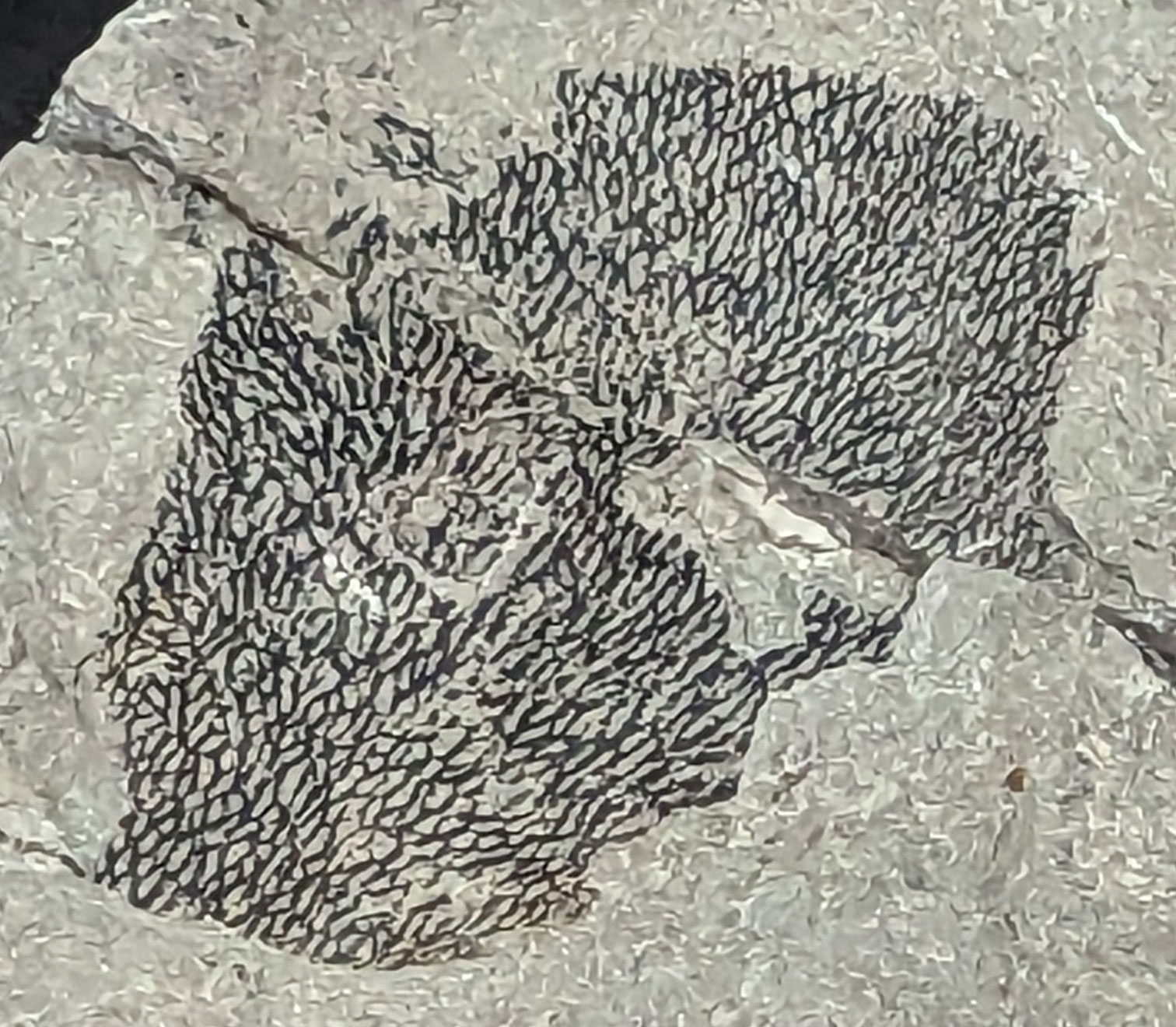
Waldron Shale Desmograptus Graptolite Fossil


This post is a fossil called Desmograptus sp. (Hopkinson, 1875) graptolite. Fossil found in the Waldron Shale of Clark County Indiana USA. It dates to the Silurian Period. The fossil is black due to carbon-film preservation.

Fossil on display at Falls of the Ohio Interpretative Center Clarksville Indiana USA as of December 2022.

Sunday, December 18, 2022

Dawsonoceras amycus Cephalopod Fossil


This cephalopod fossil is called Dawsonoceras amycus.  Fossil found in the Waldron Shale of Clark County Indiana USA. It dates to the Silurian Period.

Fossil on display at Falls of the Ohio Interpretative Center Clarksville Indiana USA as of December 2022.

Saturday, December 17, 2022

Bellerphon tuber Gastropod Fossil


This rare gastropod fossil is called Bellerphon tuber (genus:Montfort, 1808).  Fossil found in the Waldron Shale of Clark County Indiana USA. It dates to the Silurian Period.

Fossil on display at Falls of the Ohio Interpretative Center Clarksville Indiana USA as of December 2022.

Friday, December 16, 2022

Glyptambon verrucosus Trilobite Pygidium Fossil


The picture above is of a pygidium of a trilobite fossil called Glyptambon verrucosus (Hall, 1854).  Fossil found in the Waldron Shale of Clark County Indiana USA. It dates to the Silurian Period.

Fossil on display at Falls of the Ohio Interpretative Center Clarksville Indiana USA as of December 2022.

Thursday, December 15, 2022

Pyrite Leptaena rhomboidalis Fossil


The picture above is of a pyrite brachiopod fossil called Leptaena rhomboidalis (Wahlenberg, 1818).  Fossil found in the Waldron Shale of Clark County Indiana USA. It dates to the Silurian Period.

Fossil on display at Falls of the Ohio Interpretative Center Clarksville Indiana USA as of December 2022.

Wednesday, December 14, 2022

Lyriocrinus melissa Crinoid Fossil


A very nicely preserved crinoid fossil called Lyriocrinus melissa (Hall, 1863).  Fossil found in the Waldron Shale of Clark County Indiana USA. It dates to the Silurian Period. 

Fossil on display at Falls of the Ohio Interpretative Center Clarksville Indiana USA as of December 2022.


Tuesday, December 13, 2022

Leptaena rhomboidalis Brachiopod Fossil


Today's post is of a brachiopod fossil called Leptaena rhomboidalis (Wahlenberg, 1818).  Fossil found in the Waldron Shale of Clark County Indiana USA. It dates to the Silurian Period.

Fossil on display at Falls of the Ohio Interpretative Center Clarksville Indiana USA as of December 2022.

Monday, December 12, 2022

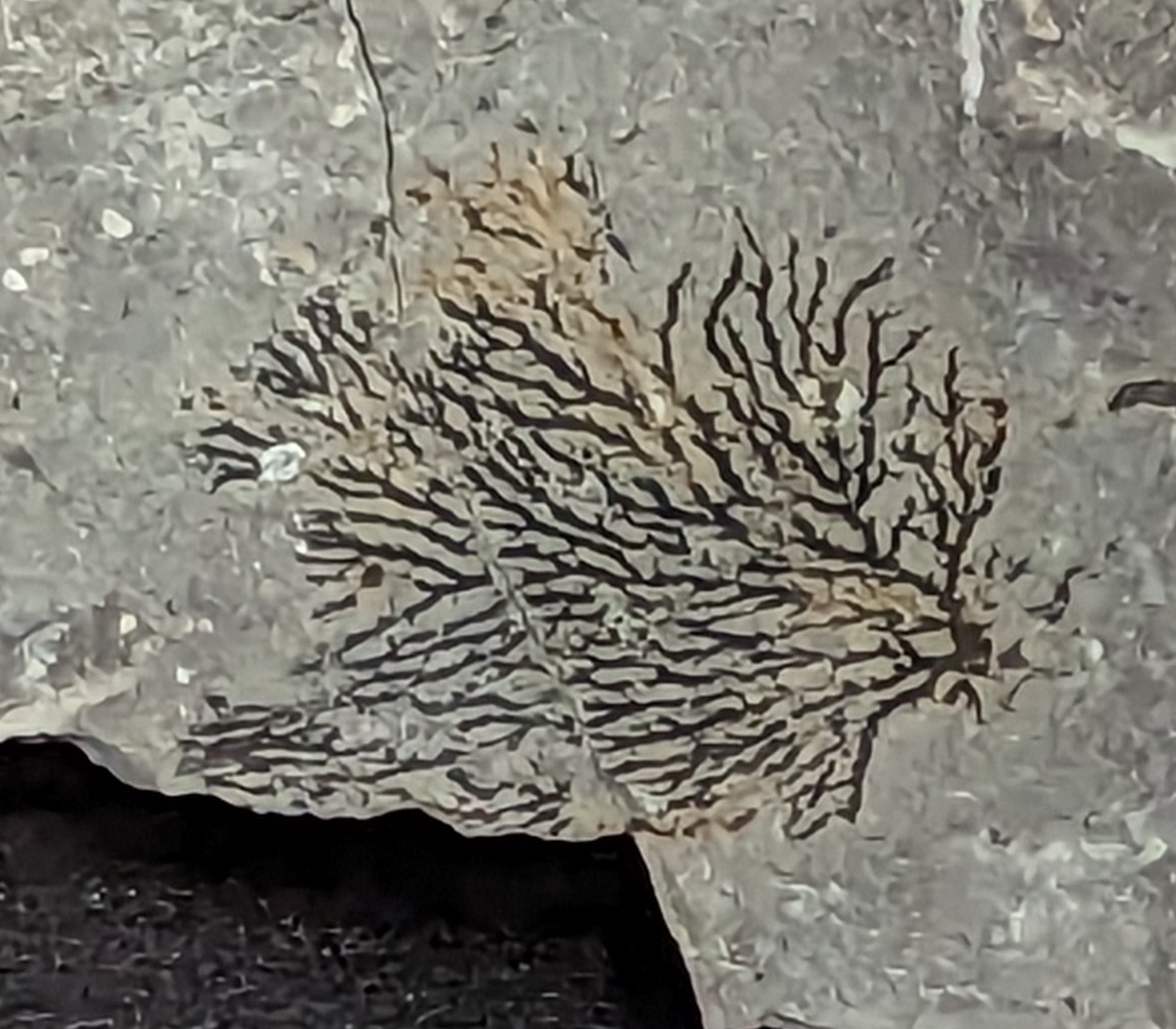
Desmograptus Graptolite Fossil


This post is a fossil called Desmograptus sp. (Hopkinson, 1875) graptolite. Fossil found in the Waldron Shale of Clark County Indiana USA. It dates to the Silurian Period. The fossil is black due to carbon-film preservation.

Fossil on display at Falls of the Ohio Interpretative Center Clarksville Indiana USA as of December 2022.

Sunday, December 11, 2022

Pyrite Fenestella acmea Bryozoan Fossil


Saturday I gave a talk at the Falls of the Ohio Interpretative Center entitled "Fossils Around Us - You Don't Always Have to Go to the Wilds of Nature to Find Creatures of the Past". This presentation was about fossils one can find in buildings and other human constructed objects. 

After finishing I checked out the Waldron Shale Fossil exhibit at the center. Lots of Silurian Period fossils to look at in the display case.

Highlighted in this post is a fossil called Fenestella acmea (Hall) bryozoan fossil. Fossil found in the Waldron Shale of Clark County Indiana USA. It dates to the Silurian Period. Very nice specimen as it is coated in pyrite.


Saturday, August 28, 2021

26th Annual Digging the Past Event


Back from volunteering at the Falls of the Ohio State Park (Clarksville, Indiana USA) where I spent about 4 hours identifying and digging up Silurian fossils for visitors to the park. I spent my time at the four socially distanced Waldron Shale piles containing Silurian period fossils. It was a real treat working this year as I was paired with local historian/teacher and park volunteer Kenny Karem. I enjoyed hearing his stories about his long time friend and Falls park advocate Ruth Browne (1905-1999).

Even though it rained yesterday, the piles did not yield too many fossils on the surface. After splitting some of the shale rocks, I found several Eucalyptocrinites crinoid cups and some stem pieces. These fossils were given to some teachers from Ohio.


This next image shows Atrypa and Fardenia brachiopod fossil imprints (negative). I gave the positive side away to someone not having much luck finding any fossils. Did not take a picture of it before hand. A number white calcite Atrypa brachiopods were found while I was there.

Last image is of a mineral found in the Waldron Shale: pyrite or "fool's gold". I challenged a number of children collecting at the piles to try and find some pyrite crystals to take home with them.

All in all a nice day. It was hot (in the 90s F and humid). Working in the shale piles was muddy. I did not get to check out how the mineral piles or Devonian period fossil piles were going. The Devonian one was very mucky and wet.

Read my write up of this event in 2020 at THIS LINK.


Saturday, January 9, 2021

Paleontologist Ruth Gillespie Browne


1921 passport photograph of Ruth F. Gillespie (restored in Adobe Photoshop)

I live near outcrops of the Ordovician Period Bardstown Reef fossil beds. During 2008-2009, I collected a number of fossil coral specimens and researched more about them. The name of a local scientist appeared during my quest which was Ruth Browne. Unfortunately, I could not talk to her about my finds as she had passed away in 1999 at the age of 94.

An item I believe is missing from the Internet is the lack of a record of women in the geological sciences from the 19th and early 20th century. A remedy to this is to publish some information to help with this situation. Using public records and some Internet databases, I was able to find out more about this Louisville area paleontologist.

Early Life

Ruth F. Gillespie was born on July 28, 1905 in Syracuse, New York. Her mother Ella M. Gillespie (1880-1963) was a housewife. Ruth's father Robert M. Gillespie (1877-1935) was telecommunications engineer. In the early 1920s, Western Electric sent him to Sweden to install a phone system between Stockholm and another city. Ruth and her family applied for passports in 1921 for a 1922 trip to stay with him in Europe. She attended high school in Scandinavian countries where her father worked. Above is a re-touched 1921 passport records image. It appears she, her mother and sister Helen Gillespie (1907-1983) sailed on the SS Stockholm to Europe in July 1922 and returned on the SS Lapland from Southhampton, England (August 11, 1922) to New York City (August 19, 1922).

1921 passport picture of Ella M. Gillespie (1880-1963) enhanced with Firefly/Gemini AI


1921 passport picture of Helen Gillespie (1907-1983) enhanced with Firefly/Gemini AI

Education

Ruth graduated from Cornell University in 1929 with a bachelor's and master's degrees in geology with emphasis on paleontology. She had a younger sister Helen E. Gillespie (1907-1983) who graduated from Cornell University with a degree in architecture.

Marriage

She married James Gunn Browne (1905-1995) on August 30, 1930 in Syracuse New York. Below is a picture of James from his 1922 Charlottesville High School (Virginia) year book. Mr. Browne eventually lived in Louisville, Kentucky where he was treasurer in 1948 at Whayne Supply (construction equipment supplier). He was elected to their board of directors in June 1953 and stepped down as their secretary-treasurer in 1969. He would later retire from there as Vice President and  Finance Director in 1970 [source: Building on a Century of Commitment: A History of Whayne Supply Company by Carl E. Kramer Sunnyside Press, 2013]. From best I can tell, after she got married, they lived in Virginia and she raised two children.

James Gunn Browne (1905-1995) high school picture from 1922 (enhanced with Firefly/Gemini AI)

Life in Louisville

Later the family moved to Louisville (maybe in the mid to late 1940s). The first instance of her mentioned is in the Courier Journal newspaper database on October 10, 1954 in an article entitled 'Creature Meets Critter At Wildlife Meet' by Kent Previette. It shows a picture of Ruth G. Browne holding a black pilot snake while two other women observe. The caption identifies her as head of the Ohio Falls Chapter of Kentucky Society of Natural History. The article states the society is one of the sponsors of the three-day 15th Annual Wildlife and Natural History Conference.


The next entry in the newspaper database is from October 5, 1961 showing Mrs. Ruth Browne (geologist and director or Kentucky Society for Natural History) leading the 4th grade class of St. Matthews Elementary School on a fossil hunt at the quarry at Brownsboro Road and Hubbards Lane. The police later ended the event citing child safety at the quarry as an issue.

The Courier Journal article from January 28, 1968 profiled her in their Woman in the News column entitled 'Her Museum Cause Is a Site' by Yvonne Eaton (1935-2005). The article mostly centers on the controversy of where Louisville's Museum on Natural History should be located. She favored the site at the Ben H. Collings estate at Newburg Road and Trevillan Way as opposed to downtown site or or the campus of the University of Louisville. It eventually was located downtown where the Kentucky Science Center is now (727 W. Main Street, Louisville). In the article she is identified as a board member of the Louisville Natural History Museum, Inc. and a former teacher at the University of Louisville and a former president of the Ohio Falls Chapter, Kentucky Society of Natural History. The article says she "attributes her love of the outdoors to weekend outdoor trips on which her father took the family. She say that she was taken in a basket even before she could walk to a secluded summer camp which her family owned in the Adirondacks."
Mrs. Browne is quoted in the article, "Geology has just been an interest with me. I think, why do I stay home and work with these bugs. But I enjoy it. I'm not a socialite. It's not that I don't like people. But it's that I feel I can contribute in this way. I have compulsion. I can't explain it. I feel there isn't enough time."

In 1973, she and Dr. Erwin Robert Pohl (1904-1973) of Horse Cave, Kentucky named a fossil foraminifera genus Tubispirodiscus found in the Fraileys facies of the Big Clifty Formation (Chesterian) of central Kentucky.

The Paleontological Research Institution of Ithaca, New York list her has a Trustee from 1976 to 1981. Ruth Browne wrote a number of letters to the editors of the Courier Journal which got published. If not writing about the Louisville museum, the letters were in tribute to people she was associated: Carlyle Chamberlain (1969), Leonard Brecher (1976), and Robert Paul (1982).

In 1981, she testified a U.S. Congressional committee about the importance of preserving and protecting the Falls of the Ohio River area (it is now an Indiana State Park). Public law 97-137 TITLE II - FALLS OF THE OHIO NATIONAL WILDLIFE CONSERVATION AREA approved December 29, 1981.

The last newspaper database entry that mentions her while alive was from July 22, 1991 Courier-Journal article 'WORK OF ART Terry Chase tells nature's story though museum exhibits' by Linda Stahl. In the article,  Ruth Browne is identified as a board member of the Louisville Nature and Conservation Center. She and other board members traveled to Chase Studio, a 125 acres of woods next to a national forest 30 miles east of Branson, Missouri. They were looking at exhibit developer's work on three projects: planned Falls of the Ohio Interpretive Center, the Nature and Conservation Center to be constructed at Joe Creason Park in Louisville, and the American Cave and Karst Center at Horse Cave, Kentucky.

Legacy

Before her death she made a large financial contribution and donated a number of her books to the Falls of the Ohio State Park. Browne's fossil collection and library were donated to the Paleontological Research Institution in Ithaca (now "Museum of the Earth"). She also donated money to the Nature Conservancy and Cornell University in her will. The available literature paints a picture of a very talented and generous person.  The Museum of the Earth database shows a number of specimen donations attributed to her.  

I am grateful she published her coral research as it helped with identification of the eastern Louisville fossils found. In addition, after reviewing newspaper articles and letters to editor over the decades she lived in Louisville, it shows she was a dedicated advocate for museum for natural history and science and other nature centers in the Louisville area.

https://louisvillefossils.blogspot.com/2009/03/foerstephyllum-colonial-coral.html

https://louisvillefossils.blogspot.com/2008/12/cyathophylloides-cf-c-burksae.html

Publications

Below are list of some of her publications from 1958 to 1977.

Sedimentation and stratigraphy of the Silurian and Devonian rocks in the Louisville area, Kentucky (Roadlog for Geological Society of Kentucky 1958 Field Excursion), by Ruth Browne and others, 1958, 46 p. ?

Wisconsin molluscan faunas from Jefferson County, Kentucky by Ruth G. Browne and D.E. McDonald in Bulletins of American Paleontology No. 189 (August 5, 1960), 24 pp., 4 plates [LINK]

Arenaceous Foraminifera from the Osgood Formation at Osgood Indiana by Ruth G. Browne and Virginia J. Schott in Bulletins of American Paleontology, volume 46, number 209 (July 1963), pp. 187-243. [LINK]

Smaller Paleocene Foraminifera from Reidland, Kentucky by Ruth G. Browne and Stephen M. Herrick in Bulletins of American Paleontology, volume 46, number 210 (August 23,1963), pp. 247-285. [LINK] [In this paper, L.M.  MacCary geologist at U.S. Geological Survey and Nat Dortch geologist at Paducah Junior College, Kentucky supplied Ruth Browne fossils in March 1960. The authors later thank Bruce Chang of Louisville Kentucky for illustrations of fauna and Dr. James E. Conkin (1924-2017) geologist at the University of Louisville for loan of literature.]

The Coral Horizons and Stratigraphy of the Upper Richmond Group in Kentucky West of the Cincinnati Arch by Ruth G. Browne in Journal of Paleontology, Vol. 38, No. 2 (Mar., 1964), pp. 385-392 published by: SEPM Society for Sedimentary Geology [In this paper she thanks Virginia Schott and  the curator of the University of Louisville Geology museum Donald McDonald. Dr. Kenneth E. Caster, professor of Geology at the University of Cincinnati reviewed her paper.]

Some Upper Cincinnatian (Ordovician) Colonial Corals of North-Central Kentucky by Ruth G. Browne in Journal of Paleontology, Vol. 39, No. 6 (Nov., 1965), pp. 1177-1191. [In this paper she thanks Mrs. Virginia Schott and  Mr. Donald McDonald in aiding in the collection of fossils. Dr. Thomas G. Perry of Indiana University for preparing thin sections. Dr. John W. Wells of Cornell University for manuscript review. Charles Stone of Lexington, Kentucky made the photographs. Special thanks to Dr. Rousseau Flower of the New Mexico Bureau of Mines and Mineral Resources for loan of coral fossils from Montoya New Mexico.]

Foraminifera of the Fraileys Member (Upper Mississippian) of Central Kentucky by E. Robert Pohl, Ruth G. Browne, James R. Chaplin in Journal of Paleontology, Vol. 42, No. 2 (Mar., 1968), pp. 581-582

Wisconsin molluscan faunas from Henderson County, Kentucky by Ruth G. Browne and P.M. Bruder in  Bulletins of American Paleontology No. 241 (June 3, 1968), 85 pp., 3 plates [LINK]

Plant Fossils from the St. Louis Formation in Kentucky by Ruth G. Browne and Albert L. Bryant in Journal of Paleontology, Vol. 44, No. 3 (May, 1970), pp. 520-521

Misassignment of Silurian Gastropod Protoconch Casts to Taxa of Foraminifera by Ruth G. Browne in Journal of Paleontology, Vol. 45, No. 1 (Jan., 1971), p. 141 [Correction of paper she published in 1963 where she mis-identified foraminfera fossils as snail protoconch casts.]

Stratigraphy and genera of calcareous Foraminifera of the Fraileys Facies (Mississippian) of central Kentucky. by Ruth G. Browne and E. Robert Pohl in Bulletins of American Paleontology No. 280 (December 13, 1973), 76 pp., 10 plates. [LINK]

The Archaediscidae of the Fraileys Facies (Mississippian) of central Kentucky by Ruth G. Browne, J.W. Baxter, and T.G. Roberts in Bulletins of American Paleontology No. 298 (October 24, 1977), 62 pp., 4 plates [LINK]


Wednesday, September 2, 2020

Digging The Past Event


Saturday, August 29, 2020 The Falls of the Ohio State Park held their Digging the Past event. It has been several years since I had last attended back in 2015. In the past I always enjoyed identifying what people found in the collecting piles and elaborating about the minerals or fossils. The downside is the place to do this was at the cleaning screens and by the end of my shift I was quite wet and sometimes muddy.


This year everyone was in masks and social distanced so I only identified a couple of things. I volunteered to give a talk about fossil collecting but ending up talking to 2 people. While I was there I would estimate at least 100 people visited. Most of my time was spent speaking with exhibitors, helping with fundraising by selling fossil/mineral egg cartons or working around the presentation area.


At the end I went in the collecting area which was really muddy and my Estwing rock hammer split apart large pieces of Waldron Shale. It was almost impossible to find fossils in the muddy shale. Splitting the rocks helped in that I found several Eucalyptocrinus crinoid holdfasts, Metopolichas breviceps trilobite cephalon and Dalmanites pygidium.


Outside of the rocks, I found a small Stegerhynchus brachiopod and Platyostoma gastropod. The crowds would have probably been larger if no Covid epidemic and the weather being overcast with it looking like it was going to rain most of the morning. It was nice to be back and I got some exercise walking along the river front and breaking rocks.


Here are some links to past events I have participated at the Falls of the Ohio State Park:

https://louisvillefossils.blogspot.com/2015/09/digging-past-event-2015.html

https://louisvillefossils.blogspot.com/2014/09/digging-past-event-at-falls-of-ohio.html

https://louisvillefossils.blogspot.com/2013/08/earth-discovery-day-august-2013.html

https://louisvillefossils.blogspot.com/2012/10/earth-discovery-day-2012.html

https://louisvillefossils.blogspot.com/2011/09/fossil-festival-fun.html

https://louisvillefossils.blogspot.com/2011/09/2011-falls-fossil-festival.html

https://louisvillefossils.blogspot.com/2010/09/fossil-festival-2010.html

Sunday, January 13, 2019

Fossil Plant Presentation at Falls of the Ohio State Park


Here is a picture of plant fossil called Sigillaria elegans. It is from the Pennsylvanian Period and was found in Hazard, Kentucky, USA.

Herb Miracle showed this fossil at a presentation he gave today at the Falls of the Ohio State Park at Clarksville, Indiana, USA. Thanks to Kenny for image.