Showing posts with label beckner. Show all posts

Sunday, May 5, 2024

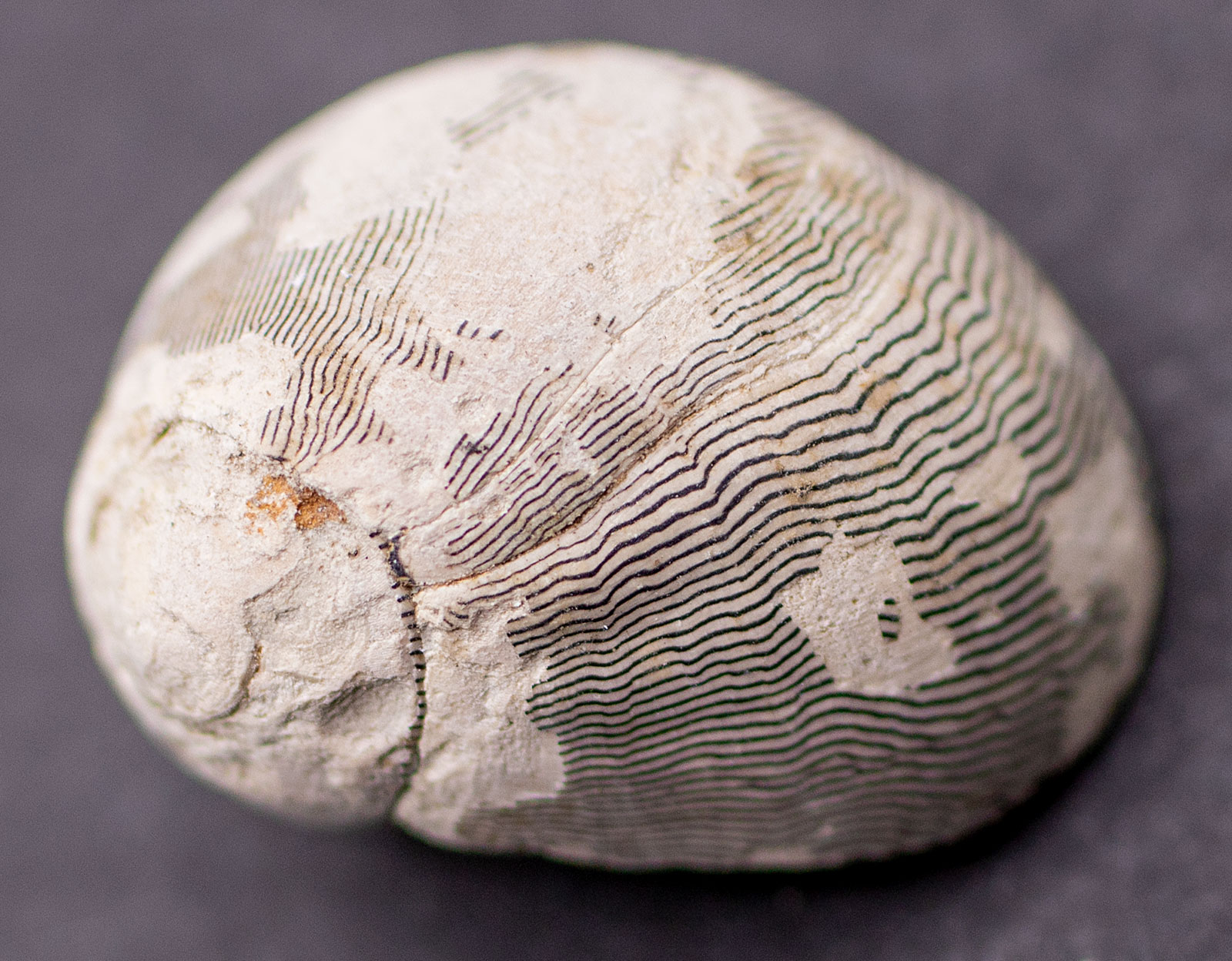
Straparollus planispira Gastropod Fossil


This fossil appears to be a Straparollus planispira (Cumings, 1906) gastropod fossil. It was found by Lucien Beckner (1872-1963) in 1928 in Breck County Kentucky, USA. The fossil dates to the Mississippian Period.

Source:

https://paleobiodb.org/classic/checkTaxonInfo?taxon_no=73633&is_real_user=0

Thursday, May 2, 2024

Pentremites godoni Blastoid Fossils


Picture of a number of blastoid fossils that appear to be Pentremites godoni (Defrance, 1819). They were found by Lucien Beckner (1872-1963) in Meade County, Kentucky USA. The fossils date to the Mississippian Period. This picture was taken last year and since then the fossils have been cleaned. Hopefully will post some new pictures soon.

The Kentucky Geological Survey has a nice web page about blastoid fossils. Go there to learn all kinds of interesting information, for instance, the first blastoid described in 1808 literature was from western Kentucky.

Tuesday, April 30, 2024

Ectenocrinus (Heterocrinus) simplex Crinoid Fossil

This fossil appears to be an Ectenocrinus (Heterocrinus) simplex (Hall, 1847) crinoid calyx fossil. It was given to  Lucien Beckner (1872-1963) in earlier 1900s by Dr. William H. Shideler (1886-1958) of Miami University of Ohio. The fossil dates to the Ordovician Period.


Monday, April 29, 2024

Ectenocrinus simplex Crinoid Calyx Fossil

This fossil appears to be an Ectenocrinus (Heterocrinus) simplex (Hall, 1847) crinoid calyx fossil. It was found by Lucien Beckner (1872-1963) in 1932 in the blue shale of Henry County Kentucky, USA. The fossil dates to the Ordovician Period.


Monday, October 23, 2023

Rogers Clark Ballard Thruston - Louisville Geologist

My interest in this geologist stems from some fossil specimens found in Colonel Lucien Beckner's collection a Pennsylvanian Period gastropod found in the coal mines of eastern Kentucky and some gastropods from maybe the Eocene of Naples, Florida.

Early Years

Rogers "Rog" Clark Ballard was born on November 6, 1858 to Frances "Fanny" Ann Thruston (1826-1896) and Andrew Jackson Ballard (1815-1885) in Louisville, Kentucky, USA. He was born into a wealthy and prestigious family; his great-grandmother was George Rogers Clark (1752-1818) sister. Rogers began his early education at Hopkins Grammer of New Haven, Connecticut and then Williston Seminary of East Hampton, Massachusetts. After his freshman year of college, in the summer of 1877 he helped his father with mining interests in Colorado thus missing the start of his sophomore term.

He graduated in 1880 from the Sheffield Scientific School of Yale University with a degree of Bachelor of Philosophy. To round out his education, late in life the University of Louisville conferred a Master of Arts degree upon him in 1937 and the University of Kentucky awarded him a degree of Doctor of Laws in 1942.

Occupations

After graduating Yale, he started as a clerk for the Monon Railroad office in Louisville and worked his way up to Assistant Ticket Auditor. Later, he became a metallurgist for the Kentucky Geological Survey (KGS) on July 1, 1882. At the age of 25, on October 27, 1884, the Fayette County Court appended his mother's maiden name Thruston to his last name. His mother, the last of the Thrustons, wanted her family name to live on but as it turned out, he never married or had any children. He would sign paperwork with his initials RCBT or R.C. Ballard Thruston. 


Appears to be a Bellerophon meekianus gastropod fossil found by George Rogers Ballard Thruston in 1883 in a coal seam at Elkhorn Creek, Pike County, Kentucky.

He helped survey and photograph ("kodak") Pike, Letcher, Harlan, and Bell counties till he left the KGS in 1887. RCBT took employment with the Kentucky Union Land Company where he was buying land in Harlan and Bell counties as well as Wise and Lee counties in Virginia for coal and iron mining. By 1890, he was promoted to Superintendent of the Land Department where he worked on acquiring land for timber and coal in Estill, Powell, Lee, Breathitt, Perry and Letcher counties. In the 1880s, he and his brothers acquired acreage through the Interstate Investment Company in the Big Stone Gap section of Virginia for coal production. RCBT managed the Big Stone Gap Iron Company from 1895 to 1899.

As a side note, The Trail of the Lonesome Pine by John Fox, Jr. (1862-1919) was published in 1908. It became one of the best selling books in the United States in 1908 and 1909. The story takes place in the Appalachian Mountains of Virginia and Kentucky. Its main character is geologist John Hale who the author in part based on Rogers Clark Ballard Thruston. The story was adapted into a 1912 Broadway production, a 1916 Cecil B. DeMille film, a 1923 film and a 1936 film starring Fred MacMurray (1908-1991), Sylvia Sidney (1910-1999), and Henry Fonda (1905-1982). The author John Fox, Jr. was a friend to RCBT in 1890 where his family lived at Big Stone Gap, Virginia.

A colorized image from John Fox Jr. 1908 book The Trail of the Lonesome Pine showing the main characters mountain girl June Tolliver and geologist-engineer Jack Hale. It is thought heroine is based off a Keokee, Virginia girl Elizabeth Morris and the character Jack is partially based off of Rogers Clark Ballard Thruston who was a surveying geologist in the Big Stone Gap, Virginia area.

Retirement

In 1919, at the age of 61, Thruston retired with the intent to spending the rest of life studying history and traveling.

On November 18, 1921 he helped dedicate the Sunshine Ballard Cabin to Berea College. It was in honor of one of his relatives. The cabin allowed the school to expand its Fireside Industries department which taught weaving, basketry, homespun and hand work.

In 1922, he traveled to Naples, Florida, while there he found a number of gastropod shells (fossils?) known as Theodoxus reclivatus (Say, 1822) [modern name is Vitta usnea (Röding, 1798)].


In 1925, he participated in a history pageant in Lexington, Kentucky and dressed as his ancestor George Rogers Clark. He would spend the rest of his life promoting a monument be created to honor George Rogers Clark.

In 1930, he unveiled a monument to George Rogers Clark in Springfield, Illinois.

The Filson Historical Society

Today, the biggest impact Mr. Thruston left upon the Louisville area were his contributions to The Filson Historical Society (FHS). In 1919, he offered $50,000 to help the society obtain a fireproof room to store its collections. When the founder of the society, Reuben T. Durrett died in 1913, his family sold his historic collection the University of Chicago. RCBT went to Chicago to retrieve items that really belonged to the society and returned them to Louisville. He was president of the society from 1923 to 1946. In 1923, he helped the society purchase a new home and in 1929 covered half the cost of moving into it. 

He purchased F. W. Leach's research work The Genealogies of the Signers of the Declaration of Independence and donated to the FHS. His photo collection of over 20,000 images from 1880-1942 was also donated to the FHS collection. He contributed the following to the FHS History Quarterly

1926 The Signing of the Declaration of Independence 

1928 Letter by Edward Harris 1797 

1935 Some Recent Findings Regarding the Ancestry of General George Rogers Clark 

1937 Reprint of The Filson Club Program of June 25 1937 The Lincoln Pilgrimage

1940 Rachel Eastham Not Mary Byrd or Bird was the Wife of John Rogers The Grandfather of George Rogers Clark

1941 After the Death of George Rogers Clark

Legacy

He died at 2:15 a.m. at Jewish Hospital in Louisville, Kentucky on December 30, 1946. His funeral was held at Christ Church Cathedral followed by his burial at Cave Hill Cemetery. His remains are buried next to his parents in section G, lot 24, grave 12 at the cemetery.

RCBT left a very explicit 9 page will. 

Here is part of it, "As to the disposition of my remains after death. I am the holder of lots 24 and 25 in Section G, in Cave Hill Cemetery, Louisville, Kentucky. There are buried the remains of my maternal grand-parents and their children, my parents, a brother, my sister and certain law kin. The space next to the grave of my father has been set aside for my remains. There I have erected a headstone with an inscription complete except as to the dates of my death; that date I direct my executor to
have suitably inscribed thereon.
My desire is that my body be cremated; that my ashes be placed in a simple glass, metal or pottery container and buried on the site above named. I also desire that all unnecessary forms and ceremonies be dispensed with and that the disposition of my remains after my death be accomplished simply, quickly and inexpensively."

As described above, his financial and research material contributions to the Filson Historical Society are probably his most lasting mark on the Louisville area. In 1947, the Society devoted an entire issue of the History Quarterly to his memory. 

Besides the fossils I have documented earlier, he also left specimens to the old museum that was part of the Louisville Free Public Library which was later transferred to what is now the Kentucky Science Center. They are de-accessioning that collection so Thruston's items might now go to the Filson Historical Society or Frazier History Museum. The Speed Art Museum has some of his paintings including one called the View of Jerusalem from 1867.

He and his brothers donated a number of pieces of land to become parks: Ballard Square, Churchill Park and George Rogers Clark Park. In addition, they deeded the original home of George Rogers Clark on Poplar Level Road to the City of Louisville.


Sunday, October 8, 2023

Cyclonema Snail Fossils


Pictures are of two Cyclonema (Hall, 1852) snail fossils found in Clark County, Kentucky, USA. They were probably collected in the 1930s by Colonel Lucien Beckner (1872-1963). The fossils date to the Ordovician Period. Colonel Beckner was a long time curator of the Louisville Museum of Natural History.


Wednesday, September 20, 2023

Dr. John H. Lemon - New Albany Indiana Paleontologist


The 1910 U.S. Census lists John Herschel Lemon was born in September 1844 and his obituary lists at a farm near Harrodsburg, Indiana. His family moved to Bloomington, Indiana in 1856 when he was 12, where at age 13 he and his brothers became students at Indiana University (IU). The American Civil War interrupted his studies and in May 1862 he became a private in the 54th Indiana Infantry, Company A and later 82nd Indiana Infantry, Company F. They guarded 4000+ Confederate prisoners of war (POWs) at Camp Morton (Indianapolis) and later deployed to western Kentucky.

The Owen Connection

His interest in paleontology may have been inspired by geologist Richard D. Owen (1810-1890) who was boarder at his mother's house in Bloomington, Indiana. Owen was professor on Natural Science at IU for 15 years and served as colonel in the Union Army in the 15th and later 60th Indiana Infantry Regiment and was in charge of the POWs at Camp Morton. His permanent residence was in New Harmony, Indiana and where he is buried when he died.

After the war, John Lemon continued his studies at IU and later studied at University of Michigan. Once he became a doctor, he moved to New Albany in 1867 and practiced medicine till the 1930s. He died on July 10, 1935 which at that time he was considered Indiana's longest serving physician.

The Smithsonian Connection

In 1887, Dr. Lemon sent the Smithsonian some charophyte fossils found at the Falls of the Ohio. F. H. Knowlton (1860-1926) named the fossil after him in 1889 calling it Calcisphaera lemoni in a paper called Description of a problematic organism from the Devonian at the Falls of the Ohio. The holotype specimens are in the Smithsonian Museum of Natural History USNM P 3664.

The George Greene Connection

New Albany fossil collector and author George K. Greene named a number of fossils after Dr. Lemon in publications from 1904. Greene named the fossil horn coral Heliophyllum lemoni in which wrote "The specific name is in honor of Dr. John Lemon, of New Albany, Ind., an ardent collector and a good palaeontologist. Found in the lower Devonian (Corniferous group), at the Falls of the Ohio. Now in the collection of the author." Later in his publication, he named another fossil after Lemon, the Crania? lemoni. "The specific name in in honor of the discoverer, Dr. John Lemon, of New Albany, Ind."


The Colonel Lucien P. Beckner Connection

Beckner had two fossils of Dr. Lemon in his collection. The first was a Paraconularia newberryi (Winchell) fossil still partially embedded in a nodule.Another was labeled Pentremites pyriformis? blastoid both fossils listed as found in Indiana.


Sources

In preparing this entry about Dr. Lemon, an informative blog post entitled Dr. John Herschel Lemon Reminisces about Early Life in Bloomington by Randi Richardson on November 26, 2018 at the Monroe County History Center Research Library blog was found helpful.

George K. Greene's Contribution to Indiana Palaeontology Volume I Part I to XX published from February 1898 till September 1904.

Smithsonian National Musuem of Natural History Department of Paleobiology Collections database

Frank Hall Knowlton's 1889 paper Description of a problematic organism from the Devonian at the Falls of the Ohio


Saturday, September 16, 2023

Prunum apicinum Gastropod Shell


This shell appears to be a Common Atlantic Marginella gastropod shell or Prunum apicinum (Menke, 1828). It was found by a 17 year old Lucien Pearson Beckner in 1889 at Naples, Florida, USA. Mr. Beckner was a mentor to Professor James Conkin (1924-2017) and his natural history collection was left to him upon his death.


Friday, September 15, 2023

Anadara transversa Sea Shell


This shell appears to be a Transverse Ark shell or Anadara transversa (Say, 1822). It was found by a 17 year old Lucien Pearson Beckner in 1889 at Naples, Florida, USA. Mr. Beckner was a mentor to Professor James Conkin (1924-2017) and his natural history collection was left to him upon his death.


Thursday, September 14, 2023

Chione elevata Shell


This shell appears to be a Florida Cross-barred Venus shell or Chione elevata (Say, 1822). It was found by a 17 year old Lucien Pearson Beckner in 1889 at Naples, Florida, USA. Mr. Beckner was a mentor to Professor James Conkin (1924-2017) and his natural history collection was left to him upon his death.


Wednesday, September 13, 2023

Sinum maculatum Snail


This shell appears to be a Brown Baby Ear Snail or Sinum maculatum (Say, 1831). It was found by a 17 year old Lucien Pearson Beckner in 1889 at Naples, Florida, USA. Mr. Beckner was a mentor to Professor James Conkin (1924-2017) and his natural history collection was left to him upon his death.


Tuesday, September 12, 2023

Crested Oysters

These shells appear to be Crested Oysters or Ostrea equestris (Say, 1834).  One has group of barnacles attached to it.

They were found by a 17 year old Lucien Pearson Beckner in 1889 at Naples, Florida, USA. Mr. Beckner was a mentor to Professor James Conkin (1924-2017) and his natural history collection was left to him upon his death.


Monday, September 11, 2023

Spotted Slipper Shell


This shell appears to be a Spotted Slipper Snail or Crepidula maculosa (Conrad, 1846). It was found by a 17 year old Lucien Pearson Beckner in 1889 at Naples, Florida, USA. Mr. Beckner was a mentor to Professor James Conkin (1924-2017) and his natural history collection was left to him upon his death.


Sunday, September 10, 2023

Colonel Lucien Beckner - Geologist & Museum Curator


Lucien Pearson Beckner (1872-1963) Firefly Gemini AI enhanced

Lucien Pearson Beckner was a figure that played a part in the formation of Louisville's knowledge of it's natural history. He lived a full life and his career spanned many directions: journalist, author, lawyer, geologist, engineer, writer, historian, and curator.

He was born in Winchester, Kentucky on December 29, 1872, the son of Judge W. M. Beckner (lawyer, ran Clark County Democrat newspaper, congressman) and Elizabeth Anne Taliaferro Beckner. Young Lucien attended the Louisville Military Academy. When he was 17 years old, he traveled to Naples Florida and collected a number of shells that are now in the possession of the author. Two of the shells have been blogged about before Oliva sayana and Fulguropsis pyruloides.

Later he went to Centre College, the University of Kentucky, Transylvania College and the University of Pennsylvania.

Lucien helped his father with publishing the newspaper. As a civil engineer he helped lay out the tracks in the City of Ashland and Lexington and eastern branch of the Louisville & Nashville Railroad. Later in 1903, he used this railroad expertise and went to Ecuador to help that country with its railroads.

He eloped with Marie Davis Warren (1875-1950) on August 14, 1894 in New Albany, Indiana at the residence of Reverand W. B. Ellis. The  Kentucky Advocate newspaper in their notice reported that Lucien ("Choctaw") has job in Frankfort, Kentucky paying $1,200 a year. A first daughter was born Jean Warren Beckner on April 3, 1896 and tragically died of meningitis on September 17, 1898. Their second daughter was born Elizabeth Taliaferro Beckner (1897-1967) on November 17, 1897 and the third Marie Warren Beckner Kittrell (1904-2001) was born October 25, 1904.

Beckner practiced law in Winchester, Kentucky with father from 1904-1922 and published and edited newspapers The Winchester Sun and The Clark County Republican. He sold the papers and returned to being a geologist during the Kentucky oil boom of 1916.

During the 1917 Spanish flu outbreak, he helped administer medical treatments to residents of eastern Kentucky. His World War I draft registration showed that he was a consulting geologist as his occupation. He was an assistant at the Kentucky Geological Survey and consulting geologist for Louisville Gas & Electric (LG&E).

Beckner earned the title of colonel from multiple sources. 1) Kentucky Governor Edwin P. Morrow (1877-1935) commissioned him into the Kentucky Militia, he was give the honorary commission by Tennessee Governor Austin Peay (1876-1927) [a former classmate at Centre College], and in 1903 from the Government of Ecuador.

In 1933, Lucien was named curator of Louisville Museum of Natural History and Science and remained at that position till 1959. A major challenge during this time was dealing with the Ohio River flood in 1937. One of the highlights of the museum collection was Gerard Troost (1776-1850) mineral collection from 1811-1850. It was heavily damaged by the flood and a lot of mineral specimens lost their labels. With a Work Projects Administration (WPA) crew, they cleaned and re-identified the museum's 100,000 items. This work included baking the Egyptian mummy in a bread oven to dry it out. He oversaw the move of the museum from the main public library building (Fourth and York Streets) to the old Monsarrat school building (Sixth and York Streets).

The Filson Club 

He published a number of articles in the The Filson Club Quarterly:

April 1927 - John Findley, The First Pathfinder of Kentucky

January 1928 - A Sketch of the Early Adventures of William Sudduth in Kentucky

October 1928 - Letter from George Washington to Charles Morgan, 1795

April 1931 - John D. Shane's Interview with Benjamin Allen, Clark County 

October 1932 - Eskippakithiki, The Last Indian Town in Kentucky

July 1936 - Rev. John D. Shane's Notes on Interviews, in 1844, with Mrs. Hinds and Patrick Scott of Bourbon County

October 1937 - John D. Shane's Interview with Elijah Foley

July 1938 - John D. Shane's Notes on an Interview with Jeptha Kemper of Montgomery County

January 1946 - John D. Shane's Interview with Jesse Graddy of Woodford County

October 1946 - Groping for Health in the Mammoth Cave

April 1947 - Scientist (R.C. Ballard Thruston Issue)

October 1948 - John D. Shane's Copy of Needham Parry's Diary of Trip Westward in 1794

January 1952 - Kentucky's Glamorous Shorthorn Age

July 1955 - The Moundbuilders

April 1959 - Abraham Lincoln, Influences That Produced Him

Beckner was a director at the Kentucky Historical Society, elected president of the Kentucky Academy of Science, a representative of the American Geophysical Union, and a fellow of the American Association for the Advancement of Science.

Death

Aged 90, Colonel Beckner died on Wednesday August 28, 1963 at 5 p.m. at a Louisville, Kentucky nursing home. He had broken some bones the year before and never really recovered from that injury. At his funeral the Reverand Conrad G. Crow gave this tribute, "We in the city of Louisville possess a museum because of his devotion and labor... His range of interests was so wide, his conversations so gripping that those who heard him could not but be impressed by his scholarship. But he possessed something more: that intangible spark which fired the enthusiasm of his hearers and influenced many young people to take up their life work. " He was buried with other family members in the Winchester, Kentucky cemetery.


Memories of Colonel Beckner by Dr. James Conkin

James Conkin writes in his autobiography, "When I was a senior at Louisville Male High School in early 1940... I spent (after school) the remainder of most days studying fossils and rocks under Col. Lucien Pearson Beckner at the old Natural History Museum."  He writes later in the endnotes, ""As Director of the Louisville Free Public Library Museum, Col. Beckner led me, from a junior high school student until his death (at 90) along with my geologic studies, it mattering not whether he was physically with me. I still sense his presence. I was able to nominate him for his Doctor of Science given him by the University of Louisville."

Dated October 28, 1948, James published his first paper in the Annals of Kentucky Natural History entitled On the Occurance of a New Species of Cyrtodonta from the Liberty Formation of Oldham County, Kentucky in which he named a pelecypod fossil after Lucien Beckner calling it Cyrtodonta beckneri.


In Dr. Conkin's house in Louisville, he had a fireplace constructed consisting of a number of fossils. One of Lucien Beckner's fossils that was embedded there was what appears to be an Evactinopora quinqueradiata (Ulrich, 1890) byrozoan (its cross section looks like a starfish).


Musician Delcy Marcum

His daughter Elizabeth Anne Taliaferro Beckner (1897-1967) became a regional celebrity musician under the name Delcy Marcum. Like her father, she had quite a variety in her career who was a Kentucky State Board of Health medical technician, song writer, radio actress, ballad singer, dulcimer player, and writer of short stories, professional comedy skits, and newspaper features. Two of her father's poems "Spring Fever" and "Vine Leaves Serenade" she converted to songs. She wrote two more songs "One Kiss Devine" played by Wayne King and his orchestra and "Louisville Stomp" performed by Fletcher Henderson and his orchestra. She sang mountain ballads and played the dulcimer on Cincinnati and Chicago radio programs mostly in the 1930s and 1940s.


Tuesday, June 13, 2023

Oliva sayana Gastropod Shell


This shell was found in 1889 by a 17 year old Lucien Beckner (1873-1963) in Naples, Florida USA. Mr. Beckner was a mentor to Professor James Conkin (1924-2017) and his natural history collection was left to him upon his death.

I think the shell pictured in this posting is a Lettered Olive Snail or Oliva sayana (Ravenel, 1834). 

Lucien Beckner was born into an established Kentucky family in 1873. He attended Louisville Military Academy, Centre College, the University of Kentucky and Transylvania College. Later he practiced law in Winchester, Kentucky as well as serving as a newspaper editor there. Next he worked as a geologist at the Kentucky Geological Survey and with Louisville Gas and Electric. He switched careers and worked as an engineer with the Louisville and Nashville Railroad and then helped build a railroad in Ecuador.

In 1933, he became curator of the Louisville Museum of Natural History and Science at the Louisville Free Public Library. He held that position for 26 years helping educate the Louisville area community about natural history. He is buried at Winchester Cemetery in Clark County, Kentucky, USA.


Sunday, June 11, 2023

Florida Pear Whelk Shell


Recently, I was given to a small bag of seashells that was in the possession of a long time University of Louisville geology professor James Conkin (1924-2017). The shells were found in 1889 by a 17 year old Lucien Beckner (1873-1963). The bag was labeled that the shells were found in Naples, Florida USA. Mr. Beckner was a mentor to Professor Conkin and his natural history collection was left to him upon his death.

While I am not an expert, I think the shell pictured in this posting is a Florida Pear Whelk or Fulguropsis pyruloides (Say, 1822). This species was named by early American naturalist Thomas Say (1787-1834) who is buried in New Harmony, Indiana (several hours drive west of Louisville, Kentucky).

Hopefully, I can identify all the shells in the bag and properly document them and then find them a good home somewhere in Louisville.


 Lucien Beckner was born into an established Kentucky family in 1873. He attended Louisville Military Academy, Centre College, the University of Kentucky and Transylvania College. Later he practiced law in Winchester, Kentucky as well as serving as a newspaper editor there. Next he worked as a geologist at the Kentucky Geological Survey and with Louisville Gas and Electric. He switched careers and worked as an engineer with the Louisville and Nashville Railroad and then helped build a railroad in Ecuador.

In 1933, he became curator of the Louisville Museum of Natural History and Science at the Louisville Free Public Library. He held that position for 26 years helping educate the Louisville area community about natural history. He is buried at Winchester Cemetery in Clark County, Kentucky, USA.