Showing posts with label calcite. Show all posts

Wednesday, July 24, 2019

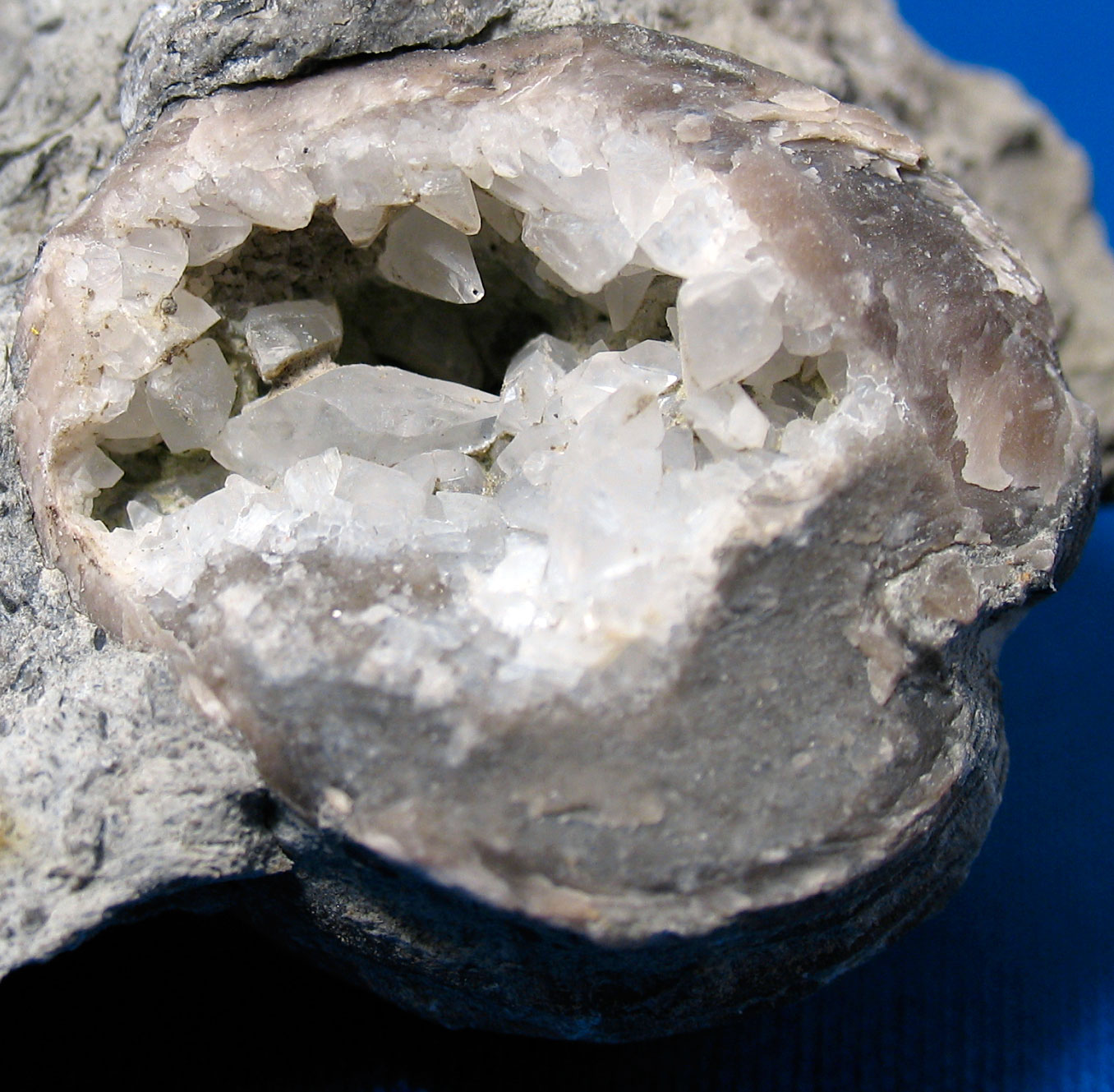
Prasopora Bryozoan Fossil with Calcite Crystals

This specimen is a mix between a fossil and mineral (calcite crystals). It appears to be Prasopora bryozoan fossil. The fossil dates to the Ordovician Period. It was found in Ripley County, Indiana, USA.

Thanks to Kenny for image.

Sunday, October 19, 2014

Fibrous Calcite from Illinois


Back in 2010 I found a Devonian brachiopod fossil with a fibrous or needlelike mineral growth in it. I was trying to determine what this was. Last week while touring the Gallery of Natural History section of the Arizona Historical Society Museum at Papago Park (1300 N. College Ave, Tempe Arizona 85281) I saw a calcite specimen (AHS-NH#11396) from Cave in the Rock, Hardin County Illinois, USA. It appears to be composed of calcite fibers. This formation type seems similar to the one I saw in the brachiopod. So maybe this type of calcite is what formed in that Devonian brachiopod. Images of museum specimen taken October 2014.


Here is an image of the Devonian brachiopod I found in Clark County, Indiana, USA.


See the rest of the pictures and more discussion of this specimen at my blog post here:

http://louisvillefossils.blogspot.com/2010/12/fibrous-or-needlelike-mineral-growth-in.html

Wednesday, April 10, 2013

Calcite Filled Platystrophia Brachiopod

These images are of a broken open Platystrophia sp. brachiopod fossil. The picture reveals calcite crystals. This fossil was found in Bullitt County, Kentucky in Ordovician Period rock.

Wednesday, November 10, 2010

Calcite Crystals in Silurian Brachiopods

Stay with my theme this week of crystals and brachiopods... Calcite crystals formed in Athyris brachiopods of the Middle Silurian Period.  Fossils found in the Waldron Shale of Clark County, Indiana.  Since they are in this limestone material I will assume they are calcite.  Plus calcite is one of the most common minerals found in the state of Indiana.


Sunday, November 7, 2010

Calcite in Brachiopod Fossils

Examples of calcite crystals forming inside brachiopod fossils.  In this case two different brachiopod fossils are shown.  The first image shows a Platystrophia ponderosa brachiopod from the Ordovician Period of Kentucky.  Two images following are of Orthospirifer brachiopod fossils from the Devonian Period of Indiana.


The rest are of Platystrophia ponderosa brachiopods.  The image make look slightly different in color, lighting and focus.  Two different Canon cameras were used to test close up abilities.  A Powershot Pro in Super Macro mode and an EOS DSLR with a 50mm macro lens.  Incandescent light was used and the DSLR white balance was not set right making the fossils look yellowish.


Tuesday, October 19, 2010

Fluorescent Clam Fossil


Honey colored calcite formed in the Giant Venus Clam fossil (aka Mercenaria permagna) of the Fort Drum Member, Nashua Formation of Florida. It was described by Conrad in 1838 and can also be found in North and South Carolina.  This creature lived in the Calabrian Stage (780,000 years ago to 1.8 million years ago) of the Pleistocene Epoch of the Quaternary period.

The fluorescent color and intensity of this specimen reminds me of calcite long wave fluorescence of Harz, Germany.


An interesting property of this calcite is that it will fluorescence in ultraviolet (UV) light.  The calcite shown in this post was illuminated with 395 nm light showing a bright yellow response.  Second fragment shown in image below.  Hopefully, I will soon acquire a short-wave uv light (254 nm) and study the calcite response to that particular wavelength.


Thanks to Mary Ann for the fossil specimen!

Tuesday, January 26, 2010

Four Types of Waldron Shale Brachiopods

This post is on recently found Silurian Period brachiopods from the Waldron Shale (also called Niagara Limestone), Clark County, Indiana. These first 3 pictures are probably of the Rhynchotrematidae cf. Stegerhynchus sp. or an Eospirifer eudora.


This next brachiopod appears to be the Meristella maria Hall(1863), also known as Meristina maria Hall(1867,1879).
This next brachiopods may have appeared before on this blog before.  The two on the left are Atrypa sp. The right brachiopod is the Homoeospira evax named by Hall and Clarke in 1893.

This last brachiopod is one I am not sure about but appears to be an Atrypa sp.  It was found broken in half and the inside contain calcite crystals.
 

Friday, July 10, 2009

Ordovician Calcite Brachiopod

Here are some Ordovician Period brachiopods from eastern Jefferson County, Kentucky. I picked out some that have some exposed calcite. I originally posted this as quartz but a KYANA member Charlie informed me that quartz is rare in Upper Ordovician Period fossils. After doing a scratch test with a pen knife, it showed it was not quartz. The white vinegar test proved inconclusive.


Friday, May 15, 2009

Minerals at Cincinnati GeoFair 2009

These are not fossils but I took some pictures of the mineral display cases as well at the Cincinnati GeoFair 2009. Here are some pictures of fluorite, sphalerite, and calcite.


Thursday, April 2, 2009

Clark County Indiana Geodes

Here are the last of the pictures I found in the Kodak camera's internal memory. They are not of fossils but of a specimens that quite a few people look for on the Internet...GEODES. I think a number of members were picking up geodes at the quarry during the KYANA Geological Society field trip. Here are two that I opened up and contain quartz? or calcite?


Wednesday, August 13, 2008

Calcite Deposit

This is not a fossil but I found it with the last batch of rocks I posted from Blankenbaker Road. Sparse findings at that road cut so this is the last rock and I always like picking up calcite. [Updated: I originally declared this was quartz but after doing a scratch test it appears to be calcite.]

I will try to start using the ruler when taking pictures from now on though.


Wednesday, July 30, 2008

Mississippian Rock

Here is the large rock I have been studying that came from Hodgenville, Kentucky (birthplace of American President Abraham Lincoln).

Here is a calcite or quartz cavity with Fenestella bryozoan around it.

Thursday, July 17, 2008

Calcite or Quartz Brachiopod

Here is a Devonian brachiopod with its internal structure crystallized. The lophophore columns or feeding tubes have turned to calcite or quartz.

I am guessing it was genus Spirifera.