Tuesday, November 9, 2010

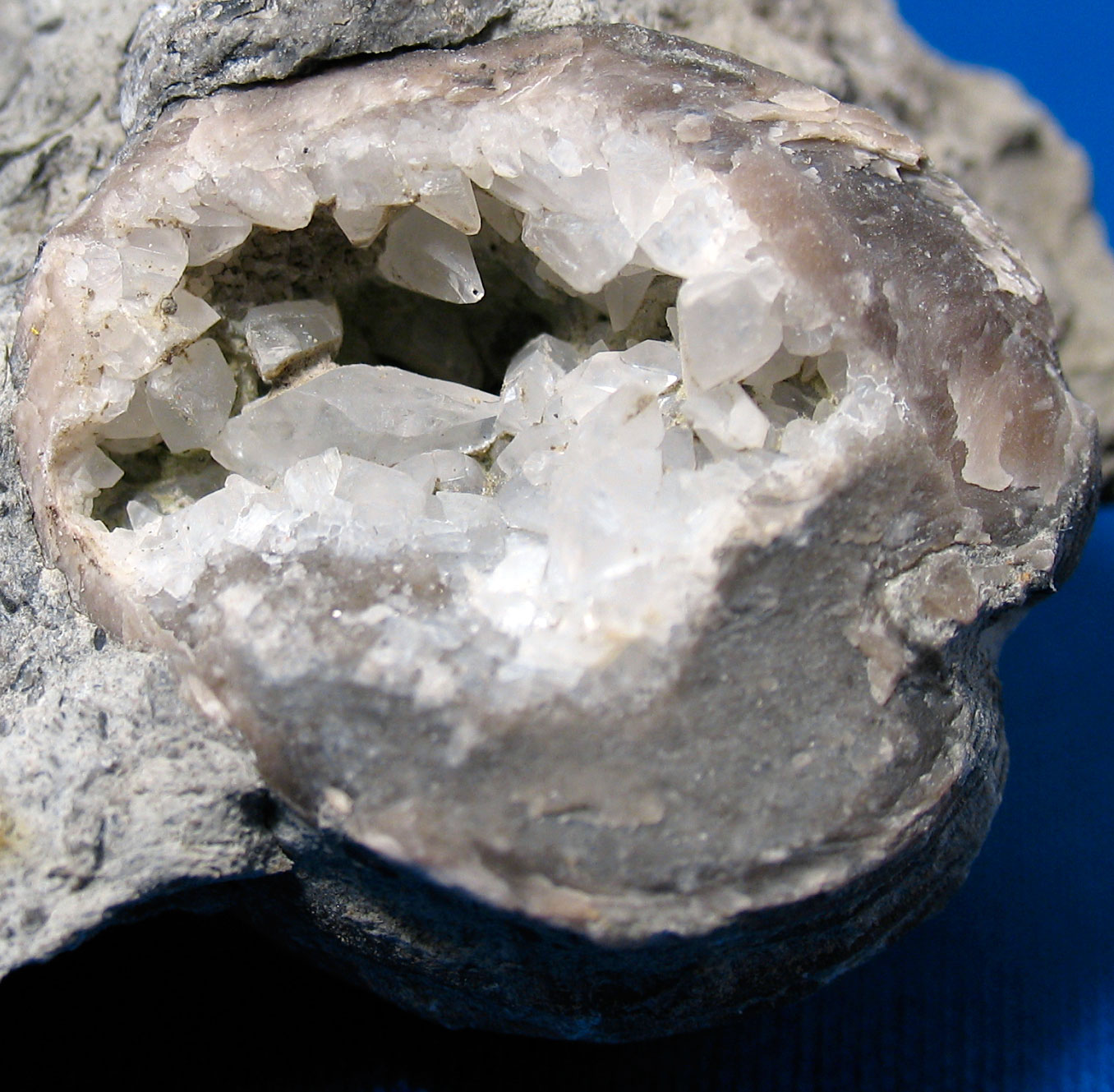
Crystalline Lophophore


This image shows a crystal lophophore probably belonging to a Pseudoatrypa brachiopod.  The fossil is broken at least in half leaving a view of the two internal tapering tube structures.  It looks to be embedded in a chert like material.  Material is from the Jeffersonville Limestone of Clark County, Indiana (Devonian Period).

This is a combination of the two themes on posts the last two days: crystals forming in brachiopod fossils and lophophore structures preserved in brachiopod fossils.  So today the fossil is a crystalline lophophore.

As reader soliussymbiosus (of blog Swimming The Ordovician Seas) pointed out in the comments of the November 7, 2010 posts on "Calcite in Brachiopod Fossils", these crystals are probably quartz.  It makes sense, if chert is composed of silca then the crystals could be silicon dioxide that formed in the cavity.

As a bonus, four more pictures have been adding showing quartz crystals formed in Devonian Period Athyris brachiopods.  They too are found in the Jeffersonville Limestone of Clark County, Indiana.  I apologize for the lighting on these images.  The light was intense because the Pseudoatrypa shown earlier needed to have the crystal chamber illuminated.  The levels on these photos had to be adjusted quite a bit to reveal crystal detail in the fossils.


Monday, November 8, 2010

Lophophores in Devonian Brachiopods

The fossilized feeding structure (lophophore) inside brachiopods is shown in today's post.  These first 5 images are of the Athyris brachiopod found in the Jeffersonville Limestone of Clark County, Indiana.  It existed in the Devonian Period.


The next pictures shows the imprint of a lophophore inside a fossil of a Pseudoatrypa brachiopod.  From the same place and time period as the Athyris shown earlier.
 Last image if of an Orthospirifer again for the same time and location as the previous mentioned brachiopod fossils.

Sunday, November 7, 2010

Calcite in Brachiopod Fossils

Examples of calcite crystals forming inside brachiopod fossils.  In this case two different brachiopod fossils are shown.  The first image shows a Platystrophia ponderosa brachiopod from the Ordovician Period of Kentucky.  Two images following are of Orthospirifer brachiopod fossils from the Devonian Period of Indiana.


The rest are of Platystrophia ponderosa brachiopods.  The image make look slightly different in color, lighting and focus.  Two different Canon cameras were used to test close up abilities.  A Powershot Pro in Super Macro mode and an EOS DSLR with a 50mm macro lens.  Incandescent light was used and the DSLR white balance was not set right making the fossils look yellowish.