Showing posts with label shark tooth. Show all posts

Wednesday, April 2, 2025

Petalodus Shark Tooth Fossil

These pictures show a Petalodus (Hall, 1858) shark tooth fossil. They were found in the Glen Dean Formation of Grayson County, Kentucky USA. The fossils date to the Mississippian Period. Thanks to Kenny for the images.

Monday, January 6, 2025

Edestus Shark Fossil


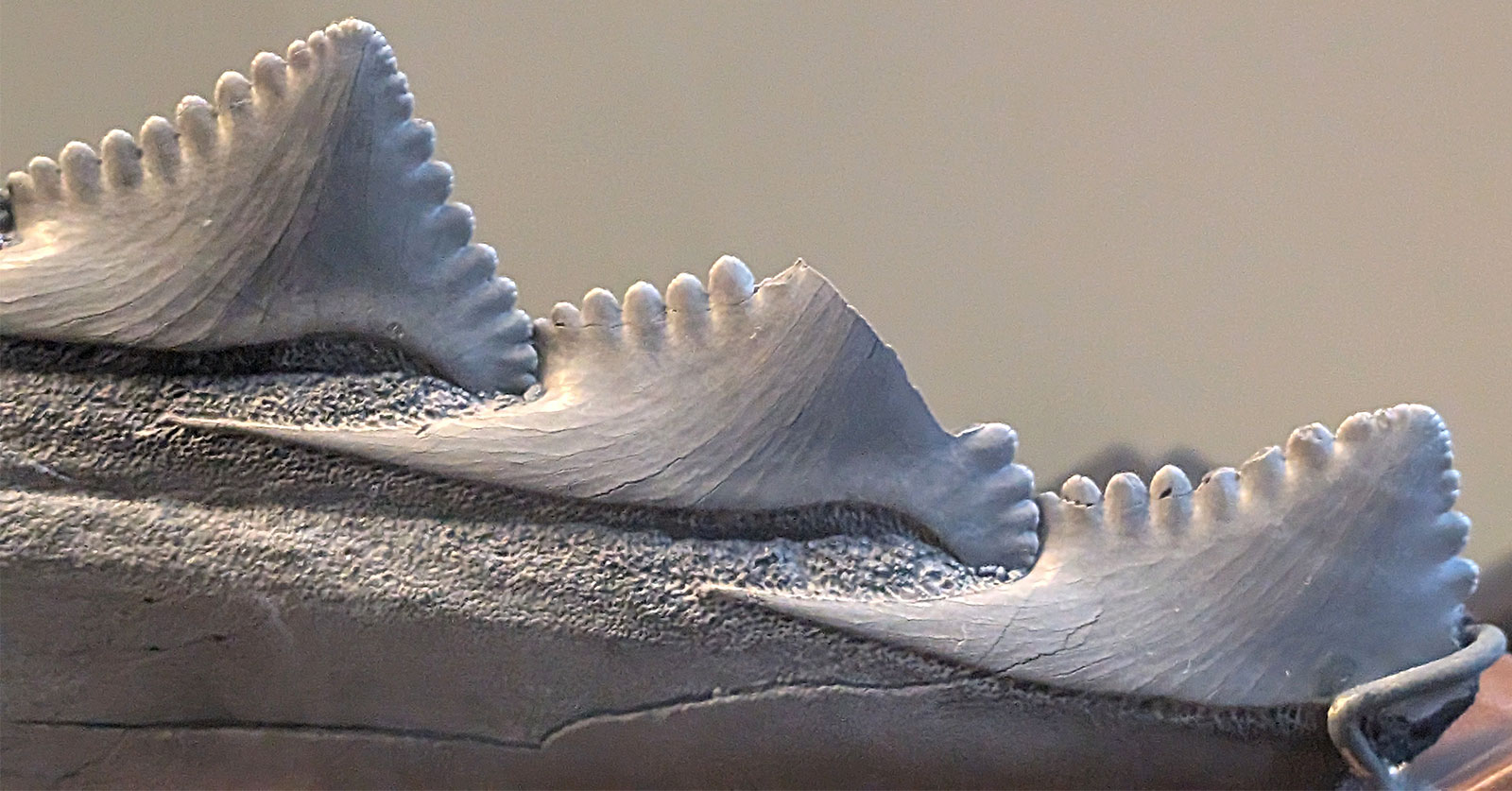
These images are of an Edestus (Leidy, 1856) shark fossil. The animal existed in the Carboniferous Period. Fossil was discovered in Marissa, Illinois, USA. Fossil was on display at the Natural History Museum Vienna (Naturhistorisches Museum Wien) on August 2024.


Saturday, December 21, 2024

Unidentified Paleozoic Shark Tooth Fossil


These pictures show an unidentified shark tooth fossil. It was found in the Salem Limestone of Hardin County, Kentucky USA. The fossils date to the Mississippian Period. Thanks to Kenny for the image.

Sunday, July 28, 2024

Deltodus Shark Tooth Fossil


Picture of what appears to be a Deltodus shark tooth fossil found in the Salem Formation of Hardin County Kentucky USA. It dates to the Mississippian Period. 


Thanks to Kenny for the picture.

Sunday, June 16, 2024

Petalodis Shark Tooth Fossil


The pictures shown in this post are of a freshly found shark tooth fossil from the Glen Dean Formation of Grayson County, Kentucky, USA. It appears to be a Petalodis (Owen, 1840) and dates to the Mississippian Period. This genus was named by the English paleontologist Richard Owen (1804-1892).

Thanks to Kenny for the pictures.


Monday, July 22, 2019

Saivodus ctenacanthus Shark Tooth Fossil


This appears to be a Saivodus ctenacanthus shark tooth (cladodont) fossil. It was found in Crawford County, Indiana USA. Fossil dates to the Mississippian Period.

Thanks to Kenny for image.

Saturday, May 13, 2017

Megalodon 3D Printed Tooth Fossil


I have been printing some more Megalodon shark tooth fossils based off the scanned model found here: http://www.thingiverse.com/thing:1380493

These images show my latest variation where I printed the layers are 0.1 mm so the tooth consists of over 900 layers. I also added a base made with OpenSCAD as well raft printing to make the base more stable. I tried to slow the printing down so the bottom of the tooth is less stringy. It turned out better but still far from perfect. The print took about 6 hours.


Sunday, April 23, 2017

Ptychodus decurrens Shark Tooth Fossil


This image is of a Ptychodus decurrens (Agassiz) shark tooth fossil from the Cretaceous Period. Found in the Chalk of Kent England. Displayed at the British Natural History Museum London as of August 2016.

Learn more here: http://www.chalk.discoveringfossils.co.uk/5%20Ptychodus.htm

Sunday, July 26, 2015

Unidentified Mississippian Period Shark Tooth Fossil


This picture shows an unidentified fossil shark tooth. It was found in the Somerset Shale of the Salem Limestone of Hardin County Kentucky, USA. The fossil dates back to the Mississippian Period.

Thanks to Kenny for the pictures.


Sunday, January 18, 2015

Cantioscyllium decipiens Shark Fossil Tooth


My cousin has been working on some Carlile Shale Formation matrix. It was found in Grant County, South Dakota, USA. He has been carefully extracting the hidden fossil shark teeth.  The fossils date to the Cretaceous Period (Turonian). The picture shows what appears to be a Cantioscyllium decipiens tooth fossil. Field of view (FOV) is about 3 mm.

Thanks to Kenny for the image.

Info Sources:
http://www.chalk.discoveringfossils.co.uk/5%20Cantioscyllium.htm

http://fossilsofnj.com/shark/c_decipiens.htm

Friday, January 16, 2015

Extinct Goblin Shark Tooth Fossil


My cousin has been extracting fossils from some Carlile Shale Formation matrix. It was found in Grant County, South Dakota, USA. He has been carefully breaking it down to extract the hidden fossil shark teeth.  The fossils date to the Cretaceous Period (Turonian). The picture shows what appears to be a Scapanorhynchus raphiodon. Field of view (FOV) is about 5 mm.

Thanks to Kenny for the image.

Info Source:
http://en.wikipedia.org/wiki/Scapanorhynchus

http://www.elasmo.com/frameMe.html?file=genera/cretaceous/scapanorhynchus.html&menu=bin/menu_genera-alt.html

Friday, December 26, 2014

Scapanorhynchus raphiodon Fossil Shark Teeth


My cousin has been extracting fossils from a piece of Carlile Shale Formation matrix. It was found in Grant County, South Dakota, USA. He has been slowly breaking it down to reveal the hidden fossil shark teeth.  The fossils date to the Cretaceous Period (Turonian). The picture shows Scapanorhynchus raphiodon shark teeth fossils.


Thanks to Kenny for the image.

Info Source:
http://en.wikipedia.org/wiki/Scapanorhynchus

http://www.elasmo.com/frameMe.html?file=genera/cretaceous/scapanorhynchus.html&menu=bin/menu_genera-alt.html

Thursday, December 25, 2014

Merry Christmas 2014


I hope anyone reading this has a Merry Christmas. May the new year bring good health and fun fossil finds!

This year's design features three fossils. A fern fossil from Pennsylvanian Period for St. Clair Pennsylvania, a Pliocene sand dollar fossil from Mexico makes up the ornaments, and the star consists of a Cretaceous shark teeth from South Dakota.

Saturday, December 13, 2014

Fossil Shark Teeth of South Dakota


My cousin recently received some matrix from the Carlile Shale Formation of Grant County, South Dakota, USA. He has been carefully breaking it down to extract the hidden fossil shark teeth.  The fossils date to the Cretaceous Period (Turonian). We have been trying to identify what they are. So far names I am considering are Leptostyrax, Cretalamna (Otodus), and Cretodus.

Thanks to Kenny for images.

Info Sources:
http://www.thefossilforum.com/index.php?/topic/41692-south-dakota-matrixteethclaws/

http://oceansofkansas.com/KS-sharks.html

Wednesday, August 28, 2013

Otodus obliquus Shark Tooth Fossil


Pictured is an Otodus obliquus shark tooth fossil found in Khouribga, Morocco. It dates to the Eocene. Learn more on wikipedia.org.

The fossil is on display at the geology department at Indiana University Southeast (IUS) of New Albany, Indiana as of August 2013.

Monday, August 26, 2013

New Albany Shale Shark Tooth


Here is a picture of a shark tooth found in the New Albany Shale of southern Indiana, USA. This layer dates to the Late Devonian Period.

The New Albany Shale is desolate of fossils as the sea at that time was thought be a low oxygen environment. When you look at the shale it is mostly black thin layers that peel off. Sometimes it has a rusty colored coating on the layer and it can smell like sulfur. Bands or nodules of pyrite can be found it as well. When fossils are found it is mostly small brachiopods and fossilized wood. It is possible that Cladoselache shark fossils can be found in this layer as well. See this web posting.

So seeing a nicely shaped shark's tooth in the layer is quite a surprise. The fossil is on display at the geology department at Indiana University Southeast (IUS) of New Albany, Indiana as of August 2013. It was listed as being found in 2004 by Jessica Kinder and Dale Lind.

Sunday, July 8, 2012

Unknown Mississippian Shark Fossil

Unidentified shark fossil found in the Indian Springs or Haney Formation of Crawford County, Indiana, USA. This creature swam around in the Upper Mississippian seas. It might be a Psammodus or Helodus tooth fragment. Still researching.


Monday, November 28, 2011

Saivodus striatus Shark Tooth


This remarkable find of a Paleozoic shark tooth in central Kentucky is a Saivodus striatus.  This type of fossil was originally described by Agassiz in 1843 as the genus Cladodus being a member of the Ctenacanthiformes. Fossil was found in Hardin County (?) of Kentucky in the Mississippian Period Salem Limestone (Meramecian), member of Borden Formation.

The name was changed in a Journal of Vertebrate Paleontology (26(2):253-266. 2006) COMMENTS ON THE SELACHIAN GENUS CLADODUS AGASSIZ, 1843 by Christopher J. Duffin and Michal Ginter.

Here is a link to more pictures of Saivodus found in the Viséan, Mountain Limestone, vicinity of Armagh, Northern Ireland: CLICK HERE

Here is a link to another found in a cave in Tennessee: CLICK HERE

Here is a link to the shark fossils found at Mammoth Cave, Kentucky in 2020: CLICK HERE

Fossil was found and prepped by Mark Palatas of Louisville.


Thursday, August 11, 2011

Symmorium Shark Tooth


Symmorium reniforme? shark tooth fossil found in the Indian Springs Formation of Crawford County, Indiana. The shark swam around in Mississippian Period seas. Fossil is quite small thus magnified 80x with a 4 mm field of view.  This is my second tooth find with the first being a Deltodus sp. that can be seen in this posting: CLICK HERE.


Monday, August 30, 2010

Japanese Shark Teeth Web Site

My knowledge of shark teeth fossils is very limited so finding this Internet site in Japan is a real treasure: J-elasmo by Dr. Fumio Nakagawa (Ota-ku, Tokyo).

It is good to set objectives and two of my current ones are: 1) find a Troosticrinus (Shumard, 1866) blastoid and 2) collect a Mississippian Period shark tooth.  This web site can help with the second objective in providing images of what to look for and which layers to find the fossil.  Wow, the collection of Indiana and Kentucky Mississippian Period shark teeth is impressive!


Symmorium
Stethacanthid Shark - Mississippian Period
Drawn by Dmitry Bogdanov
Courtesy of Wikipedia Commons


Three web pages on the site were of particular interest.  Mississippian Period fossil teeth found in three Indiana locations on this page.  The first site is in Washington County, Indiana in the Harrods Limestone Formation with Symmorium, Hybodus, Orodus greggi, Petalodus, Polyrhizodus, Lisgodus, Chomatodus multiplicatus, Helodus, Deltodus, Lagarodus, Venustodus argutus, and Phoebodus specimens being found.

Site 2 is also in Washington County, Indiana in the Salem Limestone.  Specimens found there are: Chomatodus, Antliodus, Campodus, Sandolodus, and Psammodus.

Site 3 found in Washington County, Indiana in the Haney Limestone Formation.  Specimens Symmorium and Chomatodus being found.

The next web page lists more Upper Mississippian Period shark teeth but this time from Crawford County, Indiana.  Specimens found in the Haney Formation: Symmorium, Hybodus, Orodus, Campodus, Petalodus, Fissodus, Tanodus polymorphus, Helodus, Sandolodus carbonarias, Psammodus, and Venustodus.  Found in the Indian Springs Formation: Symmorium reniforme, Antliodus, Arpagodus, Venustodus argutus, Petrodus, Sandlodus, and Deltodus.

The last web page is of Middle Mississippian Period sharks teeth found in Hardin County, Kentucky.  These teeth were found in the Salem/Harrodsburg Limestone.  Identified as Campodus, Hybodus, Orodus, Phoebodus, Chomatodus multiplicatus, Helodus, Sandolodus, and Psammodus.

This website is a treasure trove of pictures of fossil sharks teeth found in Indiana and Kentucky. Those images represent just a small fraction of the information about sharks on this impressive web site.

Here are links to locally collected shark teeth posted on the KYANA Geological Society web site:

http://www.kyanageo.org/Fossils/mississippian/vertebrata/4670---Petalodus-acuminatus.jpg
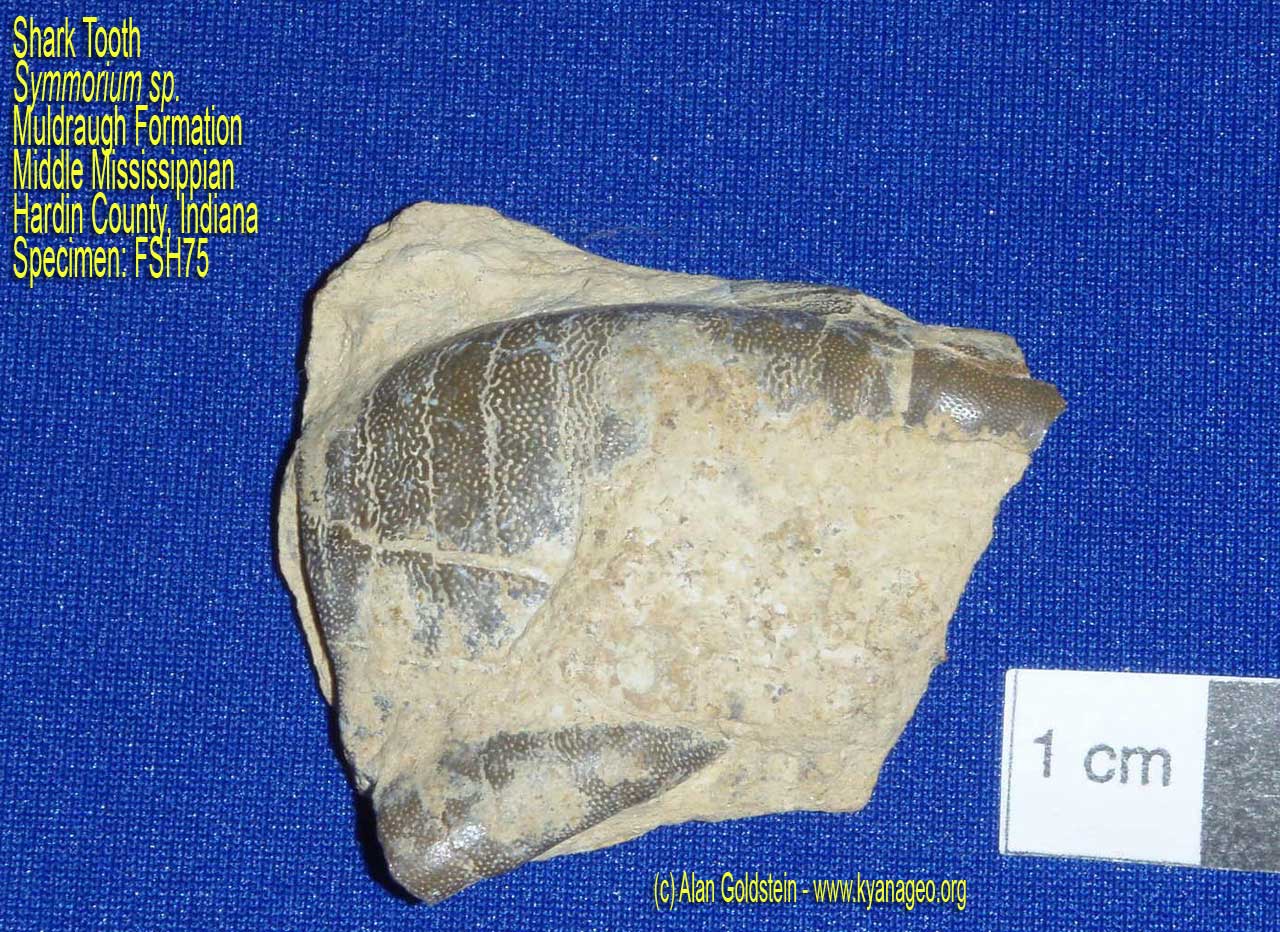
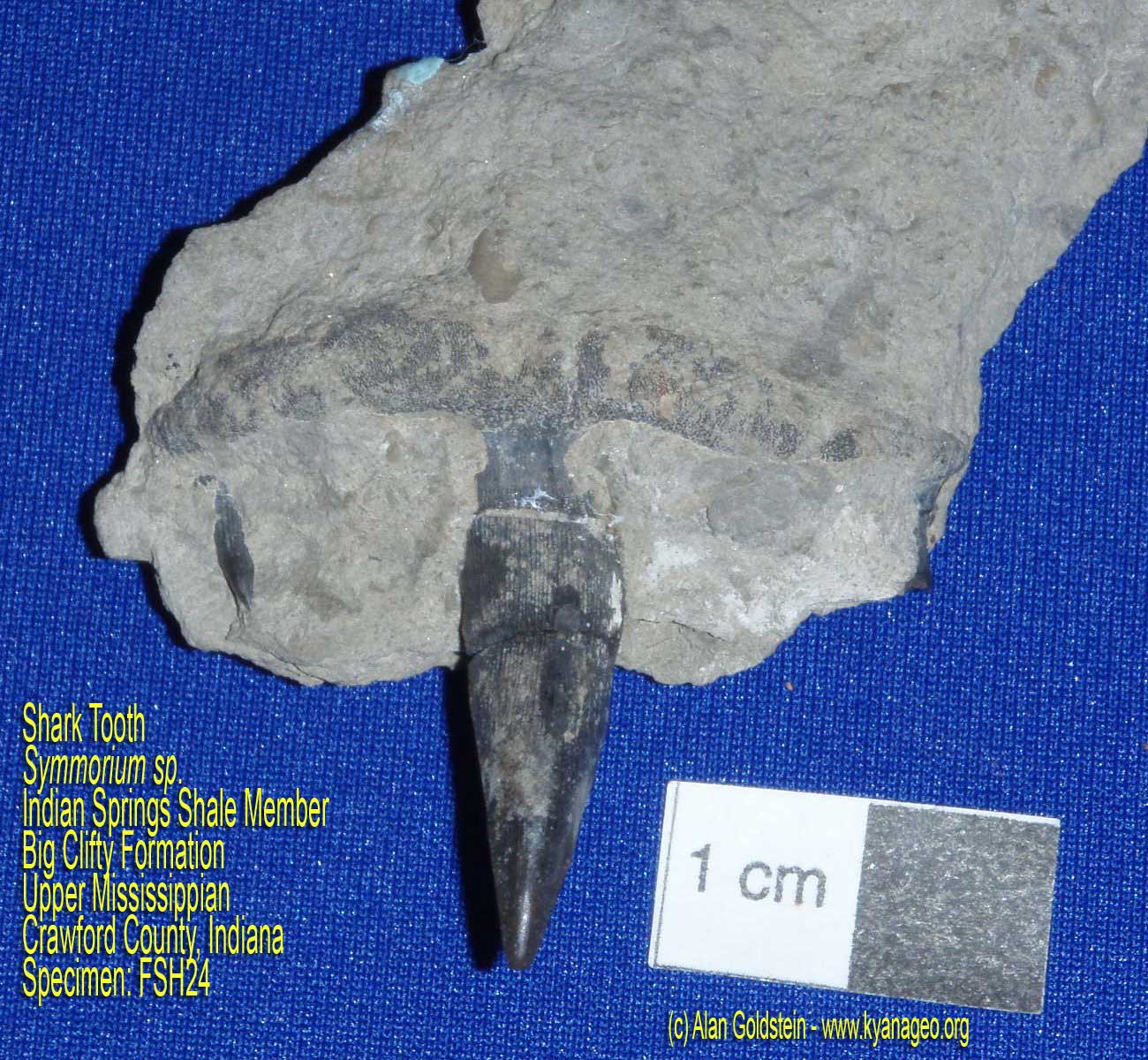
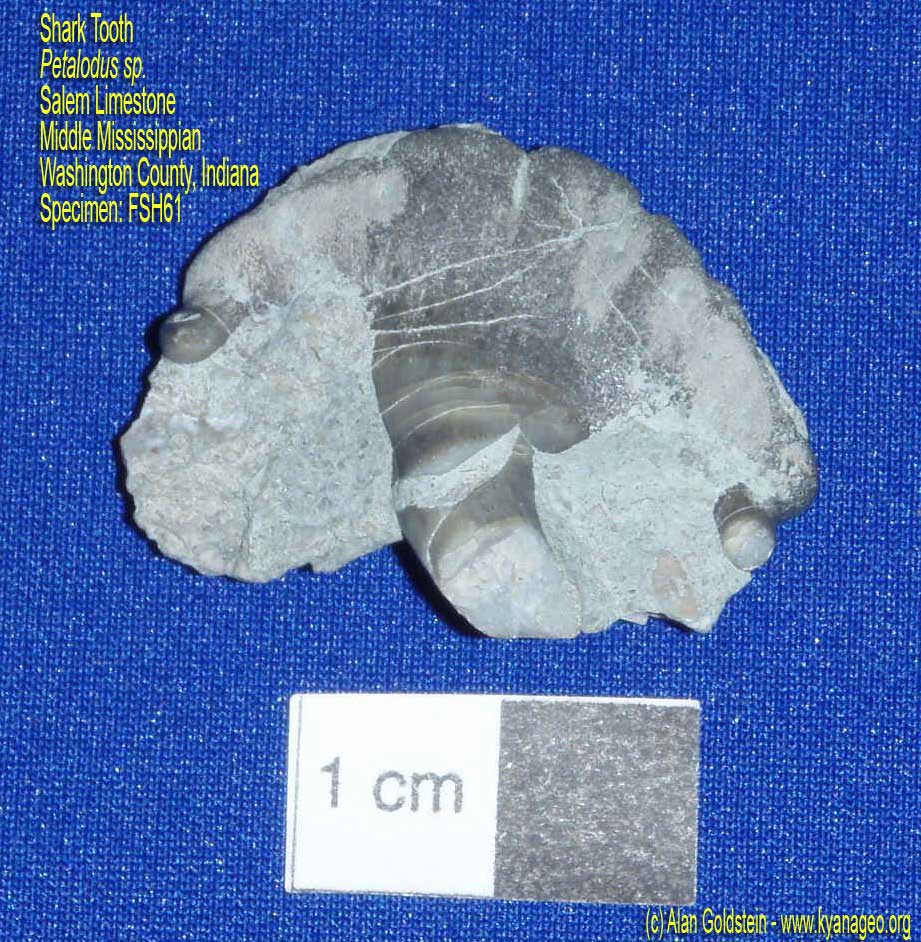
http://www.kyanageo.org/Fossils/mississippian/vertebrata/FSH75_Petalodus.jpg
http://www.kyanageo.org/Fossils/mississippian/vertebrata/FSH24_Symmorium.jpg
http://www.kyanageo.org/Fossils/mississippian/vertebrata/FSH61_Symmorium.jpg

UPDATE (9/7/2019): Changed web address for Japanese site that changed hosts.