Tuesday, December 17, 2019

Protoceratops Dinosaur Egg Fossil


Here is an image of a Protoceratops andrewsi dinosaur egg fossil. It was found in Mongolia. The dinosaur would have existed in the Cretaceous Period. Fossil was on display at The Museo Civico di Storia Naturale di Milano (Milan Natural History Museum), Italy as of August 2019.


Sunday, December 15, 2019

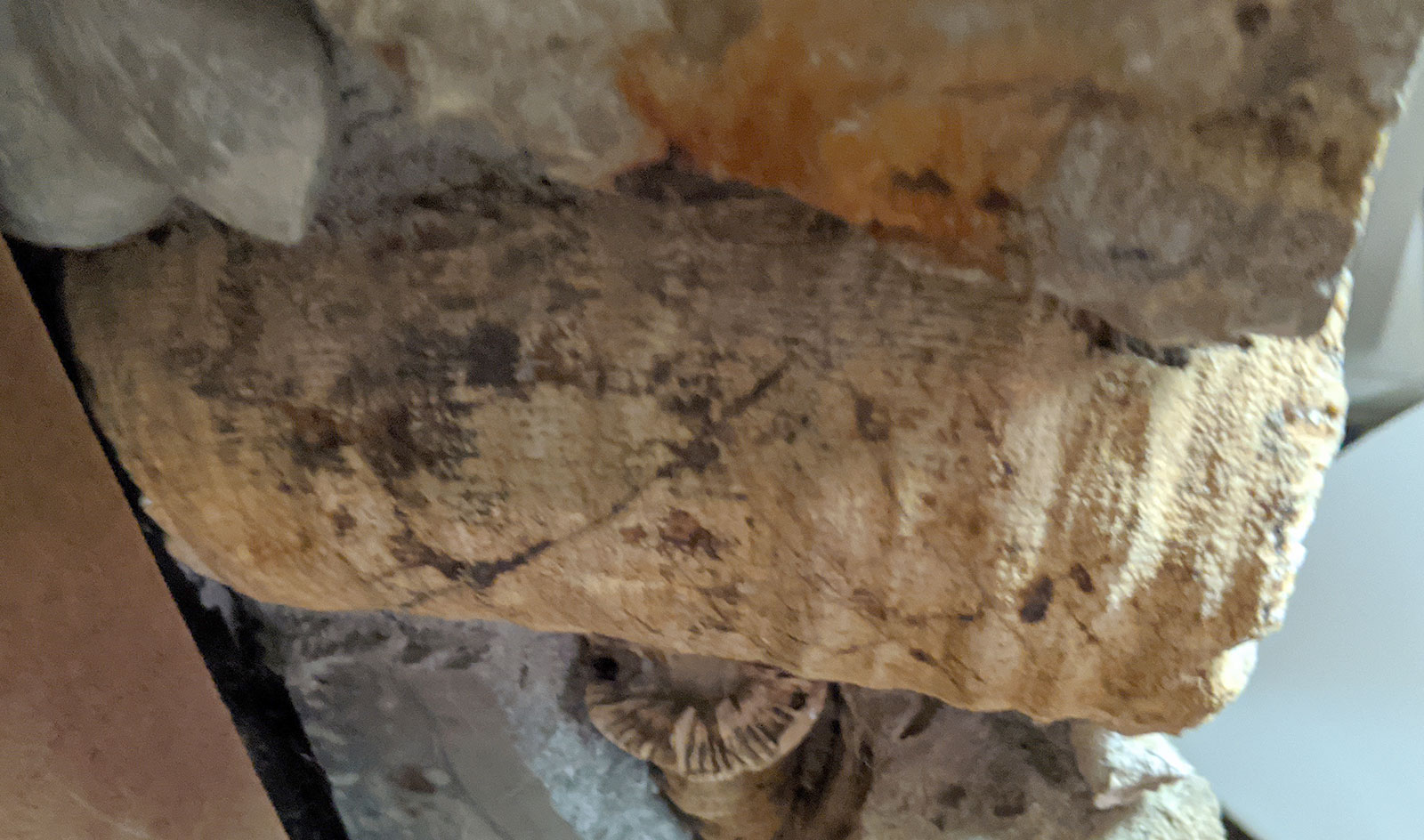
Large Horn Coral Embedded in a Fossil Fireplace


One of the largest horn coral fossils known to have existed was the Siphonophrentis elongata (Rafenesque & Clifford, 1820). When you find a piece of one these fossils you know it. It would be amazing to find one almost fully intact at this size. Fossil was probably found in the Jeffersonville Limestone of Clark County, Indiana, USA. This creature would have existed in the Devonian Period.

Second image is of the side view and is probably about 20 cm long and 8 cm in diameter.


This fossil is part of large collection of fossils that make up a large fireplace. The fossils are from a variety of places. Unfortunately, the creators of the fireplace have passed away making it difficult to determine the exact location of where this specimen is from.

Saturday, December 14, 2019

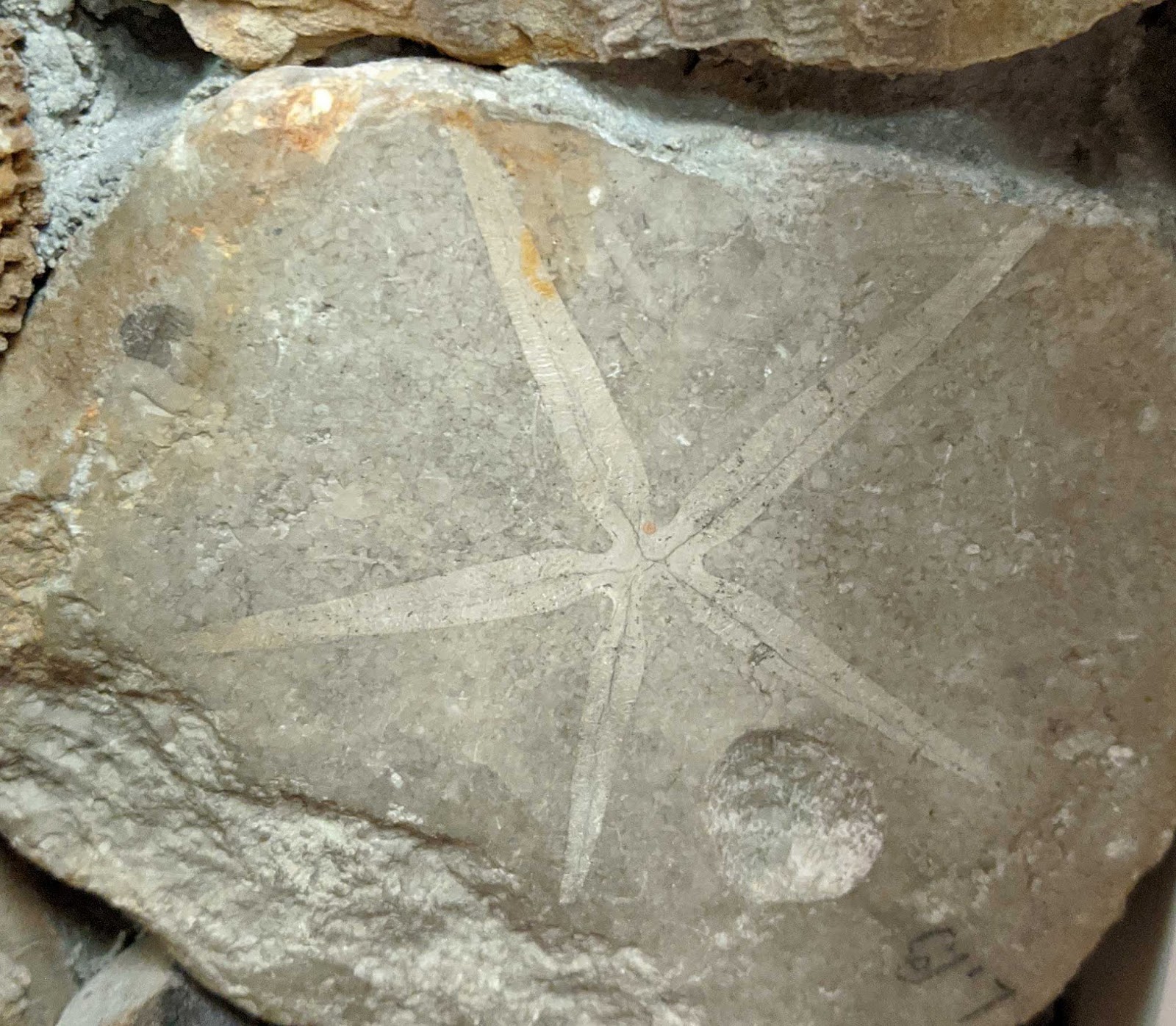
A Bryozoan Fossil That Looks Like a Starfish


The Evactinopora quinqueradiata (Ulrich, 1890) bryozoan fossil is quite unique in that its cross section looks more like starfish than a bryozoan. This one is part of a very unique fireplace in Louisville, Kentucky, USA. It is made up a lot of fossils from a variety of places. Unfortunately, the creators of the fireplace have passed away making it difficult with identifications and where the specimens are from. The fossil was once part of the Lucien Pearson Beckner (1872-1963) collection. Colonel Beckner was director of the Natural History Museum at the Louisville Free Public Library.

The species was named by Edward Oscar Ulrich (1857-1944) in 1890 in the Illinois Geological Survey report.

Evactinopora grandis (Meeks & Worthen, 1868) bryozoan fossils like this are found in the Burlington Formation of Illinois and Missouri. This specimen is a five ray creature and at least 10 cm in diameter. It dates to the Mississippian Period (Osagean Series).

Learn more about these types of creatures at this website: http://lakeneosho.org/Evactinopora/index.html


Thanks to Kenny for identifying this fossil.

 UPDATE (12-4-2022): This appears to be an Evactinopora quinqueradiata (Ulrich, 1890) and not the E. grandis (Meeks & Worthen, 1868). Learn more at http://lakeneosho.org/Evactinopora/quinqueradiata.html