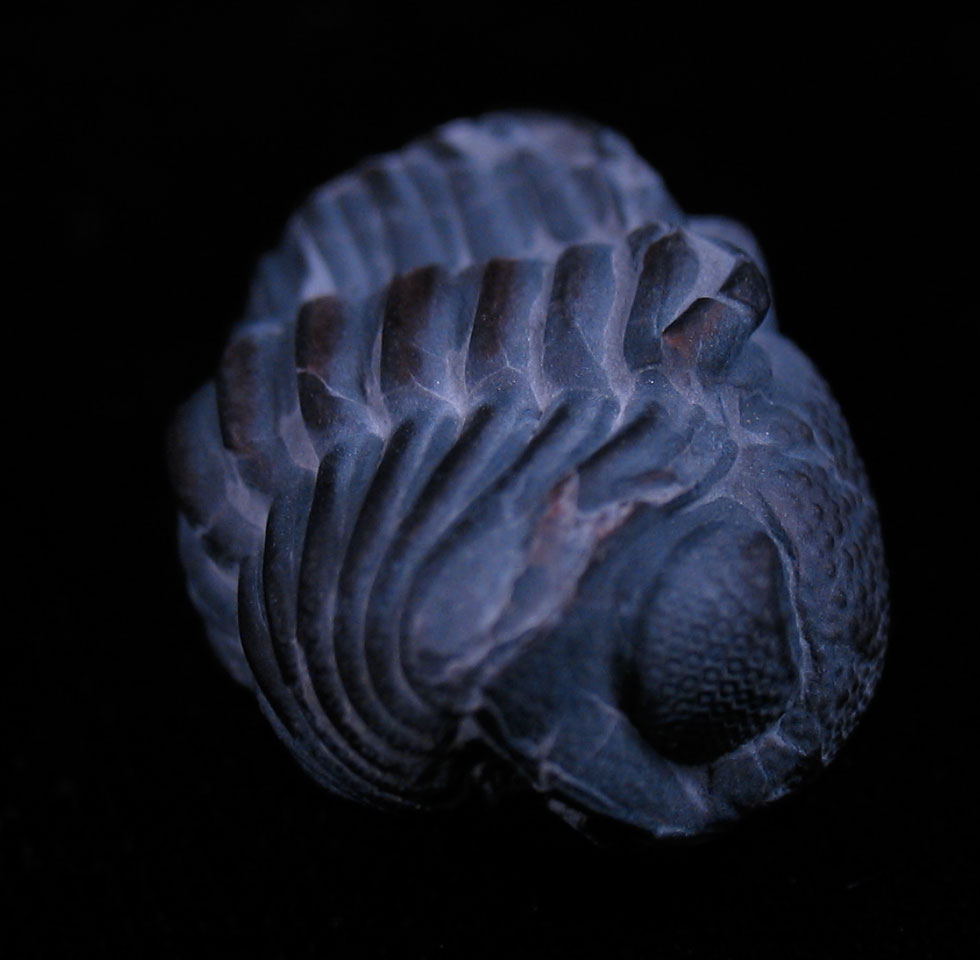
These pictures of recently cleaned trilobite fossils. They appear to all be Phacops sp. from the Devonian Period. My friend Dave at the Views of the Mahontango blog left us with some fossils in matrix and stand-alone fossils to be cleaned to see if any more detail could be revealed. My cousin Kenny and I worked on the group of fossils for hours to get some of the specimens in relatively clean shape. With the investment of more time, careful removal of all the matrix from the thorax segments and around the details in the cephalon/pygidium could be achieved.
Dave may have told me what these fossils were or where they were from but if I do not write things down I tend to forget. These group fossils I would guess are from the Silica Shale at Sylvania, Ohio. See his post: CLICK HERE. Check his blog in the future for more info about these fossils.
Tools used were electric engraver, air powered micro-scribe, needle tools, air abrasive cleaner, water/toothbrush, and diamond saw. After all the cleaning work was done, it was neat to see the results. Yet again, I did not photograph the before pictures to show what shape they were in before we started cleaning. As usual, we have to find windows of free time to work and the focus is getting the items cleaned.
One thing I remember from each cleaning session is the smell of respirator. After wearing the safety device for long periods while operating the air abrasive system, it leaves a distinct aroma of rubber/plastic.
These fossils will get a little more cleaning before being packed up and shipped back to their collection home. Woo hoo!