Showing posts with label carboniferous. Show all posts

Sunday, June 15, 2025

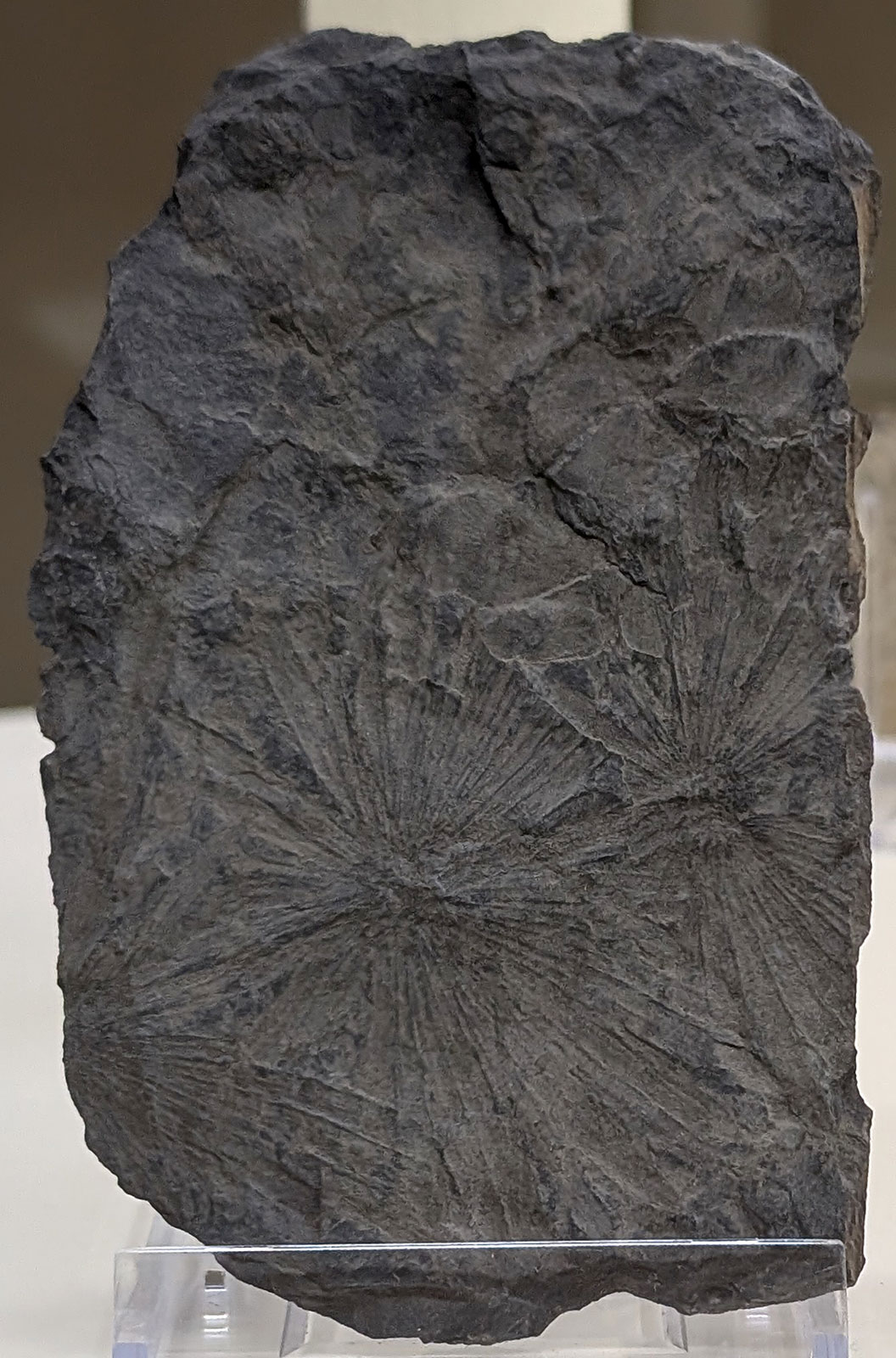
Pleurojulus Millipede Fossil


This image is of a Pleurojulus sp (Fritsch, 1899) millipede fossil on display at Natural History Museum Vienna (Naturhistorisches Museum Wien) (August 2024). It dates to the Late Carboniferous Period. The fossil was found in Nýřany Czech Republic.

Tuesday, June 10, 2025

Melonechinus multipora Sea Urchin Fossil


This image is of a Melonechinus multipora (Norwood & Owen, 1846) sea urchin fossil on display at Natural History Museum Vienna (Naturhistorisches Museum Wien) (August 2024). It dates to the Carboniferous Period (about 340 million years ago). The fossil was found in St. Louis, Missouri, USA. 

Monday, June 9, 2025

Archaeocidaris Fossil from Texas


This image is of an Archaeocidaris sp (McCoy, 1844) sea urchin fossil on display at Natural History Museum Vienna (Naturhistorisches Museum Wien) (August 2024). It dates to the Late Carboniferous Period (about 290 million years ago). The fossil was found in Brown County Texas USA.

Saturday, January 25, 2025

Yogoniscus gulo Fossil


This image is of a Yogoniscus gulo (Lowney, 1980) fish fossil. The animal existed in the Serpukhovian Stage Carboniferous Period (326-318 million years ago). Fossil was discovered in Bear Gulch, Montana, USA. Fossil was on display at the Natural History Museum Vienna (Naturhistorisches Museum Wien) on August 2024.

Wednesday, January 22, 2025

Yogoniscus gulo Fish Fossil

This image is of a Yogoniscus gulo (Lowney, 1980) fish fossil. The animal existed in the Serpukhovian Stage Carboniferous Period (326-318 million years ago). Fossil was discovered in Bear Gulch, Montana, USA. Fossil was on display at the Natural History Museum Vienna (Naturhistorisches Museum Wien) on August 2024.

Tuesday, January 21, 2025

Caridosuctor populosum Coelacanth Fossil


This image is of a Caridosuctor populosum (Lund & Lund, 1984) coelacanth fossil. The animal existed in the Serpukhovian Stage Carboniferous Period (326-318 million years ago). Fossil was discovered in Bear Gulch, Montana, USA. Fossil was on display at the Natural History Museum Vienna (Naturhistorisches Museum Wien) on August 2024.

Monday, January 6, 2025

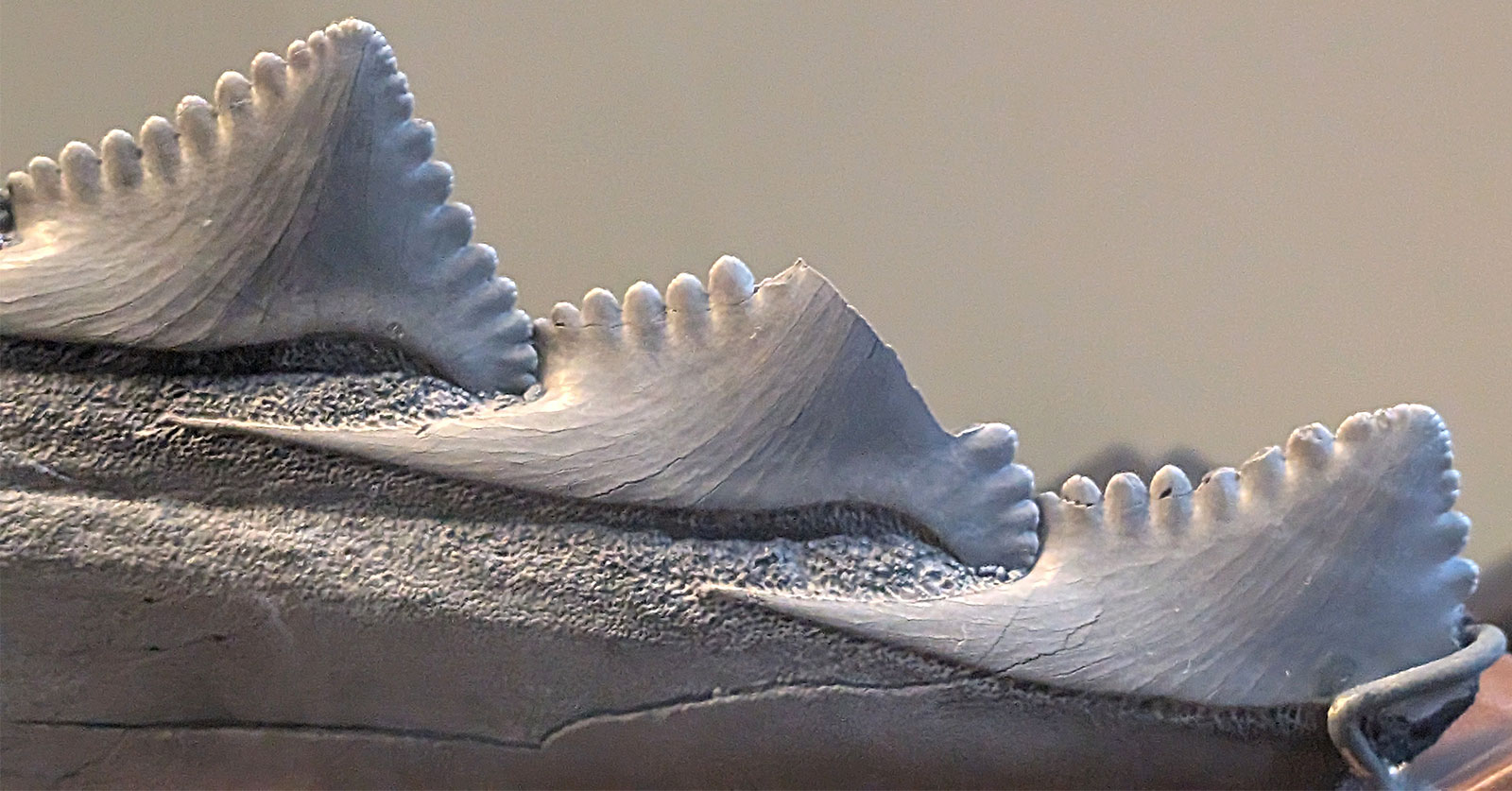
Edestus Shark Fossil


These images are of an Edestus (Leidy, 1856) shark fossil. The animal existed in the Carboniferous Period. Fossil was discovered in Marissa, Illinois, USA. Fossil was on display at the Natural History Museum Vienna (Naturhistorisches Museum Wien) on August 2024.


Thursday, January 2, 2025

Archaeocidaris Sea Urchin Fossil


This image is of an Archaeocidaris sea urchin fossil. The animal existed in the Carboniferous Period. Fossil was discovered in Brown County Texas, USA. Fossil was on display at the Natural History Museum Vienna (Naturhistorisches Museum Wien) on August 2024.

I posted another specimen found at this locality in 2017 on display at Mace Brown Museum of Natural History is located at the College of Charleston South Carolina USA.

Sunday, December 15, 2024

Capetus palustris Fossil


This picture is of a Capetus palustris (Steen, 1938) tetrapod jaw fossil. It existed during the Carboniferous period. The fossil was found in Nýřany, Tschechien, Czech Republic. Fossil was on display at the Natural History Museum Vienna (Naturhistorisches Museum Wien) on August 2024.

Sunday, November 24, 2024

Fusulindia Fossil From the Alps


This picture is of a polished fusulinida fossils. They existed during the Carboniferous period. The fossils were found in Carnic Alps, Austria. Fossil was on display at the Natural History Museum Vienna (Naturhistorisches Museum Wien) on August 2024.

Saturday, November 23, 2024

Polished Crinoid Column Fossil


This picture is of a polished crinoid column fossils. It existed during the Carboniferous period. The fossil was found in Zollnersee Carinthia, Austria. Fossil was on display at the Natural History Museum Vienna (Naturhistorisches Museum Wien) on August 2024.


Monday, November 18, 2024

Acantherpestes Millipede Fossil

This picture is of an Acantherpestes (Meek & Worthen) millipede fossil. Genus may now be Myriacantherpestes (Burke, 1979). It existed during the Carboniferous period. The fossil was found in Nýřany Czech Republic. Fossil was on display at the Natural History Museum Vienna (Naturhistorisches Museum Wien) on August 2024.

Sunday, November 17, 2024

Lithomantis bohemica Mayfly Fossil


This picture is of a Lithomantis bohemica (Novák) mayfly wing fossil. It existed during the Carboniferous period. The fossil was found in Stradonice Czech Republic. Fossil was on display at the Natural History Museum Vienna (Naturhistorisches Museum Wien) on August 2024.

Saturday, November 16, 2024

Uronectes kreicii Fossil


This picture is of an Uronectes kreicii crustacean fossil. It existed during the Carboniferous period. The fossil was found in Nýřany Czech Republic. Fossil was on display at the Natural History Museum Vienna (Naturhistorisches Museum Wien) on August 2024.

Wednesday, September 4, 2024

Annularia longifolia Plant Fossil


This image is of the Annularia longifolia plant fossil. The plant existed in the Carboniferous Period.

Picture taken at Museo di Geologia e Paleontologia Florence Italy (Università degli Studi di Firenze) in August 2024.

Wednesday, March 8, 2023

Cyathocrinites tiaraeformis Crinoid Fossil


Cyathocrinites tiaraeformis (Troost, 1850) crinoid calyx fossil Plate 7 figures 15-17 drawn by Major Adolphus Heiman (1809-1862) from A Critical Summary of Troost's Unpublished Manuscript on the Crinoids of Tennessee by Elvira Wood 1909. This crinoid was found in the Carboniferous Period Keokuk horizon of the Tullahoma Formation of White's Creek Springs, Davidson County Tennessee USA. It was assigned U.S. National Museum number 54236 and identified as a holotype. Elvira Wood lists it as Ichthyocrinus tiaraeformis (Troost) Hall.

Pictures of the actual Troost fossil at the Smithsonian shown below.

Image courtesy of the Smithsonian Institution Specimen Catalog Number:  USNM PAL 54236 Specimen GUID:         http://n2t.net/ark:/65665/390e41ca3-405f-4e83-91c9-5e494bfd3e5b Specimen housed in the collections of the Department of Paleobiology, National Museum of Natural History, Smithsonian Institution 
 
 
Image courtesy of the Smithsonian Institution Specimen Catalog Number:  USNM PAL 54236 Specimen GUID:         http://n2t.net/ark:/65665/390e41ca3-405f-4e83-91c9-5e494bfd3e5b Specimen housed in the collections of the Department of Paleobiology, National Museum of Natural History, Smithsonian Institution
 

Image courtesy of the Smithsonian Institution Specimen Catalog Number:  USNM PAL 54236 Specimen GUID:         http://n2t.net/ark:/65665/390e41ca3-405f-4e83-91c9-5e494bfd3e5b Specimen housed in the collections of the Department of Paleobiology, National Museum of Natural History, Smithsonian Institution


Tuesday, March 7, 2023

Cyathocrinites roemerii Crinoid Fossil


Cyathocrinites roemerii (Troost, 1850) crinoid calyx fossil Plate 6 figure 11 drawn by Major Adolphus Heiman (1809-1862) from A Critical Summary of Troost's Unpublished Manuscript on the Crinoids of Tennessee by Elvira Wood 1909. This crinoid was found in the Carboniferous Period aged in the St. Louis Limestone of  Duck River, Maury County Tennessee USA. It was assigned U.S. National Museum number 39944 and identified as a holotype. Elvira Wood refers to as Scaphiocrinus huntsvillae  (Worthen).

Gerard Troost (1776-1850) does not list who the species is named after but it appears was one of two geologist brothers Friedrich Adolph Roemer (1809-1869) or Carl Ferdinand von Roemer (1818-1891).

UPDATE [December 2024]: The fossil was named after the younger Ferdinand Roemer. I found his 1860 book Die silurische Fauna des westlichen Tennessee / Eine palaeontologische Monographie in which he visited Troost in 1847 in Nashville. He writes (translated from German to English): "When I returned from Texas in the summer of 1847 to Nashville, the capital of the state of Tennessee, and found a very friendly welcome and valuable instruction on the geological conditions of the country from Dr. G. Troost, who has made a great contribution to the natural history of the western states, my attention was particularly drawn to the beautifully preserved Silurian fossils in the excellent man's rich paleontological collection..."

Picture of the real fossil is below which is stored at the Smithsonian. Their database shows it is a holotype called Dinotocrinus roemeri (Troost in Wood, 1909).

Image courtesy of the Smithsonian Institution Specimen Catalog Number:  USNM PAL 39944 Specimen GUID:         http://n2t.net/ark:/65665/39ac4d2dd-9845-4878-8d40-90204c177ae3 Specimen housed in the collections of the Department of Paleobiology, National Museum of Natural History, Smithsonian Institution


Thursday, August 25, 2022

Archimedes reversus Bryozoa Fossil


This fossil was displayed on August 2022, at the Harvard Museum of Natural History in Cambridge, Massachusetts, USA. The bryozoa fossil called Archimedes reversus. This specimen was found in Illinois. It dates to the Mississippian/Carboniferous Period.


https://hmnh.harvard.edu/

Sunday, February 20, 2022

Muensteroceras (Goniatites) indianensis Drawing from 1891


This image was scanned and Photoshop enhanced from Plate XIX figure 2 in Indiana Department of Geology and Natural Resources Seventeenth Annual Report 1891 by  Sylvester Scott Gorby (1848-1930). It is described on page 700 as a new species Goniatites indianensis (Miller, 1891). Fossil found in the lower Carboniferous Period.

"The species is founded upon two sandstone casts from the Knobstone or Waverly Group, of Clark County, Indiana, now in the State Museum of Indianapolis. The smaller specimen is only half the diameter of the one illustrated." The illustration measures about 30 mm across. Below is dorsal view shown in figure 3.


New name:Muensteroceras indianense

http://www.fossilworks.org/cgi-bin/bridge.pl?a=taxonInfo&taxon_no=278460

Saturday, February 19, 2022

Prodromites (Goniatites) gorbyi Drawing


This image was scanned and Photoshop enhanced from Plate XV figure 1 in Indiana Department of Geology and Natural Resources Seventeenth Annual Report 1891 by  Sylvester Scott Gorby (1848-1930). It is described on page 700 as a new species Goniatites gorbyi (Miller, 1891). "Collected by R. A. Blair, in the lower part of the Choteau limestone or Waverly Group, at Pin Hook Bridge, in Pettis County, Missouri, and now in the collection of the author (Samuel Almond Miller [1836-1897]). The specific name is in honor of Prof. S. S. Gorby, State Geologist. The plate lists "FR BANK DEL" so that is who created the image.

This genus was renamed in 1901 in Prodromites, A New Ammonite Genus from the Lower Carboniferous by James Perrin Smith (1864-1931) and Stuart Weller (1870-1927) in The Journal of Geology April-May 1901 Volume 9, Number 3 pages 255-266. The write on page 259, "Neither the description nor the figure given by Miller of this type is accurate, the drawings of the septa being entirely too generalized." The specimen is now at the Paleontological Collection Walker Museum University of Chicago No. 6208. Diameter 114 mm, height of last whorl 64 mm, height of last whorl from the proceeding 35 mm. They put a picture on Plate VI, figure 1 shown below:

It does not appear the Walker Museum exists any more. The building is now used by the English department at the university. https://www.lib.uchicago.edu/collex/exhibits/building-long-future/george-c-walker/

Source:

Smith, James Perrin, and Stuart Weller. “Prodromites, a New Ammonite Genus from the Lower Carboniferous.” The Journal of Geology, vol. 9, no. 3, The University of Chicago Press, 1901, pp. 255–66, http://www.jstor.org/stable/30056692.