Showing posts with label plant. Show all posts

Monday, October 20, 2025

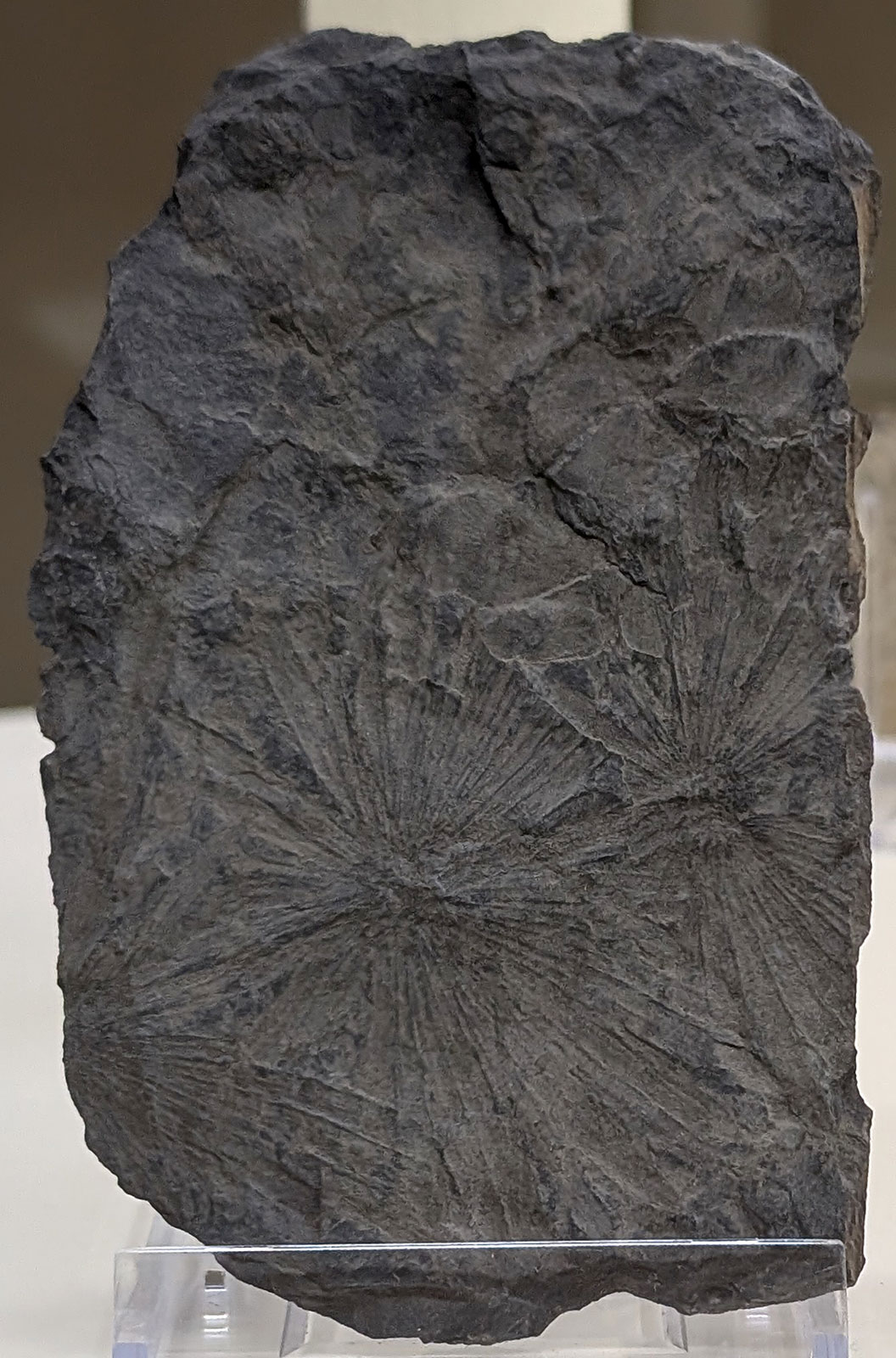
Cycadopteris brauniana Plant Fossil


This image is of a Cycadopteris brauniana plant fossil. It was found in Verona, Italy. 

 
Picture taken at Museo di Geologia e Paleontologia Florence Italy (Università degli Studi di Firenze) in August 2024.


Sunday, October 19, 2025

Pterophyllum rectum Plant Fossil


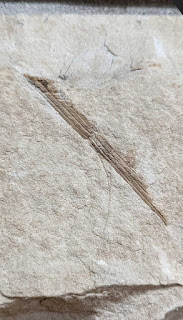
This image is of a Pterophyllum rectum (Stur, 1885) plant fossil. It was found in Lunz, Austria. The fossil dates to the Late Triassic Period.

 
Picture taken at Museo di Geologia e Paleontologia Florence Italy (Università degli Studi di Firenze) in August 2024.

Wednesday, October 1, 2025

Otozamites trevisani Plant Fossil


This image is of an Otozamites trevisani plant fossil. The plant may have existed in the Pliocene Epoch. Fossil was found in Roverè di Velo, Verona Italy.

Picture taken at Museo di Geologia e Paleontologia Florence Italy (Università degli Studi di Firenze) in August 2024. 

Monday, September 29, 2025

Glyptostrobus europaeus Plant Fossil


This image is of a Glyptostrobus europaeus cypress plant fossil. The plant existed in the Pliocene Epoch. Fossil was found in the upper Valdarno of Tuscany in Italy.

Picture taken at Museo di Geologia e Paleontologia Florence Italy (Università degli Studi di Firenze) in August 2024. 

Sunday, September 28, 2025

Cyperus Plant Fossil


This image is of a Cyperus sp. plant fossil. The plant existed in the Miocene Epoch. Fossil was discovered in the village of Prata of the Grosseto province in Italy.

Picture taken at Museo di Geologia e Paleontologia Florence Italy (Università degli Studi di Firenze) in August 2024. 

Thursday, December 26, 2024

Aspidites thomasii Plant Fossil


This image is of an Aspidites thomasii plant fossil. The plant existed in the Jurassic Period. Fossil was discovered in Gristhorpe Bay, Scarborough, England, United Kingdom. Fossil was on display at the Natural History Museum Vienna (Naturhistorisches Museum Wien) on August 2024.

Wednesday, December 25, 2024

Williamsonia gigas Plant Fossil


This image is of a Williamsonia gigas (Carruth.) plant fossil. The plant existed in the Jurassic Period. Fossil was discovered in Whitby, England, United Kingdom. Fossil was on display at the Natural History Museum Vienna (Naturhistorisches Museum Wien) on August 2024.

Tuesday, December 24, 2024

Nilsonia compta Plant Fossil


This image is of a Nilsonia compta (Phill.) plant fossil. The plant existed in the Jurassic Period. Fossil was discovered in Scarborough, England, United Kingdom. Fossil was on display at the Natural History Museum Vienna (Naturhistorisches Museum Wien) on August 2024.

Monday, December 23, 2024

Todites williamsoni Plant Fossil


This image is of a Todites williamsoni (Brongn, 1828) plant fossil. The plant existed in the Jurassic Period. Fossil was discovered in Scarborough, England, United Kingdom. Fossil was on display at the Natural History Museum Vienna (Naturhistorisches Museum Wien) on August 2024.

Sunday, December 22, 2024

Cladophlebis denticulata Plant Fossil


This image is of a Cladophlebis denticulata (Brongn, 1828) plant fossil. The plant existed in the Jurassic Period. Fossil was discovered in Scarborough, England, United Kingdom. Fossil was on display at the Natural History Museum Vienna (Naturhistorisches Museum Wien) on August 2024.

Thursday, September 5, 2024

Auracarites rotzanus Plant Fossil


This image is of the Auracarites rotzanus plant fossil. 

 
Picture taken at Museo di Geologia e Paleontologia Florence Italy (Università degli Studi di Firenze) in August 2024.

Wednesday, September 4, 2024

Annularia longifolia Plant Fossil


This image is of the Annularia longifolia plant fossil. The plant existed in the Carboniferous Period.

Picture taken at Museo di Geologia e Paleontologia Florence Italy (Università degli Studi di Firenze) in August 2024.

Wednesday, January 11, 2023

Pinus Plant Fossil


This image shows a Pinus pine needle fossil found in the Florissant Formation of Teller County, Colorado, USA. It dates to the Chadronian Stage (37.2-33.9 million years ago) of the Eocene Epoch of the Paleogene Period. Thanks to Doug for the image. Field of view 21 mm.

Tuesday, January 10, 2023

Fagopsis longifolia Fossil with Insect Predation

This image shows a Fagopsis longifolia (Hollick, 1909) leaf fossil that was skeletolized by insects found in the Florissant Formation of Teller County, Colorado, USA. It dates to the Chadronian Stage (37.2-33.9 million years ago) of the Eocene Epoch of the Paleogene Period. Thanks to Doug for the image.


Learn more about this plant:

https://www.nps.gov/flfo/learn/nature/fagopsis-longifolia-reconstruction.htm
Monday, February 28, 2022

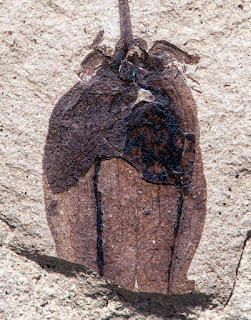
Physalis infinemundi Plant Fossil

Wilf P, MR Carvalho, MA Gandolfo, NR Cúneo. 2017. Eocene lantern fruits from Gondwanan Patagonia and the early origins of Solanaceae. Science, v. 355, p. 71-75, 6 January 2017. DOI: 10.1126/science.aag2737. Image from figshare.com CC by 4.0

Today's posting shows a fossil from the Solanaceae or nightshade family. It is called Physalis infinemundi (Wilf, 2017). When alive, it grew in Patagonia (location now known as Chubut Province, Argentia; about 52 million years ago Paleocene Epoch, Paleogene Period). Fossil was named by Peter Wilf of Penn State University in 2017. This fossil is curated at Museo Paleontológico Egidio Feruglio in Trelew, Chubut, Argentina. It appears to be Physalis fruit also known as a fossil tomatillo. Moving ahead in time to the present, shown below is a picture of a tomato today grown with some of the latest agricultural technology.

Recently, I was interested in tomatoes after buying some in the produce section of the local Walmart. The tomatoes were quite good being that Kentucky is in the winter time. As it turns out the tomatoes were grown in Kentucky at an in door farm located in the Appalachia region of the state by AppHarvest. Doing some research into this company I was impressed that they were: bringing jobs to Appalachia, using recycled rainwater, growing enclosed thus no harsh chemical pesticides/LED lighting, climate controlled buildings where bees used for pollination, and robotic harvesting.
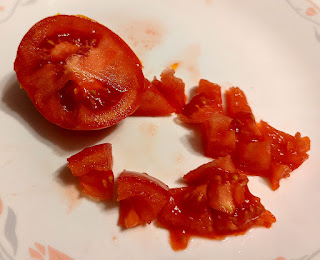
I used the tomatoes on garden salads and as one of the vegetables on burritos. They were very tasty! Picture below of tomatoes at the Walmart produce section.

Sources:
Article about this fossil
 Wilf P, MR Carvalho, MA Gandolfo, NR Cúneo. 2017. Eocene lantern fruits from Gondwanan Patagonia and the early origins of Solanaceae. Science, v. 355, p. 71-75, 6 January 2017. DOI: 10.1126/science.aag2737

Informative blog post about Tomatillos
 
Blog post by Martha Stewart about her visit to AppHarvest

Saturday, January 15, 2022

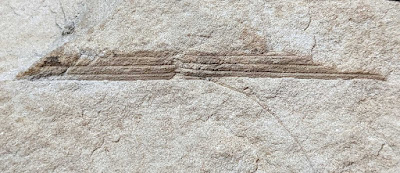
Tree Fossil in Sandstone?

While working in the lobby at work I noticed what appears to be a tree fossil imprint in a sandstone block. The building was built over 50 years ago and the lobby has its side walls surfaced with mortared sandstone blocks that are of varying sizes and are probably about 12 cm thick. The fossil is about 8 cm long and 1 cm wide.

The imprint reminds me of upper Carboniferous lycopodiophyte Sigillaria plant or could be part of a Calamites stem.
Learn more about fossil plants from this area at the Kentucky Geological Survey web site.

https://www.uky.edu/KGS/fossils/fossil-kinds-plants.php

 https://www.uky.edu/KGS/fossils/fossil-tree-stumps-types.php

Monday, March 1, 2021

Unidentified Cone Fossil from the Florissant Formation

This image shows an unidentified leaf gall plant or cone fossil found in the Florissant Formation of Teller County, Colorado, USA. It dates to the Eocene Epoch of the Paleogene Period.

Thanks to Doug for the image.

Sunday, February 28, 2021

Florrisant Snail and Plant Fossils


This image shows an unidentified snail and plant fossil found in the Florissant Formation of Teller County, Colorado, USA. It dates to the Eocene Epoch of the Paleogene Period.

Thanks to Doug for the image.

Thursday, February 25, 2021

Florissant Plant Fossil


This image shows an unidentified plant fossil found in the Florissant Formation of Teller County, Colorado, USA. It dates to the Eocene Epoch of the Paleogene Period.

Thanks to Doug for the image.

Saturday, February 20, 2021

Unidentified Eocene Leaf Fossil


This image shows an unidentified leaf fossil found in the Florissant Formation of Teller County, Colorado, USA. The field of view (FOV) is 4 cm. It dates to the Eocene Epoch of the Paleogene Period.

Thanks to Kenny for the image.