This fossil reptile skull and jaw were displayed on August 2022, at the Harvard Museum of Natural History in Cambridge, Massachusetts, USA. It is called Probelesodon minor (Romer, 1973). The creature lived during the middle Triassic Period. Fossil was found in 1965 in the Chañares Formation of La Rioja Province of Argentina.
Friday, September 16, 2022
Monday, February 28, 2022
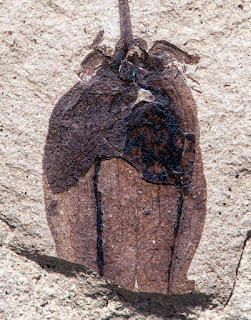
Physalis infinemundi Plant Fossil
| Wilf P, MR Carvalho, MA Gandolfo, NR Cúneo. 2017. Eocene lantern fruits from Gondwanan Patagonia and the early origins of Solanaceae. Science, v. 355, p. 71-75, 6 January 2017. DOI: 10.1126/science.aag2737. Image from figshare.com CC by 4.0 |
Today's posting shows a fossil from the Solanaceae or nightshade family. It is called Physalis infinemundi (Wilf, 2017). When alive, it grew in Patagonia (location now known as Chubut Province, Argentia; about 52 million years ago Paleocene Epoch, Paleogene Period). Fossil was named by Peter Wilf of Penn State University in 2017. This fossil is curated at Museo Paleontológico Egidio Feruglio in Trelew, Chubut, Argentina. It appears to be Physalis fruit also known as a fossil tomatillo. Moving ahead in time to the present, shown below is a picture of a tomato today grown with some of the latest agricultural technology.

Recently, I was interested in tomatoes after buying some in the produce section of the local Walmart. The tomatoes were quite good being that Kentucky is in the winter time. As it turns out the tomatoes were grown in Kentucky at an in door farm located in the Appalachia region of the state by AppHarvest. Doing some research into this company I was impressed that they were: bringing jobs to Appalachia, using recycled rainwater, growing enclosed thus no harsh chemical pesticides/LED lighting, climate controlled buildings where bees used for pollination, and robotic harvesting.
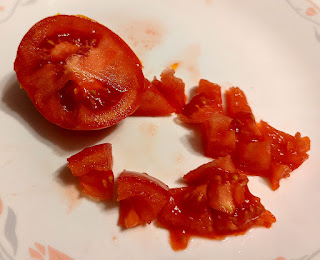
I used the tomatoes on garden salads and as one of the vegetables on burritos. They were very tasty! Picture below of tomatoes at the Walmart produce section.

Sources:
Friday, November 20, 2020
Pronothrotherium typicum Sloth Fossil
This picture is of a Pentacrinites briareus (Ameghino, 1907) ground sloth fossil. It was found in Argentina. The fossil dates to the Pliocene Epoch (5.3-1.8 million years ago).
The fossil was on display in the Evolving Planet section of The Field Museum of Natural History in Chicago Illinois, USA as of August 2020.
Saturday, September 26, 2020
Darwin's Fossil Sand Dollar at Harvard
After watching more videos from the The Society for the Preservation of Natural History Collections (SPNHC) YouTube channel. I found another interesting one to highlight. It was created 2019 for the Specimen Spotlight Wednesday presentation May 25-31 meeting. The presenter was Jessica D. Cundiff of the Museum of Comparative Zoology (MCZ) of Harvard University, Cambridge, Massachusetts, USA.
Echinarachnius juliensis (Desor, 1847) was collected in Port St. Julien, Patagonia, Argentina during the HMS Beagle voyage (1831-1836) by Charles Darwin in 1834. Darwin sent the echinoid to Swiss biologist Louis Agassiz who also started the MCZ in 1859.. Described by Pierre Jean Édouard Desor in France Geological Society Bulletin vol. 4, number 2, pp. 287-288 in 1847. It appears this fossil is from the Neogene Period (aka Late Tertiary).
Learn the more about this story by watching the video in the player below or go to the YouTube link.
Link to video is at: https://www.youtube.com/watch?v=yhOOU3eqyG8
Wednesday, August 28, 2019
Laevaptychus Pelecypod Fossil
Laevaptychus sp. pelecypod fossil on display at The Museo Civico di Storia Naturale di Milano (Milan Natural History Museum), Italy as of August 2019. The fossil was found in Patagonia, Argentina. It dates to the upper Jurassic Period (150 million years ago).
UPDATE: I made a mistake at identifying this fossil earlier. The name is updated.
Wednesday, September 3, 2014
Granchio indeterminato Crab Fossil
Here is a picture of a Granchio indeterminato crab fossil at the Museo di Paleontologia at Sapienza University of Rome Italy. Creatures like this existed in the Miocene Epoch of Neogene Period. Fossil was found in Argentina.
Image taken in June 2014.
Wednesday, September 11, 2013
Scaphonyx sanjuanensis Rhynchosaur Skull Fossil
Scaphonyx sanjuanensis rhynchosaur skull fossil loaned from the Museum of Comparative Zoology, President and Fellows of Harvard College. Accession number is MCZ VPRA-4572. Fossil is described as the remains of a herbivorous beak like pseudo-archosaur reptile. It dates to the Upper Triassic Period and was found in Ischigualasto Formation of Argentina.
Learn more at wikipedia.org.
This fossil was part of the Ultimate Dinosaurs: Giants from Gondwana exhibit at the Museum of Natural History and Science in Cincinnati, Ohio. They were photographed in August 2013. The dinosaur exhibit was created by the Royal Ontario Museum of Toronto Canada.
The exhibit was supported by Associate Exhibit Sponsor Frisch's restaurant and Promotional Partners Cincinnati Reds baseball, newspaper The Enquirer and TV channel Local 12 WKRO Cincinnati.
Tuesday, September 10, 2013
Exaeretodon frenguelli Skull Fossil
Exaeretodon frenguelli skull fossil loaned from the Museum of Comparative Zoology, President and Fellows of Harvard College. Accession number is MCZ VPRA-4483. Fossil is described as a cynodont ("dog-tooth") synapsid skull. Synapsids were "mammal-like reptiles". It dates to the Upper Triassic Period and was found in Ischigualasto Formation of Argentina.
Learn more at wikipedia.org.
This fossil was part of the Ultimate Dinosaurs: Giants from Gondwana exhibit at the Museum of Natural History and Science in Cincinnati, Ohio. They were photographed in August 2013. The dinosaur exhibit was created by the Royal Ontario Museum of Toronto Canada.
The exhibit was supported by Associate Exhibit Sponsor Frisch's restaurant and Promotional Partners Cincinnati Reds baseball, newspaper The Enquirer and TV channel Local 12 WKRO Cincinnati.
Sunday, September 8, 2013
Eoraptor, Pisanosaurus, and Herrerasaurus Dinosaur Cast Skeletons
The image above shows another early dinosaur called Herrerasaurus. It existed in the Ladinian age (Late Triassic). The name name means "Herrera's lizard". It was named for the Victorino Herrera who found the fossil outcrops in 1959 (source). The type species was originally described in 1963 by Osvaldo Reig. See wikipedia.org for more information.
The last image shows a Pisanosaurus from the Late Triassic. It is a bird like dinosaur first described by Rodolfo Casamiquela in 1967. See wikipedia.org for more information.
These cast skeletons were part of the Ultimate Dinosaurs: Giants from Gondwana exhibit at the Museum of Natural History and Science in Cincinnati, Ohio. They were photographed in August 2013. The dinosaur exhibit was created by the Royal Ontario Museum of Toronto Canada.
The exhibit was supported by Associate Exhibit Sponsor Frisch's restaurant and Promotional Partners Cincinnati Reds baseball, newspaper The Enquirer and TV channel Local 12 WKRO Cincinnati.
Friday, August 30, 2013
Pleistocene Glyptodon Fossil
Learn more about it at wikipedia.org.
This fossil was part of the Ultimate Dinosaurs: Giants from Gondwana exhibit at the Museum of Natural History and Science in Cincinnati, Ohio. It was photographed in August 2013. The dinosaur exhibit was created by the Royal Ontario Museum of Toronto Canada.
The exhibit was supported by Associate Exhibit Sponsor Frisch's restaurant and Promotional Partners Cincinnati Reds baseball, newspaper The Enquirer and TV channel Local 12 WKRO Cincinnati.
Wednesday, February 15, 2012
Arucaria mirabilis Fossil Lignotubers
UPDATED: Thanks to Dave at Views of the Mahantango for pointing out that these fossils were once considered "seedlings" are now thought to be lignotubers. According to Wikipedia, lignotubers are "starchy swellings of the root crown".
Thanks to Mark Palatas for letting me photograph these specimens.
Tuesday, February 14, 2012
Araucaria mirabilis Cone Fossil
Araucaria mirabilis (Spegazzini/Windhausen, 1924) sliced and polished "pine" cone fossil found in the petrified forest formation of Santa Cruz province, Argentina. Fossil dates to the Middle Jurassic Period (Callovian) or about 160 million years old. Learn more about this fossil at The Virtual Fossil Museum web site and Wikipedia.
Thanks to Mark Palatas for letting me photograph this specimen.
Sunday, November 27, 2011
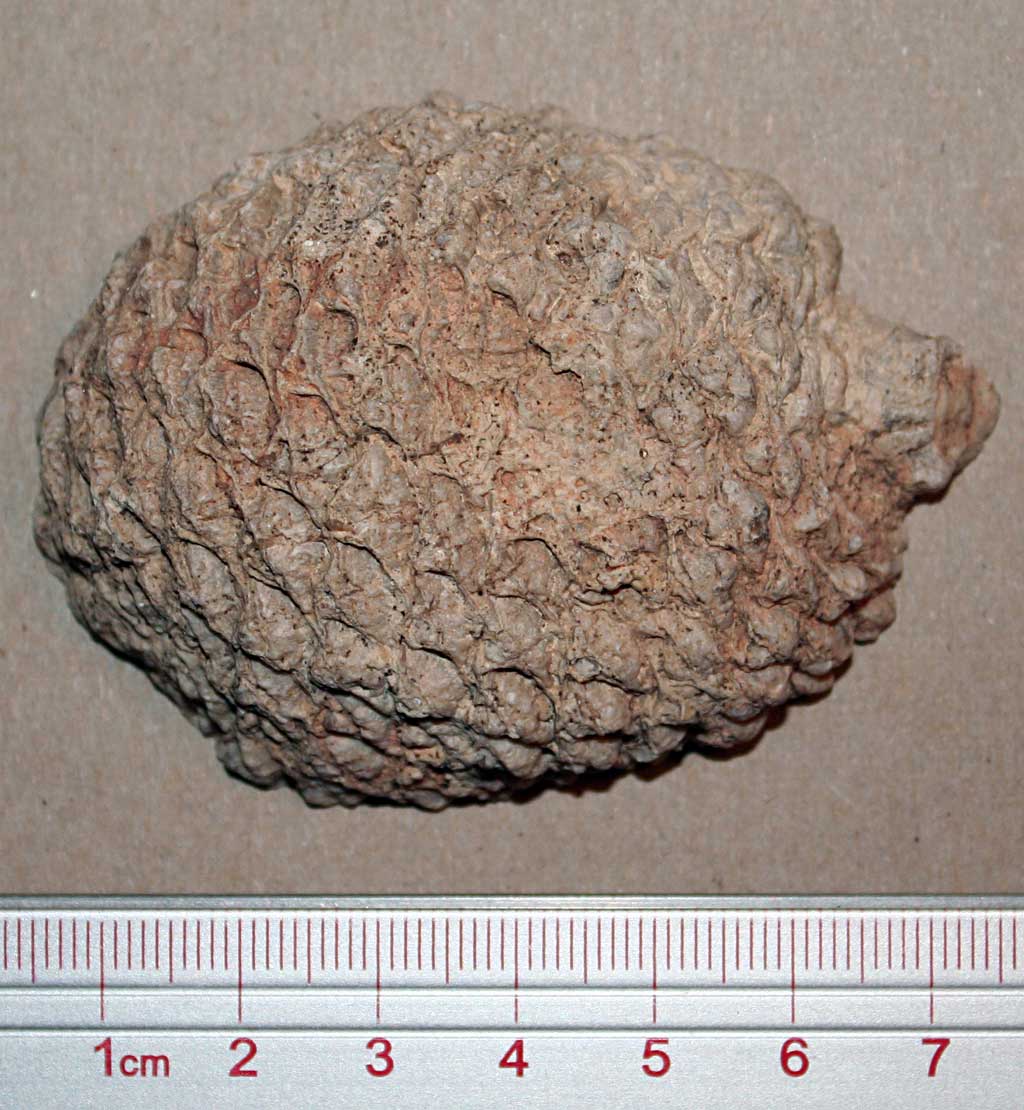
Pararaucaria patagonica Cone Fossil
These plant fossils are very interesting showing conifer cones of the Pararaucaria patagonica. These plants existed in the Middle Jurassic (Callovian - 160 million years ago). Fossils found in the Santa Cruz Province of Argentina. One of the cones has been cut in two and its flat sides are polished.
Thanks to Mark Palatas for letting me photograph these specimens in his collection.
Thursday, November 3, 2011
Saber Tooth Squirrel Fossil
It has been compared to a computer animation character Scrat in the Ice Age movie. See pictures in article at Daily Mail: http://www.dailymail.co.uk/sciencetech/article-2056715/Fossil-sabre-toothed-squirrel-fills-60million-year-void-knowledge-South-American-mammals.html?ito=feeds-newsxml
National Geographic has an artist rendering of what the squirrels might have looked like: http://news.nationalgeographic.com/news/2011/10/101102-saber-toothed-squirrel-fossils-paleontology-dinosaurs-science/
Find the Nature article here: http://www.nature.com/nature/journal/v479/n7371/full/nature10591.html
Learn more about Dr. Rougier who teaches in the University of Louisville's School of Medicine: https://louisville.edu/medschool/anatomy/faculty/faculty/professors/guillermo-rougier-ph-d.html
Link Update 4/12/2017:
https://louisville.edu/medicine/departments/anatomy/facultylist/guillermo-rougier-phd


