Showing posts with label Cincinnati museum of natural history and science. Show all posts

Monday, February 2, 2015

Six Ways to Prepare a Coelacanth Video


The American Museum of Natural History (AMNH) located in New York city has created a monthly series of videos highlighting some of the 33 million specimens and artifacts held in their collection. Paleontological specimens make up 17.3% of the collection. Invertebrate fossils are a large part of the collection with approximately 4.5 million specimens. In 2014, they received the Mapes collection from Ohio University composed of more than 500,000 marine fossils. So the museum has a lot of material to pull from for creating videos.

The series is called Shelf Life. The videos they have been creating so far are top notch!

Episode 3 has been released for January 2015 and it is entitled Six Ways to Prepare a Coelacanth. This animal was thought to be extinct but one was caught December 22, 1938. A curator in South Africa Marjorie Courtenay-Latimer obtained it from the fisherman. She then contacted a research at Rhodes University who spent 14 years waiting for another one to be caught. Learn more by watching their video link to in the posting.


If the embedded video is not showing up on your browser is the the direct YouTube link.

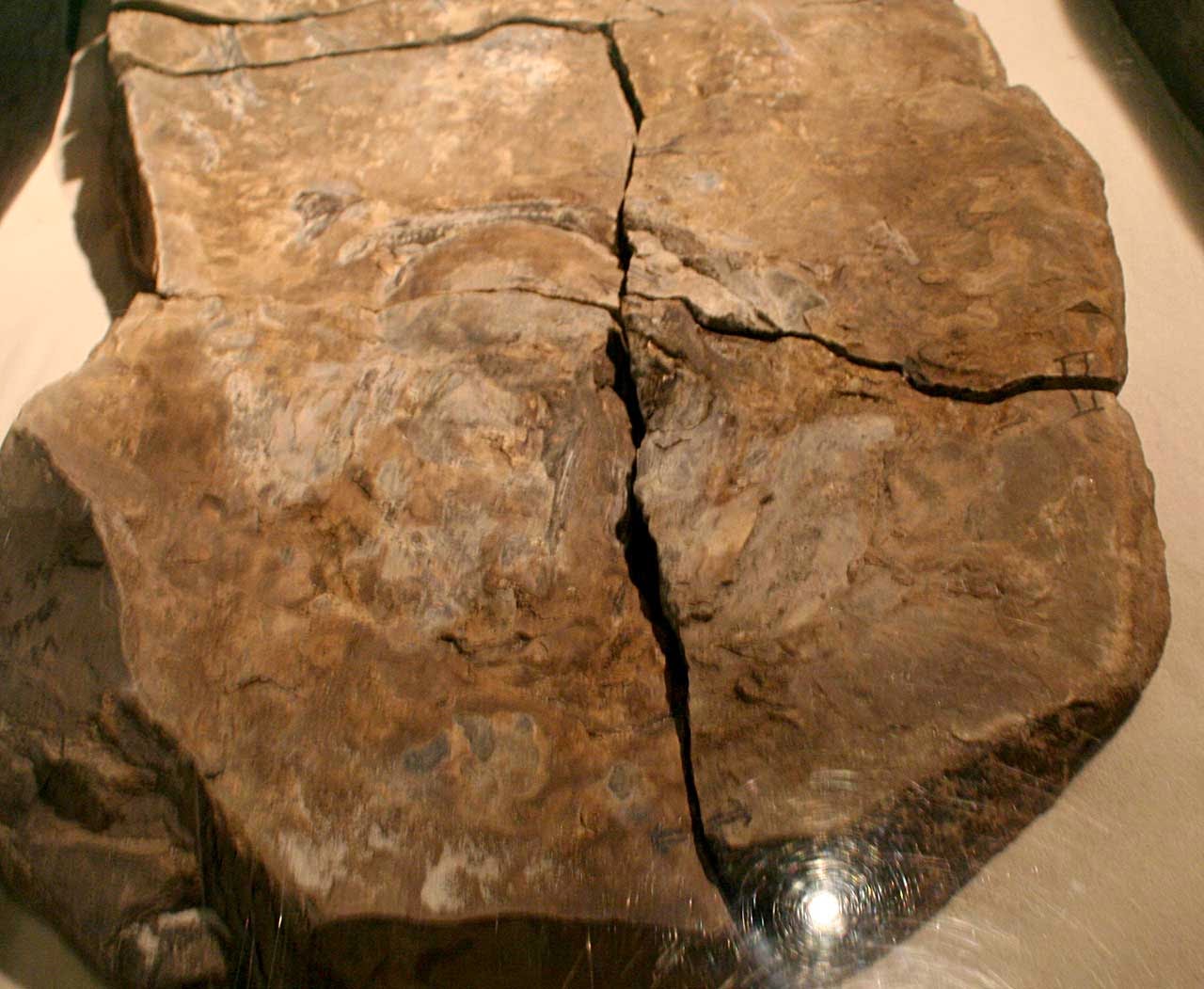
The Coelacanth tail fossil picture at the beginning of this post was taken at Cincinnati Museum Center in August 2013. This Triassic Period fossil was found in Favret Formation of Pershing County, Nevada, USA.

YouTube has another video (A Fish Lost in Time: the Coelacanth) showing a lot of clips of live Coelacanths in the deep. I wonder if the bright lights of those divers are blinding those fish. They live in a dark environment and then BAM this super bright light right in the eye. That would seem pretty painful unless they are almost blind from living in a dark environment already or have some mechanism for shielding from rapid light intensity changes.


The AMNH has produced some other great videos available to watch on the Internet. Their most popular one of this writing is The Known Universe with over 13 million views on YouTube. It really puts our place in the Universe in perspective. It can be viewed at this YouTube link.


Learn more:
http://louisvillefossils.blogspot.com/2013/10/coelacanth-fossil-fish.html

Thursday, October 24, 2013

Coelacanth Fossil Fish


These images show a "lobe-fin" fish fossil that is an unnamed species of coelacanth. It was found in 1996 by the Cincinnati Museum Center in Favret Formation of Pershing County, Nevada, USA. It dates to the Middle Triassic Period (220 million years ago). This fossil was on display at the Cincinnati Museum Center as of August 2013.


This last image is a model of a living coelacanth. It is called the "living fossil" Latimeria chalumnae.


Saturday, October 19, 2013

Cryptolithus tessellates Trilobites


Here are some pictures of the lace collar sections of the Cryptolithus tessellates (Green 1832) trilobite fossils. They were on display at the Cincinnati Museum of Natural History and Science in Ohio, USA (as of August 2013). The trilobites existed in the Ordovician Period and are found in the Edenian Stage of the Cincinnatian Series.
The genus was named by Jacob Green in 1832 Synopsis of the trilobites of North America. Monthly American Journal of Geology and Natural History, 1(12):558–560. . This trilobite was known by the name Trinucleus concentricus in other earlier works.


If there had been internal remnants of a trilobite it might have looked something like from below. It is a drawing done back in 1920 by Dr. Elvira Wood of the Cryptolithus tessellates (Green 1832).

Source:

Wednesday, October 16, 2013

Ankylosaurus Dinosaur Replica


This pictures show a dinosaur replica of an Ankylosaurus. The model is about 5 meters in length. Its name means "fused lizard" which relates to the armored connected plates on its body. Dinosaurs like this existed about 70 million years ago in the Cretaceous Period. They were found in what is modern day Montana, USA and Alberta, Canada.

When these pictures were taken the model was on display at Cincinnati Museum of Natural History and Science as of August 2013.


Tuesday, October 15, 2013

Bothriolepis - Primitive Armored Fish Fossil


Here is a picture of a partial Bothriolepis maxima fossil. It is missing its tail section. It was found in the "Old Red Sandstone" of the Baltic region of Europe. The fossil is now part of the Cincinnati Museum Center collection, accession number VP9132.

The creature is a placoderm of the Upper Devonian Period (375 million years ago). It is classified as a river or lake bottom dwelling antiarch.

When this picture was taken it was on display at Cincinnati Museum of Natural History and Science as of August 2013. It was donated by Walter L. Gross III.

Sunday, September 15, 2013

Dicroidium Plant Fossil from South Africa


This images shows a Dicroidium sp. fork leaved seed fern plant fossil from Molteno Formation. It dates to the Late Triassic Period. The fossil was found at Bird's River, Sterkstroom District in Eastern Cape Province of South Africa. Its accession number is PB1120.

This fossil was part of the Ultimate Dinosaurs: Giants from Gondwana exhibit at the Museum of Natural History and Science in Cincinnati, Ohio. They were photographed in August 2013. The dinosaur exhibit was created by the Royal Ontario Museum of Toronto Canada.

The exhibit was supported by Associate Exhibit Sponsor Frisch's restaurant and Promotional Partners Cincinnati Reds baseball, newspaper The Enquirer and TV channel Local 12 WKRO Cincinnati.

Saturday, September 14, 2013

Sphenobaiera Plant Fossil from South Africa


This images shows a Sphenobaiera sp. Ginkgophyta plant fossil from Molteno Formation. It dates to the Late Triassic Period. The fossil was found at Bird's River, Sterkstroom District in Eastern Cape Province of South Africa. Its accession number is PB1121.

This fossil was part of the Ultimate Dinosaurs: Giants from Gondwana exhibit at the Museum of Natural History and Science in Cincinnati, Ohio. They were photographed in August 2013. The dinosaur exhibit was created by the Royal Ontario Museum of Toronto Canada.

The exhibit was supported by Associate Exhibit Sponsor Frisch's restaurant and Promotional Partners Cincinnati Reds baseball, newspaper The Enquirer and TV channel Local 12 WKRO Cincinnati.

Thursday, September 12, 2013

Hibolites hastatus Cephalopod Fossil


This cross-section of a cephalopod fossil is called Hibolites hastatus. It dates to the Kimmeridgian (Late Jurassic Period). The fossil was found in Petersbuch near Eichstatt of Middle Franconia, Bavaria, Germany.

This fossil was part of the Ultimate Dinosaurs: Giants from Gondwana exhibit at the Museum of Natural History and Science in Cincinnati, Ohio. They were photographed in August 2013. The dinosaur exhibit was created by the Royal Ontario Museum of Toronto Canada.

The exhibit was supported by Associate Exhibit Sponsor Frisch's restaurant and Promotional Partners Cincinnati Reds baseball, newspaper The Enquirer and TV channel Local 12 WKRO Cincinnati.

Wednesday, September 11, 2013

Scaphonyx sanjuanensis Rhynchosaur Skull Fossil


Scaphonyx sanjuanensis rhynchosaur skull fossil loaned from the Museum of Comparative Zoology, President and Fellows of Harvard College. Accession number is MCZ VPRA-4572. Fossil is described as the remains of a herbivorous beak like pseudo-archosaur reptile. It dates to the Upper Triassic Period and was found in Ischigualasto Formation of Argentina.

Learn more at wikipedia.org.

This fossil was part of the Ultimate Dinosaurs: Giants from Gondwana exhibit at the Museum of Natural History and Science in Cincinnati, Ohio. They were photographed in August 2013. The dinosaur exhibit was created by the Royal Ontario Museum of Toronto Canada.

The exhibit was supported by Associate Exhibit Sponsor Frisch's restaurant and Promotional Partners Cincinnati Reds baseball, newspaper The Enquirer and TV channel Local 12 WKRO Cincinnati.

Tuesday, September 10, 2013

Exaeretodon frenguelli Skull Fossil


Exaeretodon frenguelli skull fossil loaned from the Museum of Comparative Zoology, President and Fellows of Harvard College. Accession number is MCZ VPRA-4483. Fossil is described as a cynodont ("dog-tooth") synapsid skull. Synapsids were "mammal-like reptiles". It dates to the Upper Triassic Period and was found in Ischigualasto Formation of Argentina.

Learn more at wikipedia.org.

This fossil was part of the Ultimate Dinosaurs: Giants from Gondwana exhibit at the Museum of Natural History and Science in Cincinnati, Ohio. They were photographed in August 2013. The dinosaur exhibit was created by the Royal Ontario Museum of Toronto Canada.

The exhibit was supported by Associate Exhibit Sponsor Frisch's restaurant and Promotional Partners Cincinnati Reds baseball, newspaper The Enquirer and TV channel Local 12 WKRO Cincinnati.

Monday, September 9, 2013

Prestosuchus Cast Skeleton


Prestosuchus cast skeleton shown in this image is a rauisuchian archosaur that is related to crocodiles. It existed in the Late Triassic in the area now known as Brazil, South America. The creature was named by Friedrick von Huene(1875-1969) in 1938. He named it in honor of Brazilian paleontologist Vicentino Prestes de Almeida (1900-1954).

Learn more at wikipedia.org.

This cast skeleton was part of the Ultimate Dinosaurs: Giants from Gondwana exhibit at the Museum of Natural History and Science in Cincinnati, Ohio. They were photographed in August 2013. The dinosaur exhibit was created by the Royal Ontario Museum of Toronto Canada.

The exhibit was supported by Associate Exhibit Sponsor Frisch's restaurant and Promotional Partners Cincinnati Reds baseball, newspaper The Enquirer and TV channel Local 12 WKRO Cincinnati.

Sunday, September 8, 2013

Eoraptor, Pisanosaurus, and Herrerasaurus Dinosaur Cast Skeletons

This first dinosaur skeleton cast is of an Eoraptor lunensis. It was found in Ischigualasto National Park, Argentina, South America. Its name means "dawn plunderer from the Valley of the Moon". The dinosaur dates back about 230 million years ago (Late Triassic). This creature was one of the earliest known dinosaurs. The cast has accession number PVSJ512.

The image above shows another early dinosaur called Herrerasaurus. It existed in the Ladinian age (Late Triassic). The name name means "Herrera's lizard". It was named for the Victorino Herrera who found the fossil outcrops in 1959 (source). The type species was originally described in 1963 by Osvaldo Reig. See wikipedia.org for more information.

The last image shows a Pisanosaurus from the Late Triassic. It is a bird like dinosaur first described by Rodolfo Casamiquela in 1967. See wikipedia.org for more information.


These cast skeletons were part of the Ultimate Dinosaurs: Giants from Gondwana exhibit at the Museum of Natural History and Science in Cincinnati, Ohio. They were photographed in August 2013. The dinosaur exhibit was created by the Royal Ontario Museum of Toronto Canada.

The exhibit was supported by Associate Exhibit Sponsor Frisch's restaurant and Promotional Partners Cincinnati Reds baseball, newspaper The Enquirer and TV channel Local 12 WKRO Cincinnati.

Sunday, September 1, 2013

Asteroceras obtusum Ammonite Fossil

This fossil ammonite is an Asteroceras obtusum.  These small creatures existed in the Lias of the Jurassic Period. It was found on the Charmouth coast of Dorset, England and is near the home of the famous paleontologist Mary Anning.  The area is known for their fossils particularly ammonites. Is museum accession number is IP70250.

These fossils are part of the Ultimate Dinosaurs: Giants from Gondwana exhibit at the Museum of Natural History and Science in Cincinnati, Ohio. It was photographed in August 2013. The dinosaur exhibit was created by the Royal Ontario Museum of Toronto Canada.


The exhibit was supported by Associate Exhibit Sponsor Frisch's restaurant and Promotional Partners Cincinnati Reds baseball, newspaper The Enquirer and TV channel Local 12 WKRO Cincinnati.

Saturday, August 31, 2013

Promicroceras Ammonite Fossils


These fossil ammonites are a Promicroceras sp. found in the Black Ven Marls Member.  These small creatures existed in the Sinemurian age or stage (about 191 million years ago) in the Early Jurassic Period.  This age was named in 1842 by Alcide d'Orbigny and named after the Semur-en-Brionnais, France [source Wikipedia].  Lyme Regis is found on the Charmouth coast of Dorset, England and is home of the famous paleontologist Mary Anning.  Lyme Regis is famous for their fossils particularly ammonites.

These fossils are part of the Ultimate Dinosaurs: Giants from Gondwana exhibit at the Museum of Natural History and Science in Cincinnati, Ohio. It was photographed in August 2013. The dinosaur exhibit was created by the Royal Ontario Museum of Toronto Canada.


The exhibit was supported by Associate Exhibit Sponsor Frisch's restaurant and Promotional Partners Cincinnati Reds baseball, newspaper The Enquirer and TV channel Local 12 WKRO Cincinnati.

Friday, August 30, 2013

Pleistocene Glyptodon Fossil

Here is the original fossil shell of a Glyptodon sp. It is specimen ROM 5130 from the Royal Ontario Museum of Toronto, Canada. It dates to the Pleistocene epoch (about 100,000 years ago) and was found in Argentina. These creatures could get to the size and weight of a small automobile! It is a mammal in the Order of Cingulata and Family of Glyptodontidae. It could be related to modern mammals like the anteater, tree sloth, and armadillo.

Learn more about it at wikipedia.org.

This fossil was part of the Ultimate Dinosaurs: Giants from Gondwana exhibit at the Museum of Natural History and Science in Cincinnati, Ohio. It was photographed in August 2013. The dinosaur exhibit was created by the Royal Ontario Museum of Toronto Canada.

The exhibit was supported by Associate Exhibit Sponsor Frisch's restaurant and Promotional Partners Cincinnati Reds baseball, newspaper The Enquirer and TV channel Local 12 WKRO Cincinnati.


Thursday, August 29, 2013

Stereosternum Reptile Fossil


Here is the original fossil skeleton of a Stereosternum sp. It is specimen ROM 29592 at the Royal Ontario Museum of Toronto, Canada. It dates to the Early Permian Period (about 280 million years ago) and was found in Brazil. It is in the Order of Mesosauria and Family of Mesosauridae.

Learn more about it at wikipedia.org and www.reptileevolution.com.

This fossil was part of the Ultimate Dinosaurs: Giants from Gondwana exhibit at the Museum of Natural History and Science in Cincinnati, Ohio. It was photographed in August 2013. The dinosaur exhibit was created by the Royal Ontario Museum of Toronto Canada.

The exhibit was supported by Associate Exhibit Sponsor Frisch's restaurant and Promotional Partners Cincinnati Reds baseball, newspaper The Enquirer and TV channel Local 12 WKRO Cincinnati.


Friday, August 23, 2013

Mesosaurus brasiliensis Aquatic Reptile Fossil


The aquatic reptile fossil pictured is a Mesosaurus brasiliensis  found in the Irati Formation of Brazil. It dates back 280 million years ago (Lower Permian Period). The museum display lists this fossil as one that shows the transition of reptiles to a freshwater environment. It also shows that the continents Africa and South America were connected since this creature's fossils are only found in those two places.

The reptile was thought to its narrow teeth rowed mouth was used to catch fish and other small aquatic creatures. It swam though the water using is long tail and paddle shaped limbs.

The fossil was loaned by Robert H. Osher family to the museum for exhibit.

Fossil on display at Cincinnati Museum of Natural History & Science as of August 2013.

Thursday, August 22, 2013

Iansan beurleni Ray or Guitarfish-like Fossil


The sea ray or guitarfish-like fossil pictured is an Iansan beurleni found in the Santana Formation of Brazil. It dates back 100 million years ago (Lower Cretaceous Period). This fossil might also be known by the name Rhinobatos beurleni (1968) as seen on the Henskens Fossils web site. Refer to 1996 paper on subject The new genus Iansan (Chondrichthyes, Rhinobatoidea) from the Early Cretaceous of Brazil and its phylogenetic relationships by Paulo M. Brito and Bernard Seret.

The fossil is part of the Cincinnati Museum Center collection (accession number VP7189). It was gift to the museum from Charles Fleischmann.

Fossil on display at Cincinnati Museum of Natural History & Science as of August 2013.

Wednesday, August 21, 2013

Toxochelys latiremis Sea Turtle Fossil


The sea turtle fossil pictured is a Toxochelys latiremis found in the Pierre Shale Formation of Kansas, USA.  This area was part of the Western Interior Seaway that divided what is today North America into two land masses. It dates back 75 million years ago (Upper Cretaceous Period).

The fossil is part of the Cincinnati Museum Center collection (accession number VP6947). It was gift to the museum from Jerome "Pete" Bussen.

Fossil on display at Cincinnati Museum of Natural History & Science as of August 2013.

Tuesday, August 20, 2013

Nematonotus longispinus Fish Fossil


This fossil fish is called Nematonotus longispinus. It was found in the Hjoula limestones of Lebanon. The fossil dates to the Upper Cretaceous Period (Cenomanian Stage). Learn more about Lebanese fish fossils at collectingfossils.org.

The museum specimen's accession number is CMC VP9876.

This fossil was part of the Ultimate Dinosaurs: Giants from Gondwana exhibit at the Museum of Natural History and Science in Cincinnati, Ohio. It was photographed in August 2013. The dinosaur exhibit was created by the Royal Ontario Museum of Toronto Canada.

The exhibit was supported by Associate Exhibit Sponsor Frisch's restaurant and Promotional Partners Cincinnati Reds baseball, newspaper The Enquirer and TV channel Local 12 WKRO Cincinnati.