

Showing posts with label ammonite. Show all posts
Showing posts with label ammonite. Show all posts
Friday, December 5, 2025
Pleuroceras costatum


Thursday, December 4, 2025
Eleganticeras elegantulum

This image is of an Eleganticeras elegantulum (Young & Bird, 1828) ammonite fossil. The animal existed in the Jurassic Period. Fossil was discovered in Ahrensburg, Germany. Fossil was on display at the Natural History Museum Vienna (Naturhistorisches Museum Wien) on August 2024.
Wednesday, December 3, 2025
Harpoceras subplanatum

This image is of a Harpoceras subplanatum (Oppel, 1856) ammonite fossil. The animal existed in the Jurassic Period. Fossil was discovered in La Verpillière, France. Fossil was on display at the Natural History Museum Vienna (Naturhistorisches Museum Wien) on August 2024.
Tuesday, December 2, 2025
Psiloceras planorbis

Monday, December 1, 2025
Hildoceras bifrons

This image is of a Hildoceras bifrons (Bruguière, 1789) ammonite fossil. The animal existed in the Jurassic Period. Fossil was discovered in England. Fossil was on display at the Natural History Museum Vienna (Naturhistorisches Museum Wien) on August 2024.
Friday, June 13, 2025
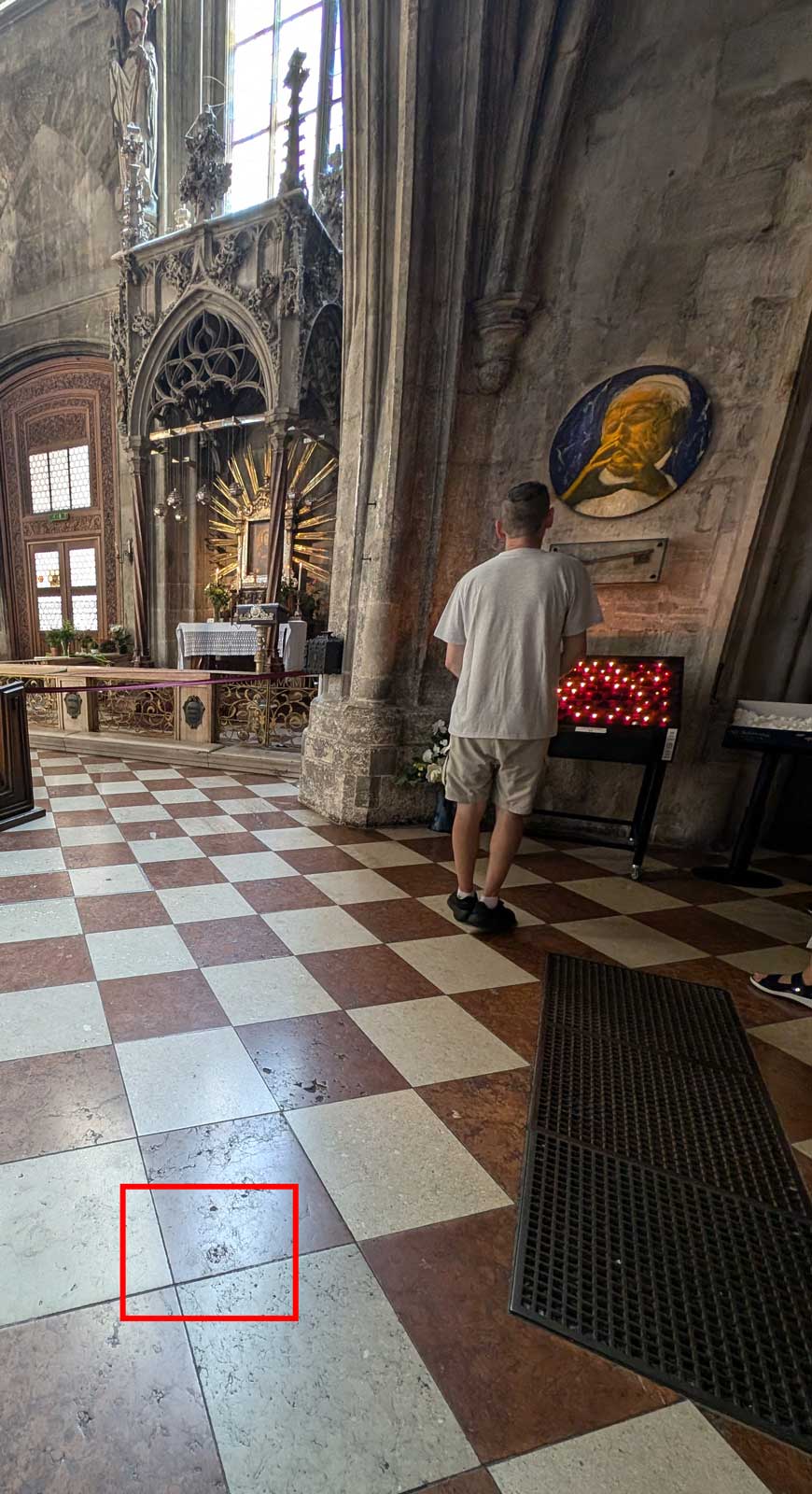
Ammonite Fossil at St. Stephen's Cathedral

The floor has checkerboard pattern made up of red and white stone tiles. There is at least one red tile has an ammonite fossil in it. It appears to be about 7 cm wide. The images were taken in August 2024.


Wednesday, January 8, 2025
Rhaeboceras Ammonite Fossil

This image is of a Rhaeboceras (Meek, 1876) ammonite fossil. The animal existed in the Cretaceous Period. Fossil was discovered in Montana, USA. Fossil was on display at the Natural History Museum Vienna (Naturhistorisches Museum Wien) on August 2024.
Sunday, January 5, 2025
Audouliceras renauxianum Ammonite Fossil

This image is of an Audouliceras renauxianum (d'Orbigny 1842) ammonite fossil. The animal existed in the Cretaceous Period. Fossil was discovered in Uljanowsk, Russia. Fossil was on display at the Natural History Museum Vienna (Naturhistorisches Museum Wien) on August 2024.
Saturday, January 4, 2025
Didymoceras nebrascense Ammonite Fossil

This image is of a Didymoceras nebrascense (Meek and Hayden, 1856) ammonite fossil. The animal existed in the Campanian age of the Late Cretaceous Period. Fossil was discovered in South Dakota, USA. Fossil was on display at the Natural History Museum Vienna (Naturhistorisches Museum Wien) on August 2024.
Sunday, December 29, 2024
Ectocentrites petersi Ammonite Fossil

This image is of an Ectocentrites petersi ammonite fossil. The animal existed in the Jurassic Period. Fossil was discovered in Kammerkaralpe, Tirol, Austria. Fossil was on display at the Natural History Museum Vienna (Naturhistorisches Museum Wien) on August 2024.
Saturday, December 28, 2024
Alsatites proaries Ammonite Fossil

This image is of an Alsatites proaries (Neumayr, 1879) ammonite fossil. The animal existed in the Jurassic Period. Fossil was discovered in Schreinbach, Salzburg, Austria. Fossil was on display at the Natural History Museum Vienna (Naturhistorisches Museum Wien) on August 2024.
Friday, December 27, 2024
Coroniceras rotiforme Ammonite Fossil

This image is of a Coroniceras rotiforme (Sowerby, 1824) ammonite fossil. The animal existed in the Jurassic Period. Fossil was discovered in Enzesfeld, Austria. Fossil was on display at the Natural History Museum Vienna (Naturhistorisches Museum Wien) on August 2024.
Monday, December 9, 2024
Ammolite - The Organic Gemstone

The picture above is a organic gemstone formed from the remains of ancient ammonite creatures. Below is a picture of a Placenticeras meeki (Böhm, 1898) ammonite fossil found in the Bearpaw Shale Formation of the Lethbridge District, Alberta, Canada. The fossil dates to the Cretaceous Period. Specimens were on display at the Natural History Museum Vienna (Naturhistorisches Museum Wien) on August 2024.

Sunday, September 1, 2024
Return To the Fossils of the Vatican

Last month, I returned to St. Peter's Basilica in Vatican City near Rome, Italy. On September 3, 2019 I posted a blog entry about finding ammonite fossils in some of the floor slabs on a visit there. This building material is a iron enriched (red) limestone also known as Red Verona marble or Rosso Verona marble used in a lot of churches including this one. I now know to look for fossils when I see the reddish-pink stone in floors. The material dates to the Upper Jurassic Period of the Rosso Ammonitico Formation, Oxfordian Stage, Verona Province, Venetia Region of Italy.


On this visit, I investigated some of the slabs in more obscure locations like the corners along walls and found some very nicely preserved ammonoid fossils. It appears the stone mason might have intentional put some of these slabs with fossils there and they have held up well since people are not walking on that surface.


Saturday, August 31, 2024
Fossils at Neuschwanstein Castle

Neuschwanstein castle is an iconic building that is one of the most visited tourist spots in Germany. It is located in Swabia, Bavaria, Germany near the Austrian border. King Ludwig II began building the castle in 1869 and was still not completed by the time of his death in 1886.

The fossils are to ammonids probably from the Jurassic or Cretaceous Periods.


Monday, August 26, 2024
Iridescent Placenticeras meeki Ammonite Fossils

Here are two pictures of a Placenticeras meeki (Böhm, 1898) ammonite fossils found in the Bearpaw Shale Formation of the Lethbridge District, Alberta, Canada. The fossil dates to the Cretaceous Period. Fossils were on display at the Natural History Museum Vienna (Naturhistorisches Museum Wien) on August 2024.

Saturday, August 24, 2024
Ammonite Fossils at Munich Residence Museum


The images on this post were found in the Octogon room which connects to the lavish 66 meter Antiquarium room commissioned by Duke Albrecht V from 1568 to 1571. This room seemed to have some of the best preserved and most fossils in its tiles. These pictures only represent some of the ammonites, I estimate I saw at least 10 in my short time looking. This building in bombed in 1944 during World War II and the original floors might have been destroyed. These images were taken in August 2024.


Thursday, October 19, 2023
Prolecanites americanis Ammonite Fossil

These pictures are of what appears to be a Prolecanites americanis (Miller and Garner, 1953) ammonite fossil. It was found in the Carwood Formation of Floyd County, Indiana, USA. The fossil dates to the Mississippian Period. Note the black suture lines seen in the image.

Thanks to Kenny for the images.
Thursday, January 5, 2023
Spinocrioceras polyspinosum Ammonite Fossil
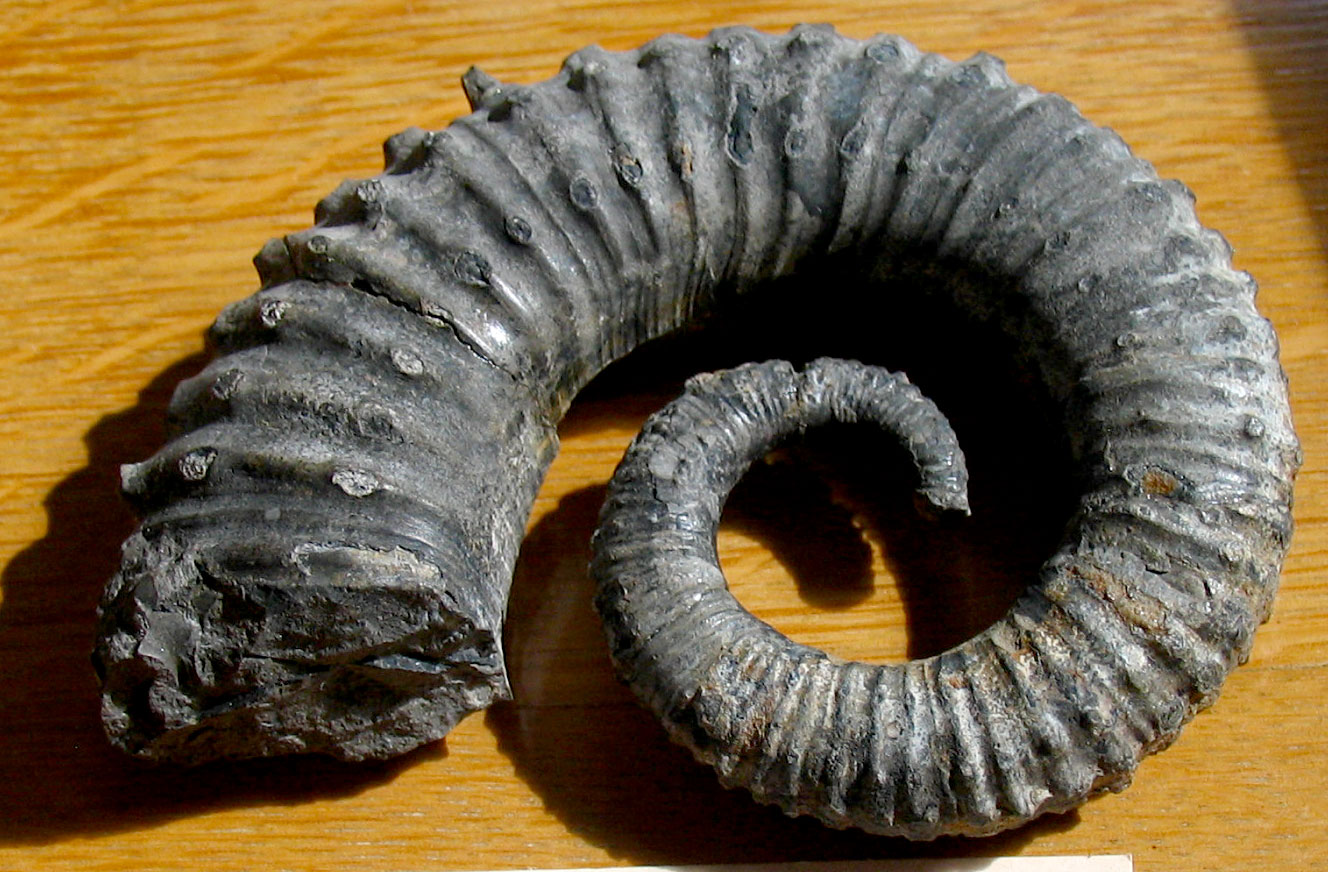
This picture is of a Spinocrioceras polyspinosum (Kemper, 1973) [Crioceratites sp.] fossil. It was found at Ville de Leyva (Leiva) Columbia. The fossil dates to the Barremian age of the Lower Cretaceous Period.
It was displayed at Muséum National D'Historie Naturelle Jardin Des Plantes Paléontologie et Anatomie Comparée, Paris, France. Image taken August 2009.
Saturday, November 26, 2022
Porpoceras ventricosum Ammonite Fossil

This image shows a Porpoceras ventricosum (Buckman , 1914) ammonite fossil. It dates to the Jurassic Period (Toarcien) and was found at Anduze (Gard) France. It was displayed at Muséum National D'Historie Naturelle Jardin Des Plantes Paléontologie et Anatomie Comparée, Paris, France. Image taken August 2009.The species was named by British palaeontologist Sydney Savory Buckman (1860-1929). It was originally named by English naturalist James Sowerby (1757-1822) and it was called Ammonites "armatus" (Sowerby, 1815).
Subscribe to:
Posts (Atom)