This image is of a Didymoceras nebrascense (Meek and Hayden, 1856) ammonite fossil. The animal existed in the Campanian age of the Late Cretaceous Period. Fossil was
discovered in South Dakota, USA. Fossil was on display at the Natural
History Museum Vienna (Naturhistorisches Museum Wien) on August 2024.
Here is a picture of a Placenticeras meeki ammonite fossil at
the Museo di Paleontologia at Sapienza University of Rome Italy.
Creatures like this existed in the western interior seaway at the time
of the upper/late Cretaceous Period (ICS geological timescale:
Maastrichtian; 70 million years ago). Fossil was found in Cheyenne River of South Dakota USA.
This image is of a Brontops robustus rhino-like skull fossil on
display at Mace Brown Museum of Natural History (August 2017). Its name means thunder face (bront ops). It dates
to the Early Oligocene Epoch (about 34-32 million years ago) of the Paleogene Period. The
fossil was found in Custer County South Dakota USA.
The Mace
Brown Museum of Natural History is located at the College of Charleston,
202 Calhoun Street, 2nd Floor, Charleston, South Carolina 29424.
This image is of a Subhyracodon occidentalis rhino skull fossil on
display at Mace Brown Museum of Natural History (August 2017). The
animal it belonged to is a cow sized extinct hornless rhino-like creature. It dates
to the Early Oligocene Epoch (about 33 million years ago). The
fossil was found in Pennington County South Dakota USA.
The Mace
Brown Museum of Natural History is located at the College of Charleston,
202 Calhoun Street, 2nd Floor, Charleston, South Carolina 29424.
This image is of a Trigonia osborni jaw fossil on
display at Mace Brown Museum of Natural History (August 2017). The animal it belonged to is an extinct hornless rhino creature. It dates
to the Early Oligocene Epoch (about 35 million years ago). The
fossil was found in Pennington County South Dakota USA.
The Mace
Brown Museum of Natural History is located at the College of Charleston,
202 Calhoun Street, 2nd Floor, Charleston, South Carolina 29424.
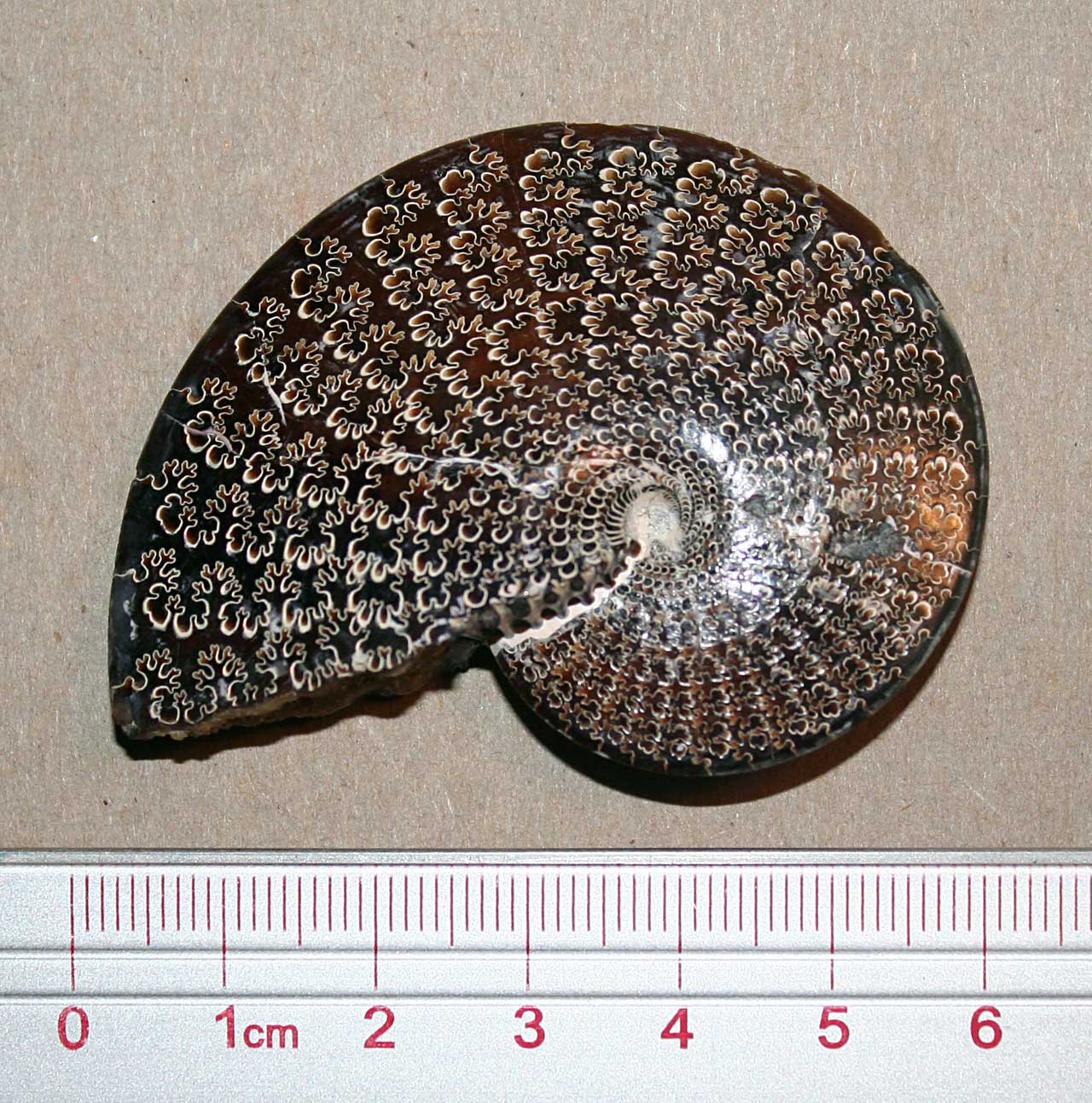
Picture of aragonite ammonite shell fossil of a Sphenodiscus sp. The creature existed the late Cretaceous Period Upper Maastrichtian stage.
Fossil was found in Fox Hills Formation of South Dakota USA. Specimen was on display at
the Muséum National D'Histoire Naturelle Minéralogie et Géologie in
Paris France (August 2016).
This picture shows a cast of the skin texture of a Triceratops horridus dinosaur. The fossil was found in the Hell Creek Formation of Harding County, South Dakota USA. This animal existed in the late Cretaceous Period.
Fossil cast was on display at Children's Museum of IndianapolisDinosphere exhibit as of July 2015. The museum was founded in 1925 and consists of an approximate 44,000 square meter facility on a 29 acre area site. Their natural science collection contains more than 10,000 items. Some of the items in the collection are the dinosaur Dracorex hogwartsia, fossil of teenage T.rex, Christensen Mastodon, 3.5-4 billion year old Acasta Gneiss, and the Geisler geological collection. Learn more at this link.
This fossil was found in the Carlile Shale Formation of Grant County, South Dakota, USA. He has been carefully extracting the hidden fossil shark teeth. The fossils date to the Cretaceous Period (Turonian). The picture shows what appears to be a Ptychotrygon triangularis sawfish rostral denticle fossil. Field of view (FOV) is about 3 mm.
My cousin has been working on some Carlile Shale Formation matrix. It was found in Grant County, South Dakota, USA. He has been carefully extracting the hidden fossil shark teeth. The fossils date to the Cretaceous Period (Turonian). The picture shows what appears to be a Cantioscyllium decipiens tooth fossil. Field of view (FOV) is about 3 mm.
My cousin has been analyzing some Carlile Shale Formation matrix. It was found in Grant County, South Dakota, USA. He has been carefully breaking it down to extract the hidden fossil shark teeth. The fossils date to the Cretaceous Period (Turonian). The picture shows what appears to be a Brachyrizodus (Pseudohypoluphus) sp. tooth fossil. Field of view (FOV) is about 3 mm.
My cousin has been extracting fossils from some Carlile Shale Formation matrix. It was found in Grant County, South Dakota, USA. He has been carefully breaking it down to extract the hidden fossil shark teeth. The fossils date to the Cretaceous Period (Turonian). The picture shows what appears to be a Scapanorhynchus raphiodon. Field of view (FOV) is about 5 mm.
Thanks to Kenny for the image.
Info Source: http://en.wikipedia.org/wiki/Scapanorhynchus http://www.elasmo.com/frameMe.html?file=genera/cretaceous/scapanorhynchus.html&menu=bin/menu_genera-alt.html
My cousin has been extracting fossils from a piece of Carlile Shale Formation matrix. It was found in Grant County, South Dakota, USA. He has been slowly breaking it down to reveal the hidden fossil shark teeth. The fossils date to the Cretaceous Period (Turonian). The picture shows Scapanorhynchus raphiodon shark teeth fossils.
My cousin has been extracting fossils from a piece of Carlile Shale Formation matrix. It was found in Grant County, South Dakota, USA. He has been slowly breaking it down to reveal the hidden fossil teeth. The fossils date to the Cretaceous Period (Turonian). The picture shows what might be a mosasaur fossil tooth. Each scale division is a mm.
My cousin has been extracting fossils from some Carlile Shale Formation matrix. It was found in Grant County, South Dakota, USA. He has been carefully breaking it down to extract the hidden fossil shark teeth. The fossils date to the Cretaceous Period (Turonian). The picture shows two Ptychodus whipplei shark teeth fossils.
My cousin recently received some matrix from the Carlile Shale Formation of Grant County, South Dakota, USA. He has been carefully breaking it down to extract the hidden fossil shark teeth. The fossils date to the Cretaceous Period (Turonian). We have been trying to identify what they are. So far names I am considering are Leptostyrax, Cretalamna (Otodus), and Cretodus.
Here is a picture of a Placenticeras meeki ammonite fossil at the Museo di Paleontologia at Sapienza University of Rome Italy. Creatures like this existed in the western interior seaway at the time of the upper/late Cretaceous Period (ICS geological timescale: Maastrichtian). Fossil was found in Cheyenne River of South Dakota USA.
The Pachydiscus gulocus ammonite fossil from the Late Cretaceous (68-65 million years ago). Found in South Dakota. On display at
the Smithsonian National Museum of Natural History.
The Hoploscaphites nicoletti ammonite fossil from the Late Cretaceous (68-65 million years ago). Found in South Dakota. On display at
the Smithsonian National Museum of Natural History.
This ammonite fossil is quite ornate with fractal like patterns representing sutures. The ammonite is known as the Placenticeras meeki found in the Pierre Shale Formation of the Badlands of South Dakota, USA. Unfortunately, I did not image it with a ruler but if I recall correctly it was over 10 cm wide. This animal swam in the Upper Cretaceous (70 million years ago) seas.
The next picture is of a much higher resolution if you want a zoomed in view of the patterns. The last picture shows the iridescent covering on the other side of the fossil. Thanks to Mark Palatas for allowing this to be photographed.
Here is a link to flickr showing a very similar one at the South Dakota School of Mines Museum: CLICK HERE
The Sphenodiscus lenticularis ammonite found in the Fox Hills Formation of South Dakota, U.S.A. Originally named by Owen in 1852 the genus Ammonites. This creature swam the seas of the Upper Cretaceous. The suture pattern shown in the images was once covered by an iridescent shell. See this link the University of Wisconsin for an example: http://pages.cs.wisc.edu/~ifischer/Collections/Fossils/Images/sphenodiscus2.jpg
Thanks to Mark Palatas for letting me photograph this specimen in his collection.


-sp-Eagle-ray-tooth-fossil-Carlile-Formation-Cretaceous--Grant-County-South-Dakota-USA.jpg)