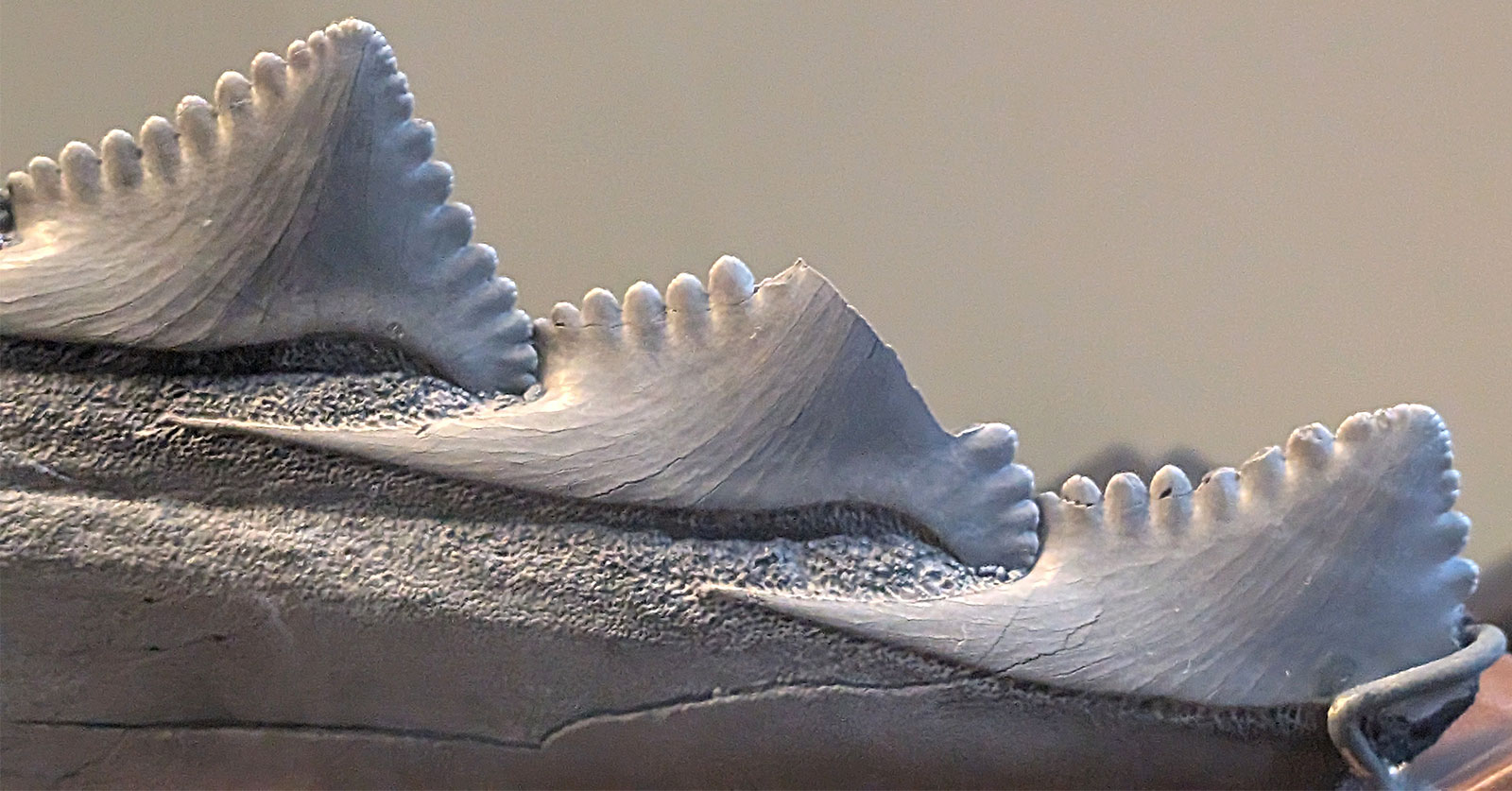
Thanks to Kenny for the image.
Monday, August 25, 2025
Ageleodus pectinatus Fossil Teeth
Monday, January 6, 2025
Edestus Shark Fossil
These images are of an Edestus (Leidy, 1856) shark fossil. The animal existed in the Carboniferous Period. Fossil was discovered in Marissa, Illinois, USA. Fossil was on display at the Natural History Museum Vienna (Naturhistorisches Museum Wien) on August 2024.
Wednesday, December 18, 2024
Petalodus Shark Tooth Fossil
These pictures show a Petalodus (Hall, 1858) shark tooth fossil. They were found in the Salem Limestone of Hardin County, Kentucky USA. The fossils date to the Mississippian Period. Thanks to Kenny for the images.
Tuesday, January 2, 2024
Hexanchus griseus Fossil Shark Teeth
Learn more at their blog: http://blogs.cofc.edu/macebrownmuseum/
Thursday, December 21, 2023
Paleohyptodus rutoti Fossil Shark Teeth
This image is of some fossil teeth of the Sand Tiger shark aka Paleohyptodus rutoti (Winkler, 1874) on display at Mace Brown Museum of Natural History (August 2017). It dates to the Paleocene Epoch of the Paleogene Period. The fossils were maybe found in the rivers of South Carolina USA.
The
Mace Brown Museum of Natural History is located at the College of
Charleston, 202 Calhoun Street, 2nd Floor, Charleston, South Carolina
29424.
Learn more at their blog: http://blogs.cofc.edu/macebrownmuseum/
Wednesday, December 20, 2023
Carcharodon hubelli Fossil Shark Teeth
This image is of some fossil teeth of the extinct White shark aka Carcharodon hubelli (Ehret, 2012) on display at Mace Brown Museum of Natural History (August 2017). It dates to the Miocene Epoch (about 5-15 million years ago) of the Neogene Period. The fossils were found in the rivers of South Carolina USA.
The
Mace Brown Museum of Natural History is located at the College of
Charleston, 202 Calhoun Street, 2nd Floor, Charleston, South Carolina
29424.
Learn more at their blog: http://blogs.cofc.edu/macebrownmuseum/
Tuesday, December 19, 2023
Carcharodon carcharias Fossil Shark Teeth
This image is of some fossil teeth of the Great White shark aka Carcharodon carcharias (Linnaeus, 1758) on display at Mace Brown Museum of Natural History (August 2017). It dates to the Miocene Epoch (about 5-15 million years ago) of the Neogene Period. The fossils were found in Peru, South America.
The
Mace Brown Museum of Natural History is located at the College of
Charleston, 202 Calhoun Street, 2nd Floor, Charleston, South Carolina
29424.
Learn more at their blog: http://blogs.cofc.edu/macebrownmuseum/
Monday, December 18, 2023
Isurus hastalis Shark Teeth Fossils
This image is of some fossil teeth of the Mako shark aka Isurus hastalis (Agassiz, 1843) on display at Mace Brown Museum of Natural History (August 2017). It dates to the Miocene Epoch (about 5-15 million years ago) of the Neogene Period. The fossils were found in rivers of South Carolina (S.C.), Ridgeville, S.C. and Aurora North Carolina, USA. It appears the genus was renamed in 2021 to Cosmopolitodus (Glikman, 1964) an extinct mackerel shark.
The Mace Brown Museum of Natural History is located at the College of Charleston, 202 Calhoun Street, 2nd Floor, Charleston, South Carolina 29424.
Learn more at their blog: http://blogs.cofc.edu/macebrownmuseum/
Sunday, December 17, 2023
Isurus planus Shark Teeth Fossil
This image is of some fossil teeth of the Mako shark aka Isurus planus (Agassiz, 1856) on display at Mace Brown Museum of Natural History (August 2017). It dates to the Miocene Epoch (about 15 million years ago) of the Neogene Period. The fossils were found in Brown Mountain slit layer of Bakersfield, California USA. It appears the genus was renamed in 2021 to Cosmopolitodus (Glikman, 1964) an extinct mackerel shark.
The Mace Brown Museum of Natural History is located at the College of Charleston, 202 Calhoun Street, 2nd Floor, Charleston, South Carolina 29424.
Learn more at their blog: http://blogs.cofc.edu/macebrownmuseum/
Monday, September 14, 2020
AMNH Tour the Hall of Vertebrate Origins Video
Today, I found a great video series being created by the American Museum of Natural History (AMNH) in New York city. During the Covid epidemic, the museum is publishing videos every Friday at 1 PM EST as live stream. The last video was presented by fossil fish researcher Allison Bronson. She does a great job narrating a video tour of the Hall of Vertebrate Origins at the museum. I was there in July of 2018 and I wished I had watched a video like this before my visit. After watching the video, I missed taking pictures of at least two special specimens she highlighted. Have to go back now :)
I am weak on my understanding of fossil fish and vertebrates in general as we do not find a lot of those fossils in the Louisville area. When I was in this museum section, the Devonian shark Cladoselache caught my attention (see posting here, to know why):
https://louisvillefossils.blogspot.com/2010/07/cladoselache-shark-fossil.html
After seeing her talk about the shark at the 7:20 mark, I realize I am pronouncing its name wrong.
It was amusing at the 22:05 mark in the video, Allison talks about the happy tortoise which is one of the most photographed specimens in the museum. As it turns out, I blogged about the Geochelone atlas specimen in December 2018, so count me in that large group of photographers!
https://louisvillefossils.blogspot.com/2018/12/geochelone-atlas-tortoise-fossil.html
If you cannot see or use the embedded video viewer in this blog post, here is the direct YouTube link: https://www.youtube.com/watch?v=fRuy7KfvqWs&t=479s
Monday, December 30, 2019
Isurus planus Shark Teeth Fossils
Here are some images of Isurus planus shark teeth fossils. The Isurus is also known Mako sharks. Fossils were found from Shark Tooth Hill, California, USA. The sharks existed in Miocene Epoch.
Tuesday, November 26, 2019
Shark Vertebrate Fossil
These images are of shark vertebrate fossils. The animal existed in the Pliocene Epoch. Fossils were discovered near Siena Italy.
Picture taken at Museo di Geologia e Paleontologia Florence Italy (Università degli Studi di Firenze) in August 2019.
Sunday, November 4, 2018
Notorhyncus primigenius Fossil Shark Teeth
This image is of Notorhyncus primigenius fossil shark teeth on display at Mace Brown Museum of Natural History (August 2017). This extinct animal was also known as a seven-gill cow shark. It dates to the Pliocene Epoch (about 4.5 million years ago), Neogene Period. The fossils were found in Yorktown Formation, Beaufort County, North Carolina USA.
The Mace Brown Museum of Natural History is located at the College of Charleston, 202 Calhoun Street, 2nd Floor, Charleston, South Carolina 29424.
Learn more at their blog: http://blogs.cofc.edu/macebrownmuseum/
Friday, November 2, 2018
Hexanchus gigas Fossil Shark Teeth
This image is of Hexanchus gigas fossil shark teeth on display at Mace Brown Museum of Natural History (August 2017). This extinct animal was also known as a sixgill cow shark. It dates to the Pliocene Epoch (about 2 million years ago), Neogene Period. The fossils were found in Huarra Formation (Caldera Site) Atacama Desert, Copiapo, Chile.
The Mace Brown Museum of Natural History is located at the College of Charleston, 202 Calhoun Street, 2nd Floor, Charleston, South Carolina 29424.
Learn more at their blog: http://blogs.cofc.edu/macebrownmuseum/
Thursday, November 1, 2018
Notidanodon loozi Fossil Shark Teeth
This image is of Notidanodon loozi fossil shark teeth on display at Mace Brown Museum of Natural History (August 2017). This extinct animal was also known as a cow shark. It dates to the Paleocene Epoch (Thanetian, about 58 million years ago), Paleogene Period. The fossils were found in Descenderie D Basin (Ouled Abdoun) Morocco, North Africa.
The Mace Brown Museum of Natural History is located at the College of Charleston, 202 Calhoun Street, 2nd Floor, Charleston, South Carolina 29424.
Learn more at their blog: http://blogs.cofc.edu/macebrownmuseum/
Monday, August 13, 2018
Megalodon Shark Jaw Model
Suspended from the ceiling in the Hall of Vertebrate Origins at the American Museum of Natural History in New York City, USA, is a model of Carcharodon megalodon shark. This shark was one of the largest to ever exist and dates to the Neogene Period (Pliocene and Miocene Epoch).
Monday, November 20, 2017
Hexanchus microdon Shark Fossil Teeth
These images are of Hexanchus microdon fossil shark teeth on display at Mace Brown Museum of Natural History (August 2017). This animal was also known as a six-gilled cow shark. They date to the Eocene Epoch (about 55-50 million years ago), Paleogene Period. The fossils were found in Atlas Mountains, phosphate pits Ouled Abdoun Basin Morocco.
The Mace Brown Museum of Natural History is located at the College of Charleston, 202 Calhoun Street, 2nd Floor, Charleston, South Carolina 29424.
Learn more at their blog: http://blogs.cofc.edu/macebrownmuseum/
Sunday, November 19, 2017
Hexanchus agassizi Fossil Shark Teeth
These images are of Hexanchus agassizi fossil shark teeth on display at Mace Brown Museum of Natural History (August 2017). This animal was also known as a cow shark. They date to the Eocene Epoch (about 45 million years ago), Paleogene Period. The fossils were found in Harleyville South Carolina USA.
The Mace Brown Museum of Natural History is located at the College of Charleston, 202 Calhoun Street, 2nd Floor, Charleston, South Carolina 29424.
Learn more at their blog: http://blogs.cofc.edu/macebrownmuseum/
Sunday, March 20, 2016
Helicoprion Shark in Cell Phone Game
My previous post showed an Edestus shark in the Jurassic World cell phone game. I encountered another fossil shark in the game called a Helicoprion. This shark-like creature was one odd fish in that its fossil consists of a spiral of teeth. It was eventually determined the spiral was located in the lower jaw. As the fish grew the smaller teeth were pushed into the center of the lower jaw. Read more at the Wikipedia entry: https://en.wikipedia.org/wiki/Helicoprion
![]() |
| Image of Helicoprion bessonovi from J. Walther old book in public domain - source Wikipedia https://en.wikipedia.org/wiki/Helicoprion#/media/File:Helicoprion_Bessonovi2.jpg |
The real shark existed from the Permian to Triassic (290-250 million years ago).
Saturday, March 19, 2016
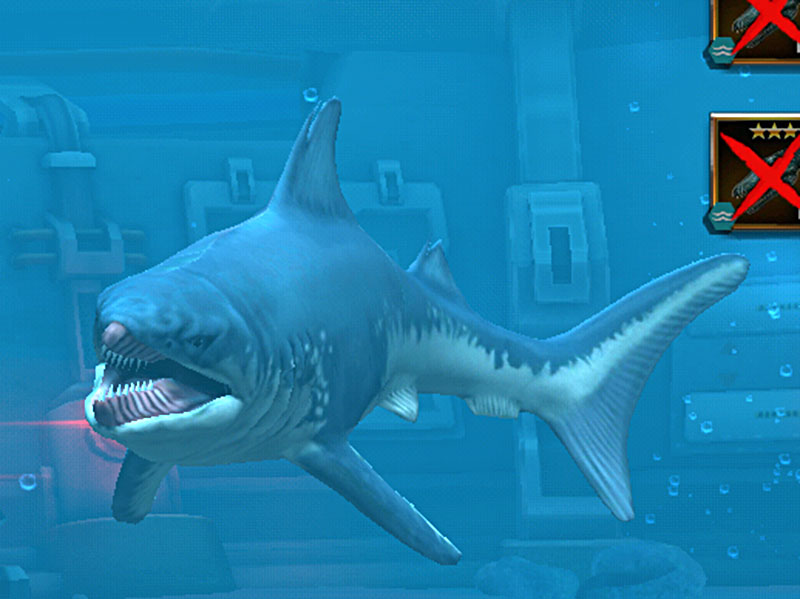
Edestus Shark in Video Game
The game developers of Jurassic World cell phone game have modeled an Edestus shark for the game. It showed up as one of the creatures to get past in the tournaments set for this weekend. It is interesting to see how the graphic designer modeled it's teeth in a single row.
The real shark is much older than the Jurassic Period. It dates to the upper Middle Pennsylvanian or Carboniferous Period (approximately 307 million years ago).
See this entry from 2015 about an actual Edestus fossil found in a Kentucky coal mine. http://louisvillefossils.blogspot.com/2015/01/newly-found-edestus-shark-fossil.html