Showing posts with label pennsylvania. Show all posts

Tuesday, August 26, 2025

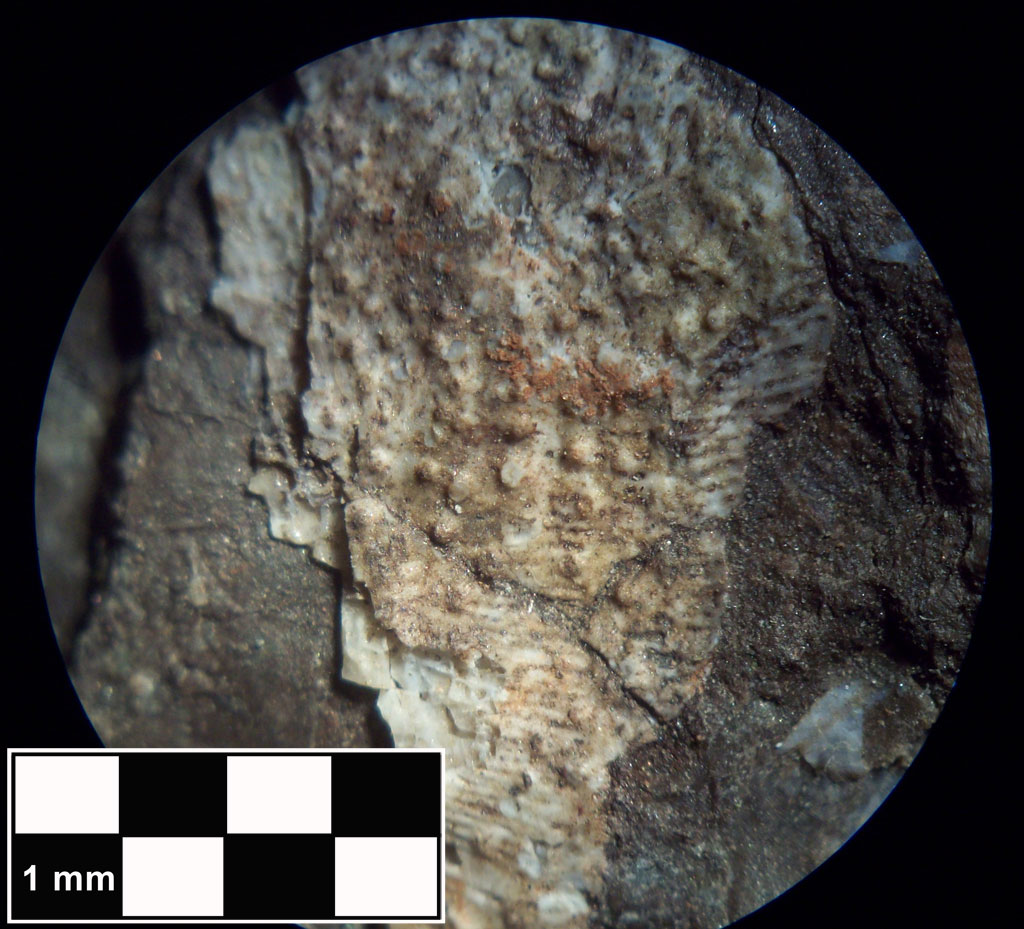
Turrisasps elektor Fossil


Here are pictures of a primitive fish fossil called Turrisasps elektor (Daeschler, Furmes & Mullison, 2003). Note fingernails in picture on size of these fossils. It existed in the  Upper Devonian Period and was found in the Catskill Formation Duncannon Member of Red Hill Pennsylvania USA.

Thanks to Kenny for the images. 


Monday, August 25, 2025

Ageleodus pectinatus Fossil Teeth

Here is a picture of two sets of fossil teeth from a primitive shark called Ageleodus pectinatus (Agassiz, 1838). Note fingernails in picture of an idea of how small these fossils are. It existed in the  Upper Devonian Period and was found in the Catskill Formation Duncannon Member of Red Hill Pennsylvania USA.

Thanks to Kenny for the image. 

Wednesday, July 30, 2025

Hyneria lindae Fish Tail Fossil


On a recent trip to Pennsylvania, my cousin was able to see a collection of fossils. This picture is of one of them. The creature was an early lobe-finned fish like an Eusthenopteron (Whiteaves, 1881) related to tetrapods. This particular fossil has been identified as a Hyneria lindae (Thomson, 1968). It existed in the  Upper Devonian Period and was found in the Catskill Formation Duncannon Member of Red Hill Pennsylvania USA.

Thanks to Kenny for the image. 

Tuesday, February 14, 2023

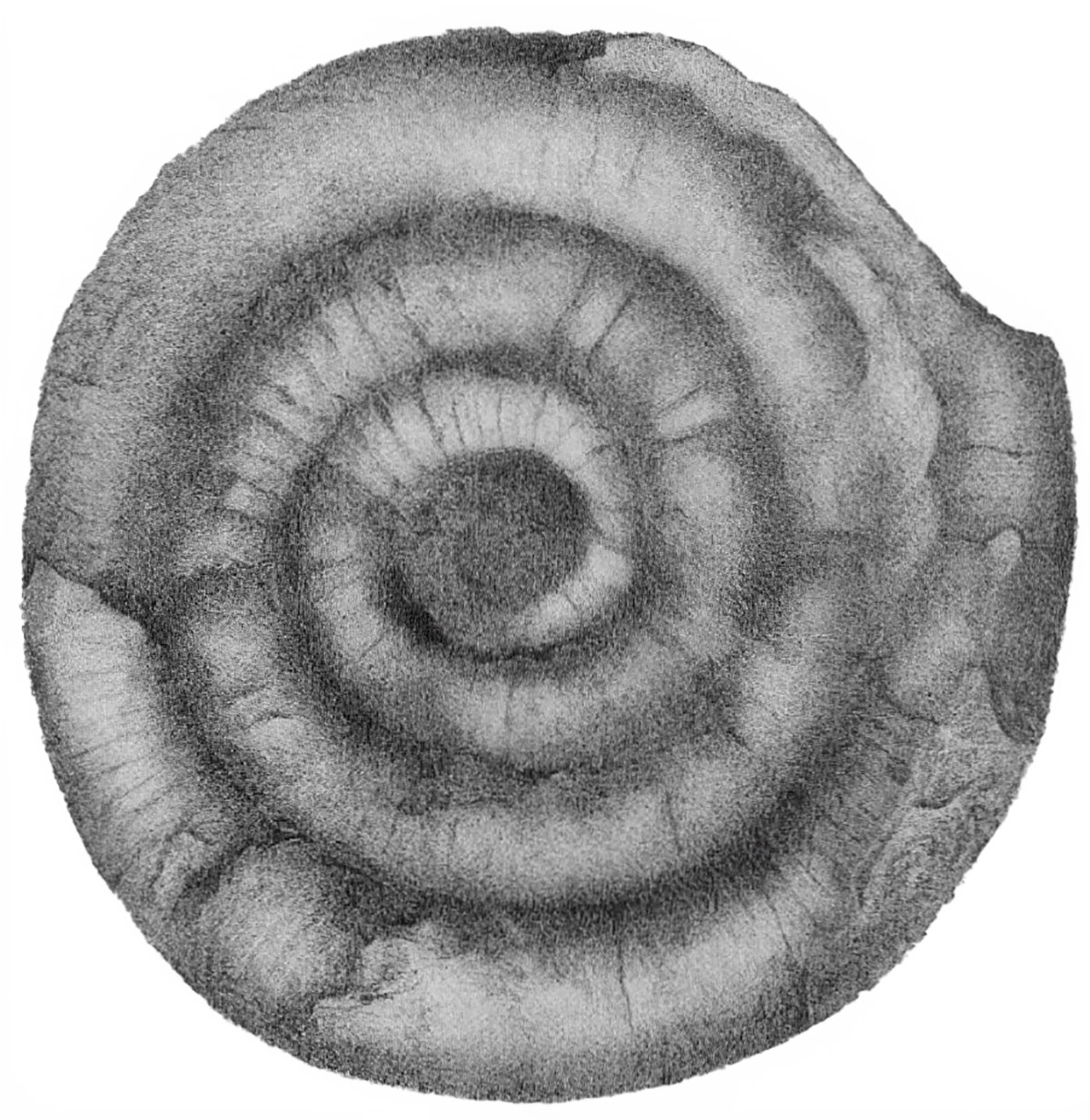
Trochoceras grovaniense Cephalopod Fossil

This fossil was discovered by quarrymen in the summer of 1913 while digging the Bossardville limestone layer near Bloomsburg, Pennsylvania, USA. Paleontologist Ruth Raeder Mook named it Trochoceras grovaniense (Mook, 1915). She did this while at the Paleontological Laboratory at Columbia University using a specimen loaned to her by the owner Guy A. Mowry of Grovania, Pennsylvania. The fossil dates to the Upper Silurian Period.

Ruth Weir Raeder at Wellesley College 1908
 

Ruth Weir Raeder (1887-1978) graduated from Wellesley College in 1908 with a Bachelor's of Arts. Studying as an assistant to Professor Elizabeth Florette Fisher of the Geology Department graduated on June 20, 1911 from Wellesley College with a Masters of Arts in Geology and Chemistry (Thesis: A Study in Animal Distribution). She became a lecturer in the geology department at Barnard College from 1912-1916. On September 2, 1914 she married Charles Craig Mook (1887-1966) at Lake Nuangola, Pennsylvania. 

Charles Mook graduated from Columbia University 1913 and obtained his Master's degree in Geology from Columbia in June 1914. He later obtained his Ph.D. from there as well in 1915. During his career he taught at Bernard College, Columbia University, New York University, and Rutgers University. He was professor of geology at Brooklyn College from 1932-1958. He was a curator of paleontology and vertebrates at the American Museum of Natural History in New York City.


Sunday, May 31, 2020

Alethopteris and Neuropteris Plant Fossils


These pictures are of plant fossils from St. Clair, Pennsylvania. These plants grew in the Late Carboniferous or Pennsylvanian Period and can be found in the Llewellyn Formation.

St. Clair is famous for the white appearance of their plant fossils which caused by aluminum silicate or pyrophyllite. This first image is of fossils are what appears to be Alethopteris (top) and Neuropteris (bottom).

The next image is a close up of the Neuropteris fossil.

Thanks to Dave H for this fossil specimen so many years ago.


The last image is with a ruler to show the size of these fossils.


Wednesday, November 7, 2012

Langite? from the Cornwall Mine

If the label is correct, this is a rare mineral (for this locality) called langite found at the Cornwall Mine in Lebanon County, Pennsylvania, USA. Ironically, the type locality for langite is in Cornwall, England. The Pennsylvania mine was named back in the 1700s by a man whose family was from that area of England.Why am somewhat skeptical of this identification is I thought langite was more blue than green in color while this one looks really green compared to other langite specimen images I see on the Internet..

This specimen appears to be composed of both magnetite and langite. Learn more about mineral on wikipedia.org.

As to where the specimen came from, my friend Milt Leet was mining engineer at the mine in the 1960s till it closed in 1973. The mine was owned by Bethelham Steel and they were a major employer at Cornwall. The American economy was not great in the early 1970s and there was an oversupply of iron ore. Most of the mines ore deposits had been tapped that were economically viable and it was thought the mine would be closed by 1980. In 1973 Hurricane Agnes visited the state and brought massive rainfalls. The storm knocked out power to the pumps at the mine and as a result the shafts flooded. This event proved to be the key point to closing the mine for good.

I finished reading a book called Cornwall The People and Culture of an Industrial Camelot 1890-1980 by Carl Oblinger. The book is an eye opening set of remembrances of a time in American long past. The stories related are of an American time period when corporations were more paternalistic and the standard of living in the United States was quite low. Watching the news one can hear about how the economy is bad in the United States right now but if you read this book about how things were in the 1920s and 1930s in a this Pennsylvania mining area, we are in great shape. No running water or electricity, limited transportation, food selection limited to the growing seasons and what could be preserved during the winter are just some of the factors the population had to contend with less than 100 years ago. The book also sheds light on the blending of different nationalities as the immigrated to the country to work in the mining sector.


Saturday, September 29, 2012

Pennsylvania's Cornwall Mine Magnetite


The Cornwall Mine of Lebanon County Pennslyvania, USA was one of the largest iron ore producers in the eastern United States. Opened in 1732 and operated until the early 1970s the mine is estimated to have produced over 100 million tons or ore. In addition, over 60,000 ounces of gold and 400,000 ounces of silver were processed. In June 1972, Hurricane Agnes knocked out the power at the mine thus rendering the pumps unusable. The rains the storm brought flooded the mine shafts and Bethelem Steel decided to close the mines after that.

Micro-mineral specimen of magnetite from the mine. Collected by Milt Leet who was a mining engineer there till mine closed. The book Mineral Collecting in Pennsylvania by Davis M. Lapham and Alan R. Geyer (Pennsylvania Geological Survey 3rd Ed. 1969) describes magnetite found at the mine as "octahedrons, dodecahedrons, plates, massive in ore and along top surface of diabase in small crystals". (page 108)

mindat.org lists 69 different types of minerals found at this mining locality.

Sunday, September 9, 2012

Red Hill Fossil


A while back my friend Herb gave me a piece of matrix from Red Hill roadcut in Clinton County, Pennsylvania, USA. After leaving the sample outside for weeks it began to break apart. In one of the pieces, I found this impression. It looks to me to be some sort of brachiopod with radial lines (costae or plicae) and a light blue layer with maybe muscle scars on it. If it is a brachiopod it is very compressed.

Looking for more information about Red Hill locality (Duncannon Member, Catskill Formation), I consulted the Devonian Times web site. It lists the site as a Late Devonian area (Famennian Stage, 361 million years old). The area was an area that flooded due to a near by river. If this was a river, I am not sure about this fossil since I thought brachiopods were marine creatures.


Sunday, April 22, 2012

Red Hill Fossils


Here are some images of fossils found in material from Red Hill Pennsylvania. This Devonian (Famennian stage) matrix contains fish parts among other things. It might be part of the Catskill Formation.


Thanks to Dave for the material. See his blog for more info: viewsofthemahantango.blogspot.com/2012/04/hyneria-scale-from-red-hill.html
viewsofthemahantango.blogspot.com/2012/04/osteolepid-fish-scale-from-red-hill.html

Thursday, February 16, 2012

Plant Fossils at State Park


Last week, I visited the interpretive center at the Falls of the Ohio State Park in Clarksville, Indiana located across the Ohio River from Louisville, Kentucky. They have two temporary fossil displays that have nice specimens to observe. One on paleoecology and the second on plants from the fossil collection of Herb Miracle. These pictures represent just a small sample of the specimens on display so if you get a chance visit and check out all the fossils.

The first fossil shown is of a long (30+ cm) section of Calamites from the Pennsylvanian Period layers of eastern Kentucky. The next image if a Lepidodendron aculeatum imprint found the Carboniferous of France.

Next is another French plant fossil called Syringodendron.
The following image is an eastern Kentucky plant fossil identified as Lescuropteris.
The next pictures shows two segments of a Stigmaria fucoides from eastern Kentucky.
Last picture is of another eastern Kentucky Pennsylvanian Period plant fossil Neuropteris.

Friday, February 3, 2012

Kloedenella Ostracod


Here are some pictures of Kloedenella sp. ostracods found in the Mifflintown Formation of Clinton County, Pennsylvania, U.S.A. The fossil dates to the Silurian Period (Wenlock Epoch, Homerian Stage). Thanks to Dave at the Views of the Mahantango blog for the specimens.

Find out more info about this genus in the book Microsfossils (2005) by Howard Armstrong and M.D. Brasier, Chapter 20 Ostracods pp.233-234.


Tuesday, July 26, 2011

Carnegie Museum of Natural History


Recently, I got to visit the Carnegie Museum of Natural History and spent a number of hours there.  It is a great place to visit if you like natural history museums.  The displays of dinosaurs and minerals are excellent.  They have a transparent wall where the fossil preparers can be observed working in the PaleoLab.  During my visit, they appeared to be working on a dinosaur from Argentina and another group was looking for teeth in gravel under a microscope.

Museum policy allows visitors to take pictures but not post them on the Internet so while a lot of pictures were taken none can be posted for this entry except the outside shots.

The area that leads into the PaleoLab is the Benedum Hall of Geology.  This room contains geological information about Pennsylvania including a Strativator (not sure of spelling) helping visitors under the stratigraphy of the area, a recreation of a Pennsylvanian Coal Forest, plant fossils from the state, large coal specimens, an educational exhibit on radiometric dating, and a "Which is a Fossil?" quiz.  One can learn that the Pittsburgh is Late Pennsylvanian in the Conemaugh Group.  The marker beds are Birmingham shale (Casselman formation) and Ames limestone (Glenshaw formation).

The next museum room contains a Herrerasaurus ischigualastensis dinosaur from Argentina (Triassic Period).  A cast of a Dunkleosteus arthrodire is also on display.  The entrance to the Hillman Hall of Minerals and Gems can be found here.  A number of minerals from Kentucky and Indiana were on display.  The opening displays a large honey calcite mineral from Indiana and in the systematic display section were a pyrite ball listed from Indiana (probably an Indianapolis quarry) and a open geode with millerite listed from Kentucky (probably Hall's Gap).  The fluorescent display was nice as it was computer controlled lighting with commentary.  Minerals selected for that display calcite/willemite (Franklin, New Jersey), scapolite (Canada), fluorite (England), tugtupite (Greenland), ruby (Pakistan), aragonite (Italy), calcite (Florida), halite (California), manganocalcite (Russia), adamite (Mexico, scheelite (China), fluorite/celestine (Ohio), fluorite/oil (Illinois), zircon (Russia), hyalite opal (Czech Republic), and fluorapatite (Pakistan).

The radioactive display was good with 4 minerals on a rotating wheel that passed near a Geiger counter.  The radioactivity was weak (100-400 CPM).  Two beautiful cuprosklodowskite and torbernite specimens were on display there from Zaire, Africa. A very nice autunite from Washington state could be seen as well.

Individual locality displays could also be seen highlighting minerals from ancient England, Herja mine Romania, former USSR, India, ancient Greece, and Pennsylvania.  A large exhibit of native gold specimens was another highlight of the gallery.


After the mineral gallery there are the fossils with exhibits for Lyme Regis, England and Holzmaden, Germany specimens.  A large case of fossils from the Solnhofen quarries of southern Germany are on display.  If I remember correctly what the guide said, the collection was bought by Carnegie for about $4000 from an Austrian collector who wanted to use the money to build a villa.

The star attraction are the dinosaurs with the larger ones from Wyoming from the late 1800s.  The Diplodocus carnegiei was copied in plaster casts and those sent to museums in London, Berlin, Paris, Mexico City, La Plata (Argentina), Bologna (Italy), Vienna, Madrid, and St. Petersburg (Russia). One could consider it a fossil ambassador from the United States.

Other dinosaurs that can be seen Marshosaurus sp., Psittacosaurus sp., Protoceratops andrewsi, Tyrannosaurus rex, Triceratops prorsus, Stegoceras validum, Camptosaurus aphanoecetes and Pachycephalosaurus wyomingensis.   Another section profiles mammals from the tar pits of California, Ice Age animals, and an exhibit on marine reptiles (Mosasaurs) plus invertebrates of the Western Interior seaway.  On an upper level there is the Hall of North American Wildlife with some stuffed polar bears and a seal.  Next to that is the Botany Hall which has some interesting exhibits.  Ones showing fauna found in Pennsylvania: nuts, mushrooms, poisonous plants, yard plants, and trees.


The dinosaur Diplodocus carnegiei was found in the Morrison Formation of Sheep Creek and Powder River, Wyoming in 1899.  Since the researchers who found it were sponsored by Andrew Carnegie it was named after him.  A metal casting of it resides outside the museum and the original is assembled inside.  It is known by its nickname "Dippy".  Another dinosaur is assembled beside it and is name for Mr. Carnegie's wife.


If you like minerals or fossils, you will enjoy this museum.  The assembled dinosaur fossils are most impressive and the mineral displays are set up to allow close inspection of minerals and are well lit. While there, I visited the mollusk collections area and a curator showed me some of the Asian snails and also showed a live snail where one could see it breathing and its heart beating.  My regret is I did not have enough time to see all of the museum as there is a connecting art area plus sections dedicated to African wildlife, ancient Egypt, polar world, birds, and American Indians.


Across the street from the Carnegie Museum of Art, the Pittsburgh Board of Education building has on display a very colorful dinosaur.  In addition, the surrounding architecture on the University of Pittsburgh campus is a visual treat.

Sunday, May 15, 2011

Fern Fossil Plate


This fossil plate contains the remains of plants found at the famous St. Clair, Pennsylvania site.  This plate was collected in the early 1970s from the Llewellyn Formation.  The fossil dates to the Late Carboniferous or Pennsylvanian Period (about 310 million years ago). 

The collection this fossil was apart of is now being sold off.  If you are interested in buying check it out on eBay LINK HERE.


Monday, February 14, 2011

PALEOpalooza 2011 - get your fossil on!

The Academy of Natural Sciences of Philadelphia, Pennsylvania is hosting a fossil festival February 19 & 20, 2011 from 10 AM till 5 PM EST.  Meet Dr. Scott Sampson and Buddy the T. Rex of PBS's Dinosaur Train.
Academy of Natural Sciences
Philadelphia, Pennsylvania
Image by Mblumber/team youcanlookitup on Wikipedia
Licensed under the Creative Commons Attribution-Share Alike 3.0 Unported
See work being done on the titanosaur fossils.

Examine the Dryptosaurus, a fossilized tyrannosaur skeleton found in New Jersey.  Staff paleontologists will be available to talk about the Academy's collection plus tour the Dinosaur Hall.  The Delaware Valley Paleontological Society will have fossils and displays to show as well.

Watch trilobite races, see floating dinosaur balloons, or create a dinosaur sculpture or fossil CD cover.

Learn more at the web page for this event.

Mosasaur at Academy of Natural Sciences - Philadelphia
Photo by Jon Voltaire B. Aquino
Licensed under Creative Commons Attribution-ShareAlike 3.0 from Wikipedia
March 19, 2011 Ned Gilmore, collection manager of the Vertebrate Paleontology Department will host an adult field trip to the Chesapeake and Delaware Canal.  Participants get to keep the fossils they find. Limited to 20 people with trip fee of $40 for non-members or $35 for members.  Call 215-299-1060 to register.  Learn more at this web page.

The Academy of Natural Sciences has been around since 1812 helping people connect to nature.  So next year is their 200th anniversary!  One of their founders and first president has ties to Louisville, Kentucky.   Dr. Gerard Troost whose 200 year old mineral collection (1811) is housed at the Louisville Science Center.  Learn more about Dr. Troost and his accomplishments at this blog posting.

Wednesday, October 13, 2010

National Fossil Day!

 Its National Fossil Day in the United States of America today.  I put together an image of some ferns to mark the day. 

In other geology news, congratulations to Chile and the rescue of the miners from the copper and gold mine.  What an amazing accomplishment!

Here is a list of 230 fossil parks in the United States which five are listed in Indiana and Kentucky.

Monday, April 19, 2010

St. Clair Pennsylvania Fern Fossils

Pictures of fern fossils from St. Clair, Pennsylvania. These plants grew in the Late Carboniferous or Pennsylvanian Period and can be found in the Llewellyn Formation.  Fossils compliments of Shamalama.

St. Clair is famous for the white appearance of their plant fossils which caused by aluminum silicate or pyrophyllite. This first fossil is Alethopteris.


Modern fern image to use as comparison to fossil.


Wednesday, January 6, 2010

Pleurodictyum Coral

These coral pictures were sent to me by Dave in Pennsylvania. He found these fossils in the Mahantango Formation formed in the Devonian Period.  The corals are Pleurodictyum.

He pointed out in his message to me, "The interesting thing about the molds is you can see what the coral colony originally started to grow on. One grew on a worm tube and the other looks like it grew on a Modimorpha pelecypod. The latter mode is much more common in the thick mudstones found at Seven Stars where I've found many pelecypod shells encrusted with Pleurodictyum colonies. Kind of like the Aulopora colonies that are common on the Paraspirifer et. al. brachiopods found in the Silica Shale. It gives you insight into the environment they lived in. Since there was no solid substrate to colonize, they grew on exposed or washed in shells."

Nicely researched and very good finds.


These first two pictures are of the Pleurodictyum styloporum.


These last three images are of Pleurodictyum lenticulare or Pleurodictyum americanum.