Showing posts with label cephalopod. Show all posts

Sunday, December 7, 2025

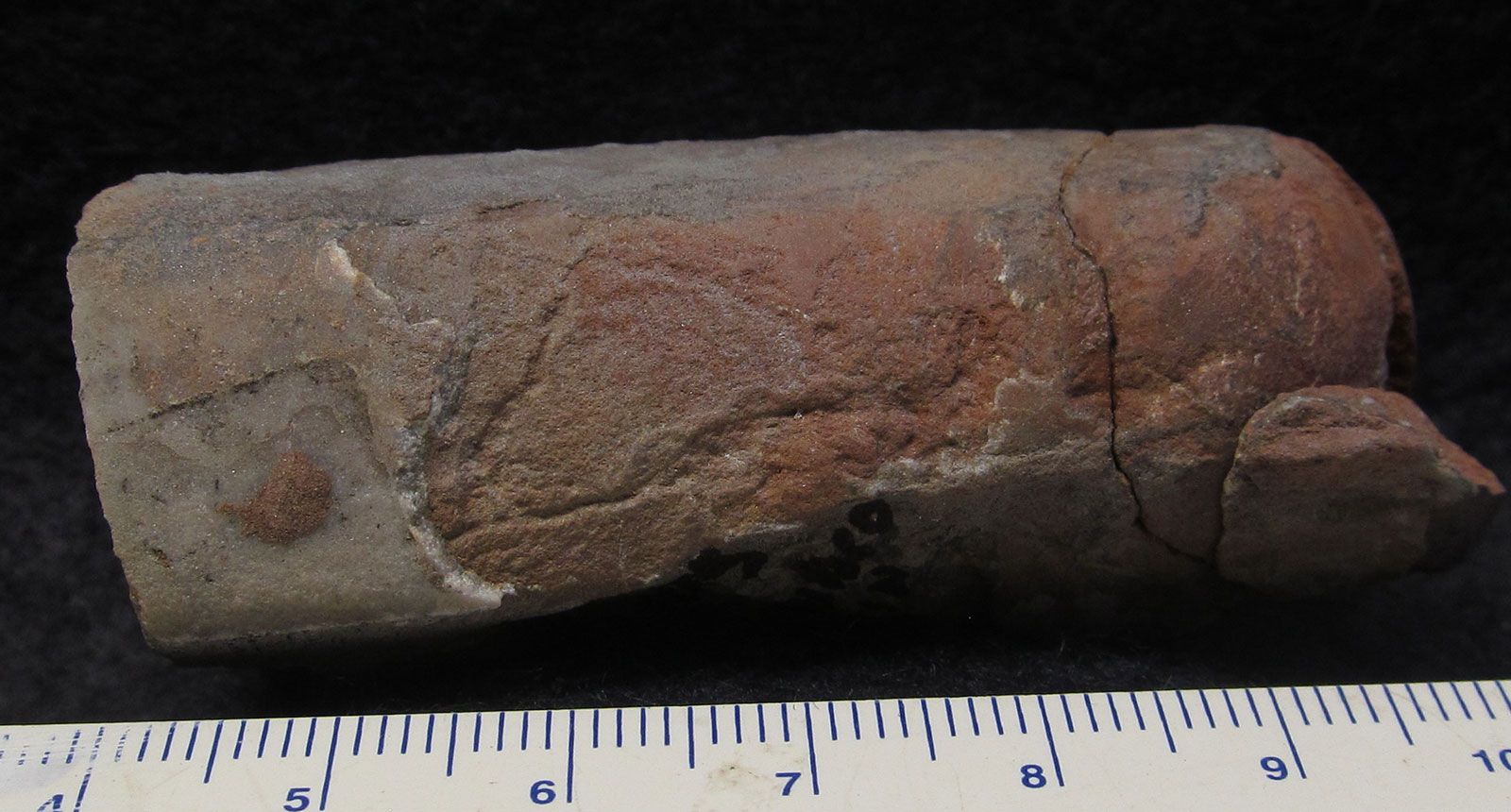
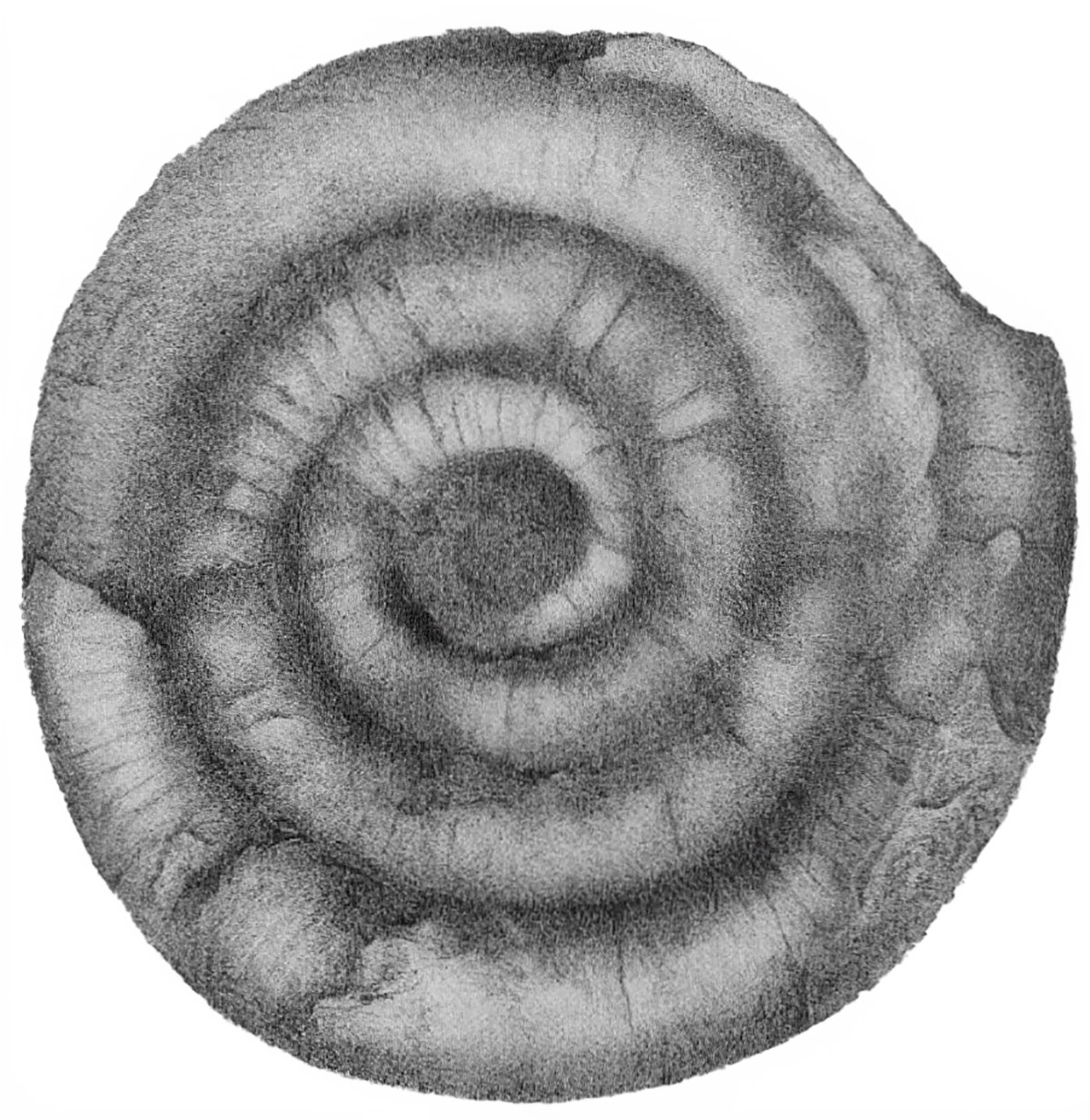
Ordovician Cephalopod Fossil


Above is a picture of an unidentified cephalopod fossil. This animal existed in the Ordovician Period. It was found in the Clays Ferry Formation of Robertson County, Kentucky USA. Thanks to Kenny for the image.

Friday, November 28, 2025

Crioceras


Here is a picture of a cephalopod Crioceras (d'Orbigny, 1842) fossil at Museo di Geologia e Paleontologia Florence Italy (Università degli Studi di Firenze) in August 2024.  The creature lived during the Cretaceous Period. It was found at Thebaid, Egypt.

Wednesday, October 29, 2025

Spatiopora Bryozoan Fossil


This image is of a Spatiopora (Ulrich, 1882) bryozoan fossil. It was found in the area of Cincinnati Ohio USA. The fossil dates to the Ordovician Period.

Picture taken at Museo di Geologia e Paleontologia Florence Italy (Università degli Studi di Firenze) in August 2024.

Tuesday, October 28, 2025

Orthoceratidae Cephalopod Fossil


This image is of an Orthoceratidae cephalopod fossil. It was found in the area of Cincinnati Ohio USA. The fossil dates to the Ordovician Period.

Picture taken at Museo di Geologia e Paleontologia Florence Italy (Università degli Studi di Firenze) in August 2024.

Sunday, September 15, 2024

Cephalopod Fossil at Basilica di Santa Croce

Here is a picture of a rare straight shelled cephalopod fossil found at Basilica di Santa Croce in Florence, Italy. I see a lot of coiled ammonoids in this material but not so many straight shelled cephalopods.

This building material is a iron enriched (red) limestone also known as Red Verona marble or Rosso Verona marble used in a lot of churches including this one. The material dates to the Upper Jurassic Period of the Rosso Ammonitico Formation, Oxfordian Stage, Verona Province, Venetia Region of Italy. Pictures taken August 2024.
 Look in the reddish square shapes in front of the tomb of Neri Corsini (1614-1678). Here is map.

Friday, January 19, 2024

Michelinoceras Cephalopod Fossil


Michelinoceras
(Foeste, 1932) cephalopod fossil shown in the pictures. Fossil was found in Floyd County Indiana USA. The fossil dates to the Mississippian Period. Thanks to Kenny for images.


Tuesday, February 14, 2023

Trochoceras grovaniense Cephalopod Fossil

This fossil was discovered by quarrymen in the summer of 1913 while digging the Bossardville limestone layer near Bloomsburg, Pennsylvania, USA. Paleontologist Ruth Raeder Mook named it Trochoceras grovaniense (Mook, 1915). She did this while at the Paleontological Laboratory at Columbia University using a specimen loaned to her by the owner Guy A. Mowry of Grovania, Pennsylvania. The fossil dates to the Upper Silurian Period.

Ruth Weir Raeder at Wellesley College 1908
 

Ruth Weir Raeder (1887-1978) graduated from Wellesley College in 1908 with a Bachelor's of Arts. Studying as an assistant to Professor Elizabeth Florette Fisher of the Geology Department graduated on June 20, 1911 from Wellesley College with a Masters of Arts in Geology and Chemistry (Thesis: A Study in Animal Distribution). She became a lecturer in the geology department at Barnard College from 1912-1916. On September 2, 1914 she married Charles Craig Mook (1887-1966) at Lake Nuangola, Pennsylvania. 

Charles Mook graduated from Columbia University 1913 and obtained his Master's degree in Geology from Columbia in June 1914. He later obtained his Ph.D. from there as well in 1915. During his career he taught at Bernard College, Columbia University, New York University, and Rutgers University. He was professor of geology at Brooklyn College from 1932-1958. He was a curator of paleontology and vertebrates at the American Museum of Natural History in New York City.


Monday, February 13, 2023

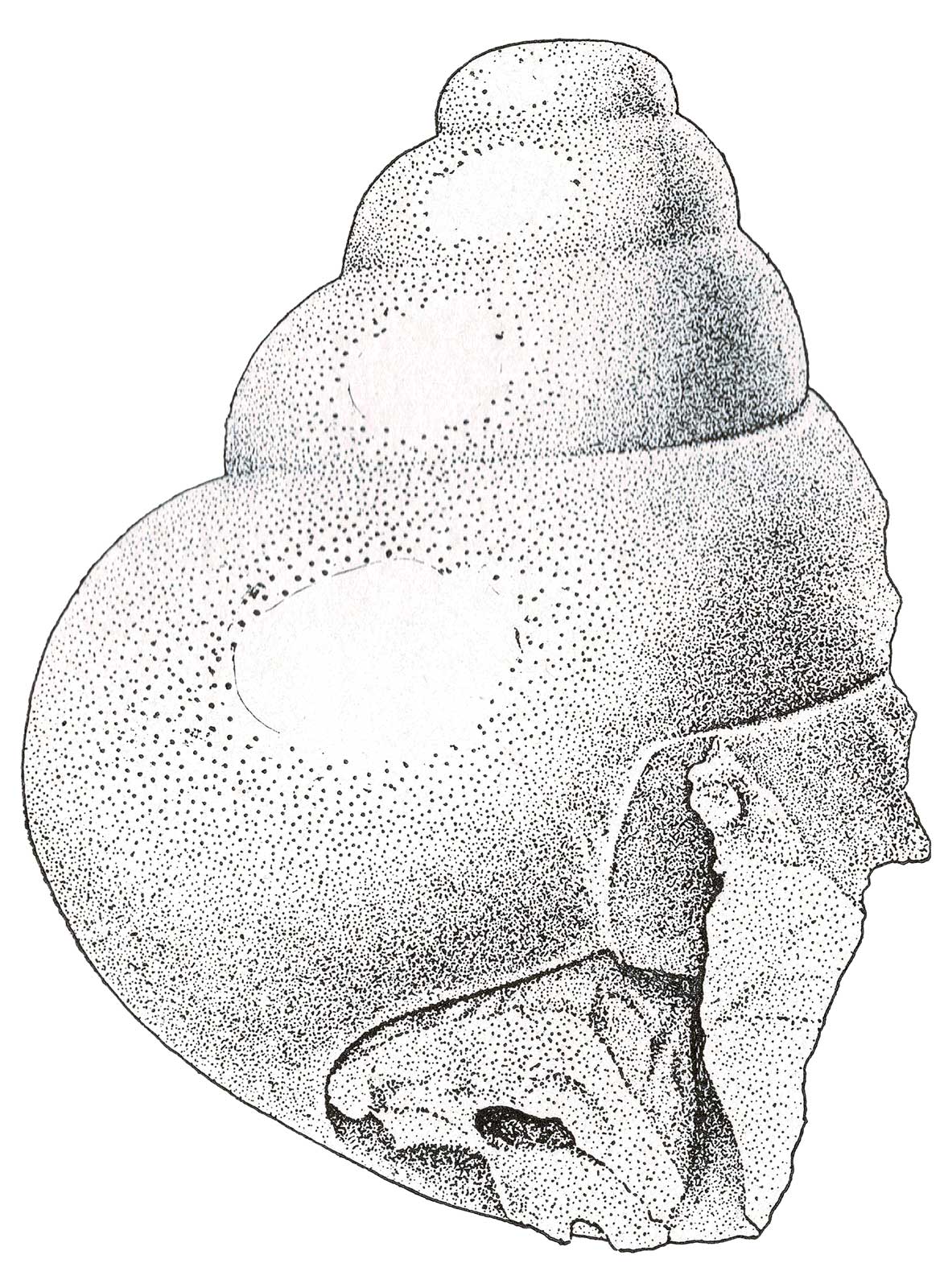
Mitroceras gebhardi Fossil

This fossil was drawn by Elvira Wood and was published in Guide to the Geology and Paleontology of Niagara Falls and Vicinity by Amadeus W. Grabau (1901) on page 217 figure 149. It was identified as Trochoceras gebhardi (Hall, 1852). It is described as being found in the Manlius limestone of North Buffalo and Williamsville in New York. The species was originally described from the Coralline limestone (Niagara) of Schoharie County, New York USA. Fossil dates to the Silurian Period.

I am curious as to why this is classified as a cephalopod and not a gastropod. It's shell look more like that of a snail.

A contemporary of Dr. Wood and Dr. Grabau named Ruth Raeder Mook published a paper A New Cephalopod from the Silurian of Pennsylvania in 1915. In it she wrote "The name proposed by Hall was printed in the second vol­ume of the Paleontology of New York in 1850, although the volume was not issued until 1852.* Hall's genotype was Trochoceras gebhardi. His original description of the genus follows:
'' Turbinate or trochiform ; spire elevated, more or less ven­tricose, umbilicated; aperture rounded or round oval; volu­tions above the other one septate; siphuncle submarginal or dorsal.
"In the specimen from which the generic description is principally made, the septa are strongly arched from the inner basal angle of the volution to the outer one, advancing on the outer angle towards the aperture." In the above description owing to a confusion of terms the siphuncle is recorded as sub­marginal or dorsal, whereas in present day usage it would be recorded as submarginal or ventral.
In 1894 Hyatt pointed out that Hall's species are quite dis­tinct from Barrande's, and that they do not belong to any genus yet described from Bohemia. Trochoceras Barrande is not generically identical with Trochoceras Hall. Hyatt sug­gested that the name Trochoceras Barrande be retained and for Hall's forms Trochoceras gebhardi and turbinatum he pro­posed the new name Mitroceras with Mitroceras (Troch.) gebhardi as the genotype. Mitroceras Hyatt differs from Trochoceras Barrande in the high turbinate spire, and in the deep and sharply angulate umbilicus." 

Her paper written while she was at the paleontological laboratory of Columbia University. Dr. Grabau was a professor there and in the early 1900s Dr. Wood got her advanced degrees at that university.


Sunday, December 18, 2022

Dawsonoceras amycus Cephalopod Fossil


This cephalopod fossil is called Dawsonoceras amycus.  Fossil found in the Waldron Shale of Clark County Indiana USA. It dates to the Silurian Period.

Fossil on display at Falls of the Ohio Interpretative Center Clarksville Indiana USA as of December 2022.

Friday, December 2, 2022

Nautilus maximus Fossil


Nautilus maximus
(Conrad, 1838) cephalopod fossil found at the Falls of the Ohio, Indiana USA. It dates to the Devonian Period and was probably found in the Jeffersonville Limestone. This image is from the 1889 Kentucky Fossil Shells by Henry Nettelroth in Plate XXIV figure 1. 

This fossil is stored at the Smithsonian and was assigned catalog number: USNM PAL 51243.

Monday, August 16, 2021

Arietites bucklandi Ammonite Fossil


This picture is of a Arietites bucklandi (Sowerby, 1816) ammonite fossil at the Museo di Paleontologia at Sapienza University of Rome Italy. This creature existed in the Jurassic Period. Species was named for William Buckland (1784-1856). Learn more about the museum at: http://www.dst.uniroma1.it/en/structures/museum

Image taken in June 2014.

Thursday, June 11, 2020

Silurian Cephalopod Fossil Dawsonoceras


This fossil appears to be a Dawsonoceras americanum cephalopod. It was found the Osgood Formation at Napoleon Quarry in Ripley County Indiana USA. It dates to the Silurian Period.


Used The Silurian Fauna of Kentucky by August F. Foerste for a list of fossils found in the Osgood Formation to narrow down the species. It can be found at http://www.uky.edu/OtherOrgs/KPS/poky/files/pokych03-01-46.pdf

Saturday, November 30, 2019

Orthoceras annulatum Cephalopod Fossil


This image is of an Orthoceras annulatum cephalopod fossil. The animal existed in the Silurian Period. Fossil was discovered in Dudley, Scotland.

Picture taken at Museo di Geologia e Paleontologia Florence Italy (Università degli Studi di Firenze) in August 2019.

Friday, May 31, 2019

Coiled Cephalopod Fossil


Finding coiled cephalopod fossils in the area around Louisville is quite rare.  This cephalopod fossil found in Clark County, Indiana, USA. I have posted an image of it before in 2013 but looking at images on my cell phone from 2018, I decided to post some fresher images from different angles.


It was on display at the Indiana University Southeast geology department as of December 2018. It was donated to them by John T. Shelton.


Thursday, August 24, 2017

Unknown Coiled Cephalopod Fossil


Recently, I was e-mailed these pictures of coiled cephalopod fossil. It was found by an 11 year old boy in rock from a quarry in northwest Illinois. The rock dates to the Silurian Period.

I think it might be a Lechritrochoceras. See the drawing of one at the Illinois State Geological Survey web site: http://www.isgs.illinois.edu/outreach/geology-resources/cephalopods


Saturday, December 31, 2016

Silurian Dawsonoceras annulatum Cephalopod Fossil


This image shows a Dawsonoceras annulatum (J. Sowerby) cephalopod fossil. It was found in the Silurian Period Wenlock series of  Coalbrookdale Shropshire England.

Image taken August 2016. The fossil was on display at the British Natural History Museum.

Thursday, September 8, 2016

Cephalopod Fossil Almost as Tall as Door


While on a recent visit to the Musée de Mineralogie (Mineralogy Museum) located at the MINES ParisTech, 60 Boulevard Saint-Michel 75006 Paris France, a saw the most amazing fossil. It was a straight shelled cephalopod fossil that was over a meter long. I think the label listed in French read Orthoceras Paleozoic.

The fossil reminds me of the Ordovician cephalopod fossils we find in Kentucky but on a so much larger scale. I was surprised to find it in a mineral museum and not one on paleontology.


If you get a chance visit the museum in Paris and see this specimen for yourself. The museum appeared to be located on the 2nd floor of a university building and it appeared to be staffed by students and professors. There was a small admission fee. The brochure describes it as the cases and architecture as being from the middle 19th century (no A/C). Over 4,000 specimens are on display that belong to a collection of over 100,000 with some added to the collection over 250 years ago.


Learn more at their web site: www.musee.mines-paristech.fr

Wednesday, August 31, 2016

Opal Belemnite Fossils


The original aragonite internal shell dissolved and was replaced by opal in these belemnite fossils. They existed the Cretaceous Period. Fossils were found in Coober Pedy, Australia. Specimen was on display at the Muséum National D'Histoire Naturelle Minéralogie et Géologie in Paris France (August 2016).

Learn more here:
http://www.mnhn.fr/fr/visitez/lieux/galerie-mineralogie-geologie


Sunday, October 5, 2014

Coal Mine Cephalopod Fossil


This fossil is somewhat rare because it was found at a depth of 60-250 meters underground. The fossil was situated above the coal seam so it might be from the Pennsylvanian Period (late Carboniferous). It was found in Webster County Kentucky USA. The mines there are part of the Eastern Interior Basin. The formations found there are Sturgis, Carbondale, and Tradewater. The limestone layers are Carthage, Madisonville, Providence, Yeargiss?, and Lead Creek.

I would identify it as Pseudorthorceras. 

This next image shows two more fossils found at the same location. A cephalopod fossil that is about 17 cm long. It is next to a large crinoid stem segment.


Learn more about the geology of this area at the United States Geological Survey:
http://pubs.usgs.gov/pp/p1151h/penn.html

Monday, September 29, 2014

Poking Around in the Waldron Shale

Recently, I got a rare opportunity hunt for fossils in the Waldron Shale and a number of fossils were found. Nothing earth shattering but it was fun to get out after a long absence to poke around and see some familiar fossil friends.

This first image is of a fragment of a Trimerus trilobite pygidium. Not sure if it is all there in at least one lobe is and probably also the middle section as well. The next image is of a very flattened Dawsonoceras cephalopod that is about 10 cm long.
No trip to the Silurian Period Waldron Shale fossil layer would be complete without seeing the index fossil. The crinoid Eucalyptocrinus must have been prolific on the seabed as the calyx cups can be spotted in just a short search time.
The last two fossils are a trilobite cephalons. I am not sure which trilobites they belong to (Dalmanites?).
UPDATE: Kenny informs the next image is of a flattened Trimerus trilobite. I agree with that ID.