Saturday, January 31, 2026
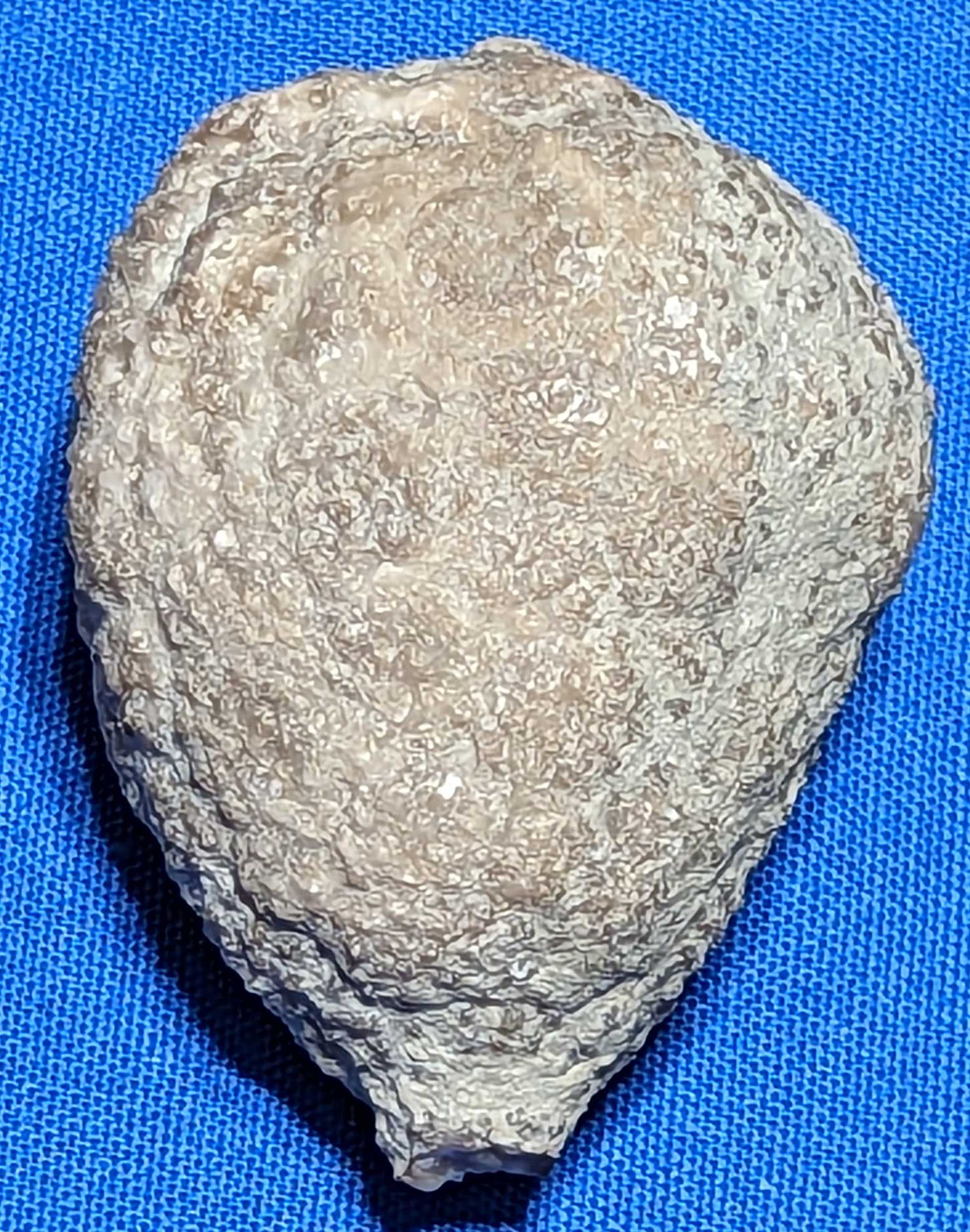
Meristella maria Brachiopod Fossil
Imprint remains of fossilized brachiopod called Meristella maria (Hall, 1863). James Hall renamed the genus Meristina (Hall, 1867). These animals lived in the Middle Silurian Period. Fossils found in the Osgood Shale of Napoleon, Indiana USA.
Friday, January 30, 2026
Holocystites gyrinus Cystoid Fossil
This fossil which appears to be a Holocystites gyrinus (Miller & Gurley, 1894) cystoid was found in Napoleon, Indiana USA. It dates to the Silurian Period (Telychian to Sheinwoodian stage) in age. The locality is world famous for this type of fossil. It was found in the Massie Formation or Osgood Shale.
Tuesday, June 27, 2023
Spathacalymene nasuta Fossil Trilobite
This trilobite fossil is identified as a Spathacalymene nasuta (Ulrich, 1879). It was found in the Osgood Formation of Ripley County, Indiana, USA. The fossil dates to the Silurian Period.
Saturday, June 3, 2023
Platyostoma niagarensis Snail Fossil
On a recent trip to Napoleon, Indiana USA, I found this gastropod fossil which might be a Platyostoma niagarensis (Hall, 1852). It dates to the Silurian Period (Telychian to Sheinwoodian stage) in age.
According to Dr. James Thomka, professor at SUNY Plattsburgh, it is "from the mudstone lithofacies of the Massie Formation (long known as the "upper Osgood shale"), which is renowned for its 'cystoid' fauna."
Wednesday, May 31, 2023
Ceraurus? Trilobite Fossil
A few weekends ago, I was able to attend a field trip to Napoleon,
Indiana USA. While there, I found this partial trilobite fossil which might be a Ceraurus (Chierurus) niagarensis (Hall, 1870).
It dates to the Silurian Period (Telychian to Sheinwoodian stage) in
age. The fossil I was looking for this trip was that of the trilobite Spathacalymene nasuta (Ulrich, 1879).
According to Dr. James Thomka, professor at SUNY Plattsburgh, it is "from the mudstone lithofacies of the Massie Formation (long known as the "upper Osgood shale"), which is renowned for its 'cystoid' fauna."
Tuesday, May 30, 2023
Holocystites gyrinus Cystoid
A few weekends ago, I was able to attend a field trip to Napoleon, Indiana USA. While there, I found this fossil which appears to be a Holocystites gyrinus (Miller & Gurley, 1894) cystoid. It dates to the Silurian Period (Telychian to Sheinwoodian stage) in age. The locality is world famous for this type of fossil. This specimen should be prepped to reveal more surface texture.
According to Dr. James Thomka, professor at SUNY Plattsburgh, it is "from the mudstone lithofacies of the Massie Formation (long known as the "upper Osgood shale"), which is renowned for its 'cystoid' fauna."
Monday, May 29, 2023
Silurian Coral Growing on Crinoid Stem
According to Dr. James Thomka, professor at SUNY Plattsburgh, it is "from the mudstone lithofacies of the Massie Formation (long known as the "upper Osgood shale").
Sunday, May 28, 2023
Holocystites gyrinus Cystoid Fossil
Last weekend, I was able to attend a field trip to Napoleon, Indiana USA. While there, I found this fossil which appears to be a Holocystites gyrinus (Miller & Gurley, 1894) cystoid. It dates to the Silurian Period (Telychian to Sheinwoodian stage) in age. The locality is world famous for this type of fossil. This one is in a matrix plate and still has part of its stem.
According to Dr. James Thomka, professor at SUNY Plattsburgh, it is "from the mudstone lithofacies of the Massie Formation (long known as the "upper Osgood shale"), which is renowned for its 'cystoid' fauna."
Sunday, June 14, 2020
Schuchertella subplana Brachiopod Fossil
This brachiopod fossil appears to be a Schuchertella subplana (Conrad, 1842). It was found the Osgood Formation at Napoleon Quarry in Ripley County Indiana USA. It dates to the Silurian Period .(Telychian to Sheinwoodian Stage).
I used The Silurian Fauna of Kentucky by August F. Foerste (1862-1936) for a list of fossils found in the Osgood Formation and Waldron Shale to narrow down the species. It can be found at http://www.uky.edu/OtherOrgs/KPS/poky/pages/pokych03.htm Plate XXIII figure 14. Learn more about Mr. Foerste at the very informative blog Fossils and Other Living Things entry on December 2019.
Species first documented by T. A. (Timothy Abbott) Conrad (1803-1877) in 1842 in the Observations on the Silurian and Devonian systems of the United Sates, with descriptions of new Organic Remains in Journal Academy of Natural Sciences of Philadelphia volume VIII, page 258. A scan can be found at https://www.biodiversitylibrary.org/item/79280#page/253/mode/thumb
This fossil has some similarities to a Coolinia subplana brachiopod fossil Dave at Views of the Mahantango blog found in the same Osgood Formation in 2011.
http://viewsofthemahantango.blogspot.com/2011/09/fardenia-subplana-from-waldron-shale.html
Thursday, June 11, 2020
Silurian Cephalopod Fossil Dawsonoceras
Friday, November 30, 2018
Spathacalymene nasuta Trilobite Fossil
This trilobite fossil was on display at the American Museum of Natural History (AMNH) in New York city in July 2018. The trilobite fossil is named Spathacalymene nasuta. It was found in the Osgood Formation of Ripley County Indiana, USA and dates to the Silurian Period. Accession number is Fl-4360. Donated by Jason Cooper.
The museum's trilobite exhibit was made possible by Dr. Martin Shugar, M.D. and Andy Secher who also edit the AMNH trilobite web site.
I have found part of one these back in 2011. The Osgood Formation is interesting as some of it's fossils are a honey color. https://louisvillefossils.blogspot.com/2011/10/spathacalymene-nasuta-trilobite.html