Showing posts with label new albany shale. Show all posts

Saturday, February 28, 2026

Devonian Fish Bone Fossils


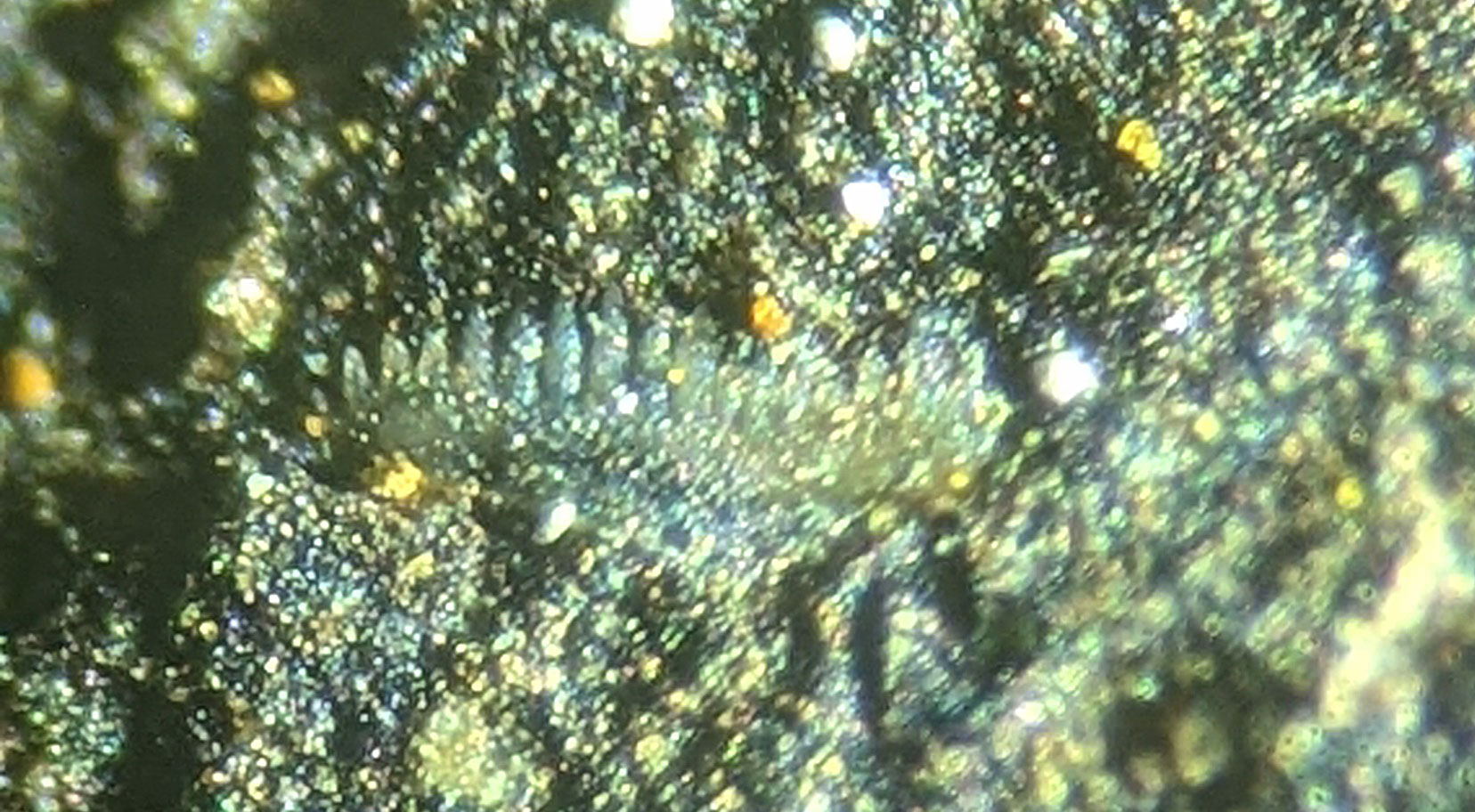
These pictures are of a somewhat unique and rare fossil found in the Louisville Kentucky USA area. The almost fossil bare New Albany Shale sometimes reveals a blue material that are the fish bone remains from the late Devonian Period. These fossils were found in the Blocher Formation of Clark County, Indiana, USA. The main pieces is about 2 cm in length. 

The fossils once belonged to Barbara Conkin(1928-2019) who taught geology at Jefferson Community College. Thanks to Kenny for taking these pictures.


Thursday, August 10, 2023

Petroglyphic Art

The Racehorse by Carolyn J. Haas Learn more at her website

Sometimes art and geology interact producing a novel and exciting way to see our natural world. Pittsburgh based artist Carolyn J. Haas is exploring this with her petroglyphic art based on boulders, stones, and pebbles. A petroglyph is an ancient art form where images are scraped or carved into a rock surface. The petroglyphs date back to maybe 20,000 years ago. What Carolyn has done is to update this art form by bringing it into the 21st century thru the use of digital photography and Adobe Photoshop. The camera transports the rock to a digital canvas while the software acts as a chisel to bring out the artistic shapes. 

 Laxe dos carballos petroglyph, in Campo Lameiro, Galicia Spain by Froaringus on Wikipedia Creative Commons Attribution 4.0 International Note: image cropped from original.
 

As Michelangelo is attributed with saying, "The sculpture is already complete within the marble block, before I start my work. It is already there, I just have to chisel away the superfluous material.” Carolyn Haas has a similar philosophy, "Although there is no carving or rubbing with an actual hand tool, the digital tools are, in a sense, doing precisely that. Chiseling layers away while following the patterns naturally in the rock brings forth the art in the rock. These images of faces, figures, patterns, and more have always been there, waiting for discovery."

Examples of New Albany Shale nodules found in 2023
 

The piece I chose to highlight is called "The Racehorse". It reminds me of a Louisville area New Albany Shale nodule or from Illinois a Mazon Creek nodule. This art piece has a distinctive brown shape near its center that looks like a horse galloping right at the viewer. If one thing Louisville, Kentucky in known for, it is horse racing. So I love how this image combines geology with horses and computer technology. It can be purchased as a metallic print in either 14"x11" or 16"x20" at www.petroglyphics.art. Her web site contains so many more geological themed art pieces so check it out.

Carolyn Haas has some exhibitions in 2023.

September

Gillespie Museum
at Stetson University
234 E. Michigan Avenue
DeLand, FL. 32723

October

Penn State New Kensington Art Gallery
115 Administration Building
3550 Seventh Street Road
New Kensington, PA. 15068

Saturday, November 19, 2022

Possible Fish Scale Fossil - Devonian Period


Pictured in this posting is a mystery fossil found in the New Albany Shale (Late Devonian Period). It was uncovered by splitting a nodule of shale. Size of fossil is  about 4 mm wide. Specimen was collected in Floyd County, Indiana, USA. It might be some sort of fish scale. I need to get some better microscope pictures of this fossil. The specimen somewhat resembles a Rhabdoderma scale (see the discussion at this link Mazon Creek Coelacanth scale).


Wednesday, September 28, 2022

New Albany Shale Conodonts


Here are two freshly found conodont fossils in the New Albany Shale (Late Devonian Period). The first appears to be some sort of Spathognathodus sp. (Branson and Mehl, 1941). The second appears to be of the genus Elictognathus (Cooper, 1939). Both were found on a shale plate about 4 cm by 4 cm. Field of view for images was about 1 mm. Specimens were collected in Floyd County, Indiana, USA. Indiana Geological Survey Bulletin 41, Conodonts from the Jacob Chapel Bed (Mississippian) of the New Albany Shale in Southern Indiana by Carl B. Rexford (1969) was used for the identification of these fossils.


Monday, August 26, 2013

New Albany Shale Shark Tooth


Here is a picture of a shark tooth found in the New Albany Shale of southern Indiana, USA. This layer dates to the Late Devonian Period.

The New Albany Shale is desolate of fossils as the sea at that time was thought be a low oxygen environment. When you look at the shale it is mostly black thin layers that peel off. Sometimes it has a rusty colored coating on the layer and it can smell like sulfur. Bands or nodules of pyrite can be found it as well. When fossils are found it is mostly small brachiopods and fossilized wood. It is possible that Cladoselache shark fossils can be found in this layer as well. See this web posting.

So seeing a nicely shaped shark's tooth in the layer is quite a surprise. The fossil is on display at the geology department at Indiana University Southeast (IUS) of New Albany, Indiana as of August 2013. It was listed as being found in 2004 by Jessica Kinder and Dale Lind.

Saturday, April 13, 2013

New Albany Shale Fossil

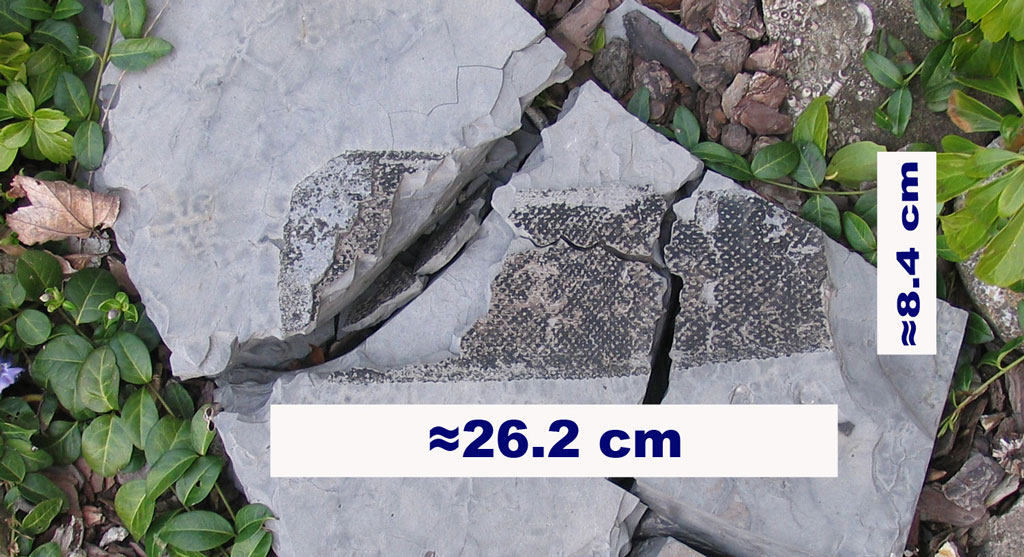
Reading the Indiana Department Geology and Natural Resources Twenty-First Annual Report W.S. Blatchley State Geologist 1896, I came across a plate image and description of the Parenchymophycus asphalticum found in the New Albany Shale of Clark and Floyd Counties in Indiana, USA. The New Albany Shale was named by a local geologist in the 1800s named William Borden. The shale dates to the Late Devonian Period.

Below is an image of a New Albany Shale fossil that might be what is described in the 1896 Report.

On page 118, Parenchymophycus asphalticum is described as:
"Plant with band-like thallus 10 to 150 mm wide, the well preserved spongy parenchymatic cells always filled with asphaltum. The cell walls are rich in silica. Cross divisions (nodes) at regular distances divide the band into rectangular oblong pieces (internodes). The termination of the plant consists of an oval shaped bud similar to that of Fucus vesiculosus L. of the present age. The length of specimens found varied from a few centimeters to 183 cm. The cell walls of this most interesting sea plant have resisted so well the influence of decomposition that they served as a means of diffusion for fluid bitumen, which, after a long time, gave off the  volatile components and left only the hard aspaltum. All specimens show no ramification. (Pl. II, fig. 1)"


Saturday, March 30, 2013

Lepidodendron? Coalified Fossil

This coalified fossil could be a decorticated bark of Prolepidodendron or Lepdidodendropsis from the Upper Devonian New Albany Shale. The New Albany Shale can be found around the southern Indiana and northern Kentucky. Usually when I find this type of fossil I think of it being an Archaeopteris or Callixylon.

I took these pictures at a local fossil study meeting. Thanks to Herb and Bruno for their opinion as to what this might be.

Tuesday, January 31, 2012

Ozarkodina Conodont Fossil


These fossils appear to be Ozarkodina willsi? conodonts found in either the upper Devonian New Albany Shale or middle Devonian Beechwood Limestone of Clark County, Indiana.

See the conodont.info web site to see Ozarkodina polita specimens: CLICK HERE and Ozarkodina tenuis specimens: CLICK HERE


Tuesday, December 21, 2010

One of the Oldest Petrified Woods


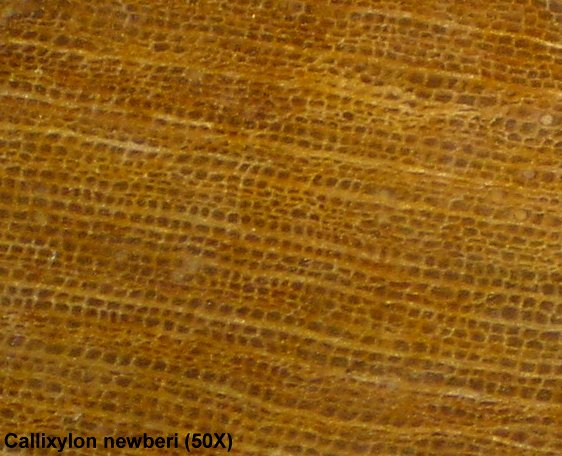
This Callixylon newberryi plant fossil is of the late Devonian period.  Fossils like this are considered some of the oldest petrified woods in the world.  This piece was found in Bullitt County, Kentucky in the New Albany Shale.

See this post for pictures of larger section of fossil wood on display at the Indiana State Museum.  Also this post about a really large fossil trunk on display at the Smithsonian National Museum of Natural History.  The Kentucky Paleontological Society has a very nicely prepared and photographed magnified sample seen here.

Below are pictures of the fossil shown at the beginning of this post.  It is a magnified view of a cut and polished section of one end.

 The next slide shows it magnified at 100x.  Need to find a way to fix the camera to the microscope so I can stack images to improve the overall image quality!


This last slide shows a 100x magnification of the long grain view of the wood.

Wednesday, October 20, 2010

Smithsonian's "The Tree" Fossil


This fossil has to be one of the largest types found in Kentucky (excluding the Paleozoic coral/sponge/bryozoan reef colonies).  The plant fossil section of the Smithsonian Museum of Natural History has a display of a Callixylon tree trunk fossil dated to 348 million years old (Late/Upper Devonian Period).  It was found in the New Albany Shale of Kentucky.  The tree did not grow in Kentucky though but probably floated in from the New York or Pennsylvania area then sank into the muck.

As the following pictures show this fossil protrudes into the floor and extends through the ceiling.  The display notes the trees reached heights of 30 meters (100 ft).  Modern conifers and cycads descend from this ancient progymnosperm plant fossil.


UPDATE: (2020-10-18): The collector was W.F. Pate and its catalog number is USNM P 33956. The Smithsonian on-line database has a link to this large fossil at:

Friday, August 6, 2010

Coalified Callixylon Wood


Devonian wood piece probably from a Callixylon log. A little different that what I normally find. It appears to have diamond shaped patterns that might represent the outer surface. They were found in New Albany Shale in Clark County, Indiana. The wood has been coalified or vitrinized by heat and pressure over time.  This fossil appears to be from the Upper Devonian Period.


This image of the specimen viewed with a microscope shows on the left pyrite mixed with the shale and a small coalified fragment showing on the right.


Thursday, August 5, 2010

Fossilized Callixylon Wood


A magnified (400x) view of a sliver of Upper Devonian Period fossilized wood.  It is probably Callixylon found in the New Albany Shale of Clark County, Indiana.  While this area was a sea with anaerobic bottom, it is thought logs floated in from Pennsylvania or New York and sank.  Buried in the silt they fossilized instead of decomposing.


While trying to get a sample for the scanning electron microscope some very small thin pieces broke free.  They were transparent enough to use the optical microscope's bottom light thus able to achieve 400x magnification.  How to determine what material is represented by that optical pattern I am not sure.  I assume it is a fragment of two wood rays.


Last picture original fossil fragment originated from.  This piece differs from yesterday's fossil in that it is not coalified.


Thanks to Herb for the specimen.

Wednesday, August 4, 2010

Scanning Electron Microscope SEM - Callixylon


Recently, I found a a very small (7 mm x 3 mm) piece of coalified Callixylon wood from the Upper Devonian Period.  After searching a large pile of New Albany Shale in Clark County Indiana for a while, it was all I discovered.  A little disappointed, I left the site but later studied the specimen with an optical microscope.  To my surprise, it appeared the wood still had its ray lines intact.

After reading a section of Chapter 12 Progymnosperms in the book Paleobotany: The Biology and Evolution of Fossil Plants by Thomas Taylor, Edith Taylor and Michael Krings, I determined Callixylon wood rays are constructed of ray tracheids and ray parenchyma.  In figure 12.16 of the book displays a SEM image of pit membrane of tracheid and I wondered if such detail was still intact on one of these samples?

My microscope became ineffective after 100 times magnification to see something this small. What I needed was a scanning electron microscope (SEM).  Yikes! Those cost a lot of money and I am not a research university or million dollar company.  What to do?
Image compliments of ASPEX Corporation

Fortunately, I remembered my friends at ASPEX Corporation in Pennsylvania who scanned a fossil for me earlier in the year.  They have a great FREE program that lets every day people get items imaged with a scanning electron microscope SEM.  The program is call "Send Us Your Sample".  Just follow these steps:

1) Go to the ASPEX Corporation website and print this form.

2) Fill out the form and mail it along with the sample to be scanned:

ASPEX Corporation
Free Sample Submissions
175 Sheffield Dr.
Delmont, PA 15626

 3) Once ASPEX completes the scan, the images will be posted on their website here.

Note: It should take about 2-6 weeks (depending on work load) for the results to post to the ASPEX website.  Submitters will be notified via e-mail.  Be sure to note on the submission form if you want the sample returned.

While at the ASPEX web site, check out their Name That Sample contest with a chance to win a brand new Netbook. 

Thursday, July 8, 2010

Cladoselache Shark Fossil


Okay, I am going out on a limb (or should I say fin) with this fossil identification.  This fossil imprint appears (to me) to be a fragment of a pectoral fin of an Upper Devonian Period Cladoselache shark.  Now I have shown this fossil to a number of people and the Cincinnati & Cleveland museums mostly to met with silence or skepticism.  As an aid to readers, I have created a graphic using Adobe Illustrator with diagram representing the shark with where the fossil might fit on its body.


It looks to me to somewhat match the Cleveland Shale shark fossils.  This fossil was found in the New Albany Shale of Bullitt County which is synonymous.

Cladoselache Shark Fossil with New Fossil Overlay
Original Image from The Jesse Earl Hyde Collection
Posted with Permission (Usage Agreement)


UPDATE (March 2020): Updated web links for The Jesse Earl Hyde Lantern Slide Collection and Case Western Reserve University.

Monday, April 5, 2010

Gas Exploration in New Albany Shale

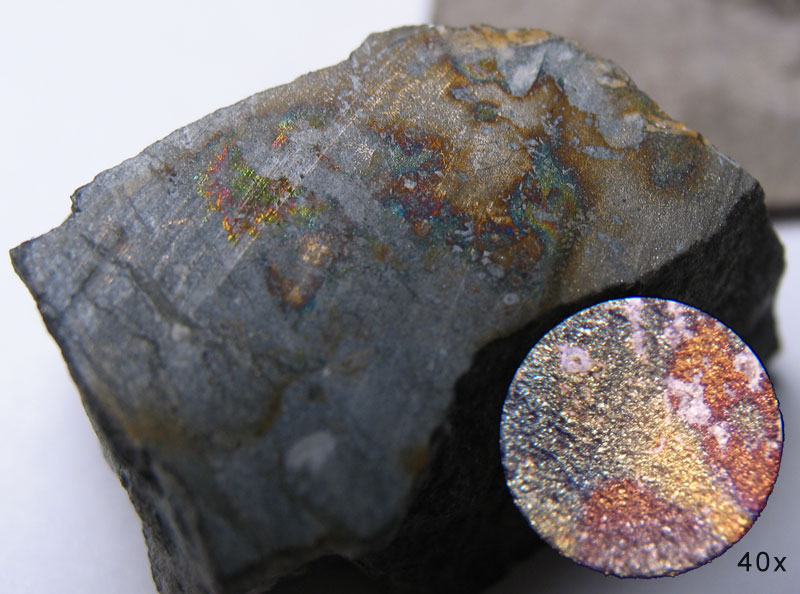
 New Albany Shale Pyrite Polished
Iridescent pyrite magnified 40x
Clark County, Indiana

An article in the Evansville Courier & Press from March 6, 2010, talks about a Louisiana exploration company looking to lease land in Illinois.  They are attempting to drill 5,000 feet (1500 m) into the New Albany Shale to find natural gas.  The article states they need at least 640 acres (2.5 km ^ 2) and will pay $6 an acre a year.  Test drilling to hopefully begin by 2011.  Another item I learned is that it is sometimes referred to as the Devonian Shale.

UPDATE (07/04/2010): A while back HBO was shown on Dish Network for FREE and one movie that the DVR saved was Gasland.  If you plan on selling mineral rights to your land and have to use well water, it would be a good idea to view this movie.  The website is here.  In addition, one should read a rebuttal at the Energy In Depth web site that refutes some items in the film.  After seeing the film and reading the web site you then need to decide what to believe by two groups promoting their own agendas.  The country needs the energy sources but it appears we need cleaner methods of extraction that are economically viable.

 New Albany Shale Pyrite Polished
Pyrite magnified 40x
Clark County, Indiana
I guess that would explain why I saw a gas slick in the water container I was using to polish the New Albany Shale pyrite the other day.  Of course, the shale we find here is not 5,000 feet (1500 m) down. but very close to the surface. Looking at one of the guides produced by the University of Louisville, the shale is dated to the Late Devonian Period.  It is Blocher and Selmier Members.  When cutting the specimen in the 2nd image the water in the saw tray turned black-dark gray and smelled like a sewer!  Some of these pyrite samples can really stink when they are sawed (sulfur?).  The first pyrite specimen was more of light gray water color.  Definitely different chemical compositions/concentrations in the layers of New Albany Shale.

 New Albany Shale
Clark County, Indiana
One other surprise is the level of thoughtful comments on the newspaper web site.  I did not realize all that went into lease agreements for mineral rights.

 Magnified Coalified Fossil Wood
Devonian Period
New Albany Shale - Clark County, Indiana