Sunday, October 2, 2016
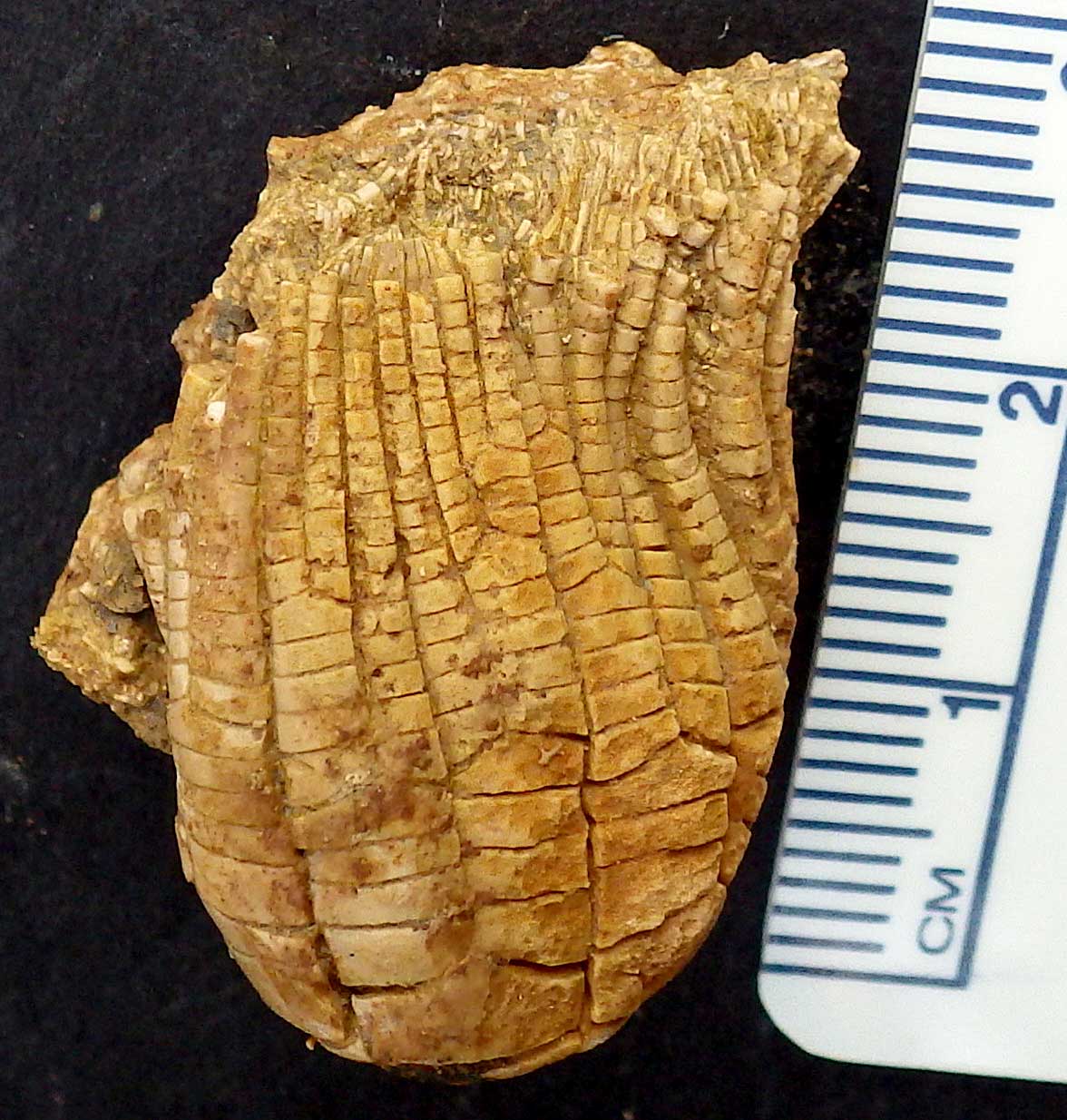
Zeacrinites Crinoid Calyx
Here is a picture of one sweet find. It appears to be a Zeacrinites wortheni (Hall, 1858) crinoid calyx fossil. It was found in the Glen Dean Formation of Grayson County, Kentucky, USA. The fossil is about 2 cm tall and consists of the calyx cup, arms and even some of the pinnules. The creature dates to Chesterian, Upper Mississippian Period.
Curious about how Zeacrinites Troost, 1858 was named? Check out this post to learn more: http://louisvillefossils.blogspot.com/2016/01/zeacrinites-wortheni-crinoid-calyx.html
Thanks to Kenny for the image.
See early finds here:
http://louisvillefossils.blogspot.com/2016/01/zeacrinites-wortheni-crinoid-calyx.html
http://louisvillefossils.blogspot.com/2015/08/zeacrinites-wortheni-crinoid-calyx_8.html
http://louisvillefossils.blogspot.com/2015/08/zeacrinites-wortheni-crinoid-calyx.html
Labels:
calyx,
crinoid,
glen dean member,
Kentucky,
mississippian
Saturday, October 1, 2016
Trimerus Trilobite from England
One my favorite places in the British Natural History Museum is the small wall display of Fossils from Britain. It is located in between their world class collection of marine reptiles and one of the gift shops. It has a sampling of a lot of Paleozoic invertebrate fossils like what I find in the Louisville area. My interest in Middle Silurian marine fossils was well represented in their Wenlock series which is very similar to the Waldron Shale.
This posting shows a almost fully intact Trimerus delphinocephalus (Green,1832) prone trilobite. It was found in the Silurian Period Wenlock series of Dudley Worcestershire England. Image taken August 2016.
It is similar to what I have found in the Waldron Shale.
http://louisvillefossils.blogspot.com/2013/05/cleaned-silurian-trimerus-trilobite.html
Labels:
British Natural History Museum,
england,
silurian,
Trilobite,
wenlockian
Friday, September 30, 2016
Fossil Plant Stems from Germany
This image is of a grouping of calcium carbonate fossilized aquatic plant stems. They are identified as Chara or stonewort plants. The plants date to the Pleistocene epoch and were found in Weimar Germany.
Fossil on display at British Natural History Museum August 2016.
Labels:
British Natural History Museum,
germany,
plant,
pleistocene
Subscribe to:
Posts (Atom)


