Saturday, August 10, 2013

Apatosaurus Skull/Vertebrae Fossils

Pictured is the fossilized skull and the first four cervical or neck vertebrae of an Apatosaurus sp. dinosaur. It was found by the staff and students of Marietta College at a site in Morrison Formation of Emery County, Utah, USA. The fossil dates to the Upper Jurassic Period (about 150 million years ago).

The fossil was collected as part of joint research program with the Cincinnati Museum Center (accession number VP7180).

The picture only shows the first four vertebrae of the more than dozen recovered at the site. This dinosaur was once known as the Brontosaurus.

Fossil on display at Cincinnati Museum of Natural History & Science as of August 2013.

Learn more about this dinosaur at wikipedia.org.

Friday, August 9, 2013

Compsognathus longipes Fossil Cast


This image is of a cast of a Compsognathus longipes fossil. It appears to be a copy made of fossil belonging to Joseph Oberndorfer of Germany. He acquired it in 1859 and it might be from the Painten Formation of Kapfelberg. This fossil dates to the Jurassic Period (about 150 million years ago).

This cast was part of the Ultimate Dinosaurs: Giants from Gondwana exhibit at the Museum of Natural History and Science in Cincinnati, Ohio. It was photographed in August 2013. The dinosaur exhibit was created by the Royal Ontario Museum of Toronto Canada.

The exhibit was supported by Associate Exhibit Sponser Frisch's restaurant and Promotional Partners Cincinnati Reds baseball, newspaper The Enquirer and TV channel Local 12 WKRO Cincinnati.

See wikipedia.org web page about this fossil.


Thursday, August 8, 2013

Anomalocaris canadensis Cambrian Fossil


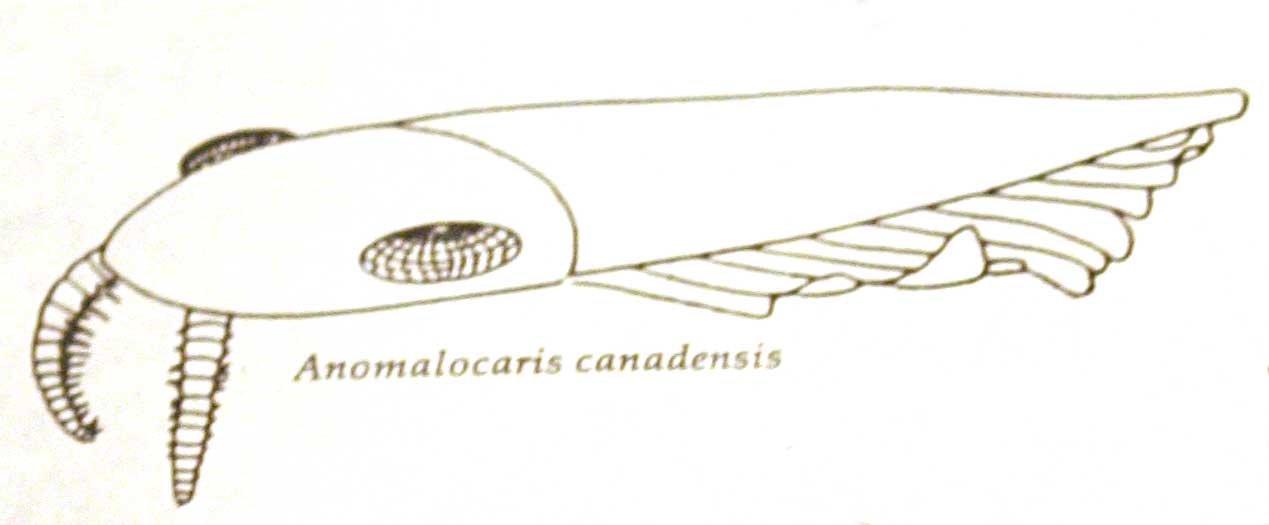
This image is of an Anomalocaris canadensis fossil found in the Burgess Shale of British Columbia, Canada. It is one of the larger fossil creatures found there. This fossil dates to the Cambrian Period of the Paleozoic Era (about 530 million years ago). Since only pieces of it were found it was mistaken for a worm or jellyfish like creature at first. Learn more at its wikipedia.org web page.

It was probably found by Charles D. Walcott (or someone in his group) who later was in charge of the Smithsonian in the United States. This fossil layer is quite famous. The Smithsonian later sent out specimens to natural history museums across the United States in the 1940s. More than likely this is one of that was sent to the Museum of Natural History and Science in Cincinnati, Ohio. It can be found in the invertebrate fossil display past the Ice Age exhibit in the museum as of August 2013.


Here is an illustration that was on display with these fossils of an artist interpretation of what these creature might have looked like.