Thursday, May 21, 2009

Fossils Found in Crawford County, Indiana - March 2008

Here are some pictures I found from a trip in March 2008 to a road cut in Crawford County, Indiana. It is a fun place to hunt for fossils from the Mississippian or Lower Carboniferous period. You will need to do some climbing though.

Unknown trilobite pygidium found in the Indian Springs Shale of the Big Clifty Formation in Crawford County, Indiana.
UPDATE (2020/02/15): Maybe a Kaskia chesteriensis or Paladin chesteriensis.

Unknown horn corals from the Mississippian period.
UPDATE (2020/02/15): Maybe a Zaphrentites spinulosa or Amplexi zaphrentis?


Unknown crinoid stem with a number of branch stubs.


Unknown crinoid calyx pieces. UPDATE (2020): Maybe Phanocrinus or Bicidiocrinus?


Archimedes sp. from the Upper Mississippian period found in the Indian Springs shale.


Cymbiocrinus (Kirk, 1944) crinoid calyx in plate with crinoid stem pieces.

Blastoids that are probably Pentremites sp. (Say) found in the Indian Springs shale in Crawford County, Indiana.

Wednesday, May 20, 2009

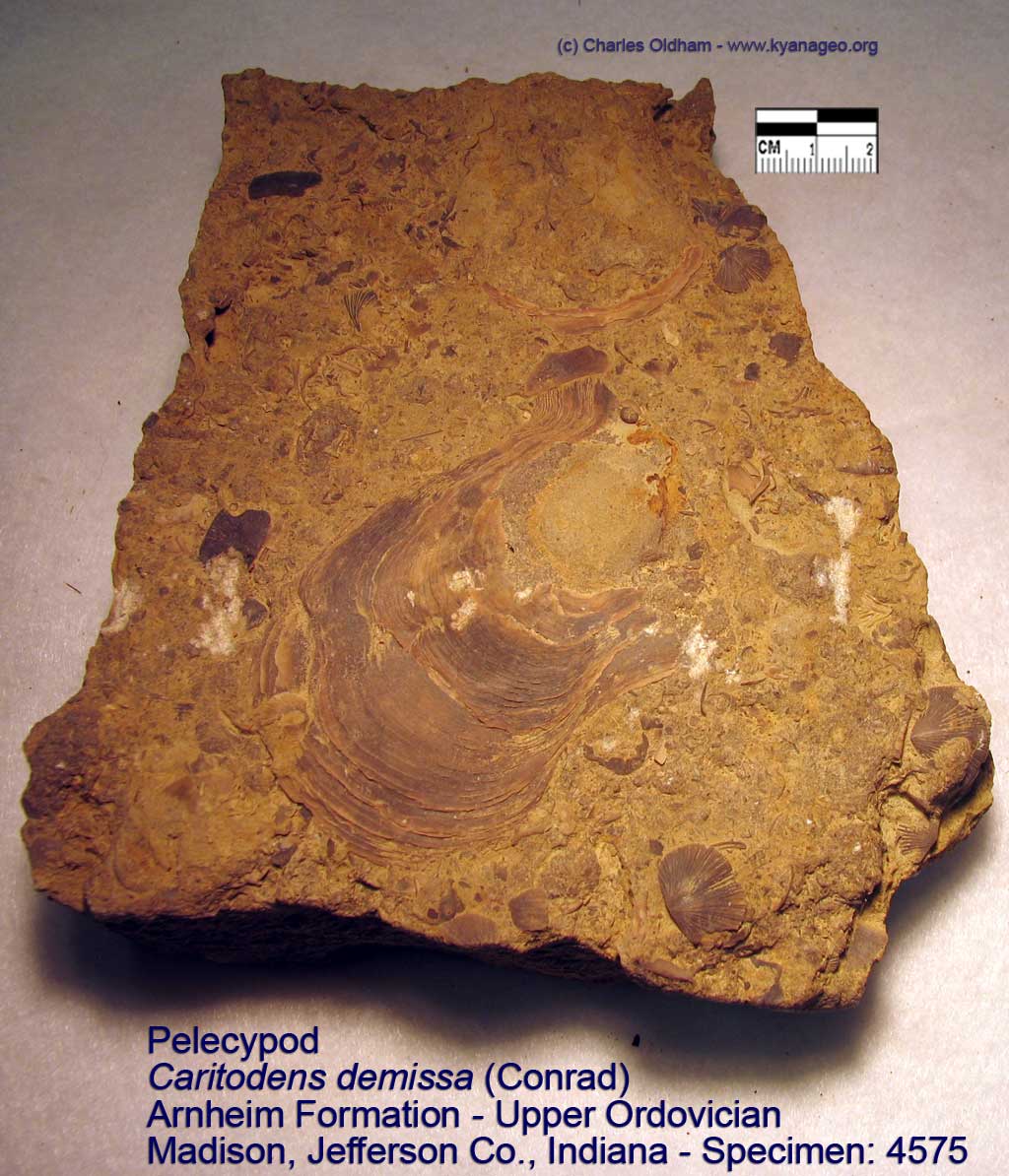
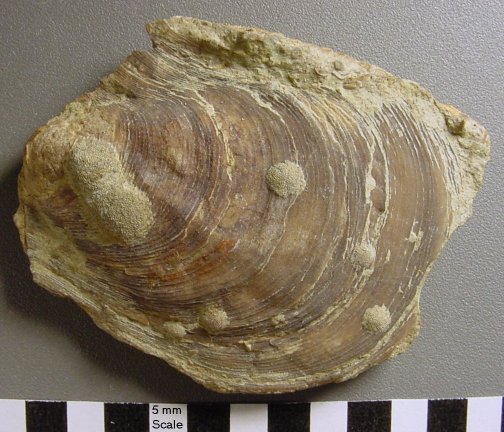
Ordovician Clam: Caritodens demissa

The following pictures show an Ordovician period clam called Caritodens demissa (Conrad, 1842). This clam was found in eastern Jefferson County, Kentucky (just outside of Louisville, Kentucky). It was found in the Grant Lake Formation. Part of clam is still embedded in the rock matrix. The fossil is about 4 cm wide and 3.5 cm long. The Fossils of Ohio book says on page 139 this clam is common. It describes it as "a large species distinguished by auricles (large winglike extensions of the hinge), strongly developed comarginal ridges, and the lack of any radial ornamentation." A picture can be found in the book at Figure 12-1.1. Here is a link to another fossil found on the KYANA Geological Society website. This might be one at this link at the Kentucky Paleontological Society website. This link on the Dry Dredgers website shows a number of Caritoden pelecypods they have found. Learn more about this pelecypod fossil at one of my other postings.


Tuesday, May 19, 2009

A Pseudofossil Called Dendrites

If you type pseudofossil into the image search engine section of Google, images like the ones shown below will start to appear. These mineral deposits of manganese oxide were created when mineral enriched water seeped into the cracks of this rock. After the water departed, these mineral patterns were left.

The patterns remind me of a little branching plant or fractals defined by mathematics.

This rock is probably Devonian so these pattern formed sometime in the last 400 million years.