Showing posts with label lophophore. Show all posts

Monday, October 4, 2021

Atrypa Brachiopod Fossil with Crystallized Lophophore


Check out this picture of an Atrypa (Hall, 1862) brachiopod fossil (note the two elliptical shapes which are feeding tubes or lophophore that have crystallized). The fossil was found in the Genshaw Formation at Alpena, Michigan USA. The creature lived Middle Devonian Period (Erian Stage).


Sunday, February 3, 2019

2000th Posting + The Hidden Lophophore Fossil


I have made it to my 2000th posting and I thought I would write about something special. In the past, I have marked other milestone postings with reviews of favorite fossils or most visited pages. You can find links to those at the end of this post, if you are curious.


This post is about maybe a unique discovery that has not been documented yet. Recently, I was testing x-ray sensors and while one can x-ray keys, pens, paper clips or calibration targets while testing, I got a bit more creative. I started to x-ray small fossils in my test image batch. Almost all of the time they were solid with a consistent layer but every so often I would see some other hidden details.


While taking an x-ray of a Devonian brachiopod Productella spinulicosta (Hall, 1867, aka Spinulicosta spinulicosta), I discovered it had a tube like structure embedded in its fossil form. It appears to be some sort of lophophore (feeding tube). My research has not found other images of lophophores from this genus of brachiopod so maybe this is the first time it has been visually documented. In x-ray images the green arrow points to the lophophore, light blue arrows point to spines.

As for this blog, I thought I would eventually run out of material to post but I continue to visit museums and on rare occasions field collect. Also my cousin Kenny has a nicer microscope/camera system that is yielding amazing images of microfossils he has been collecting. So I seem to have a good source of material to write about in the near future. Thanks for reading.

Previous milestone postings:

https://louisvillefossils.blogspot.com/2009/12/500-fossil-posts.html

https://louisvillefossils.blogspot.com/2011/07/blog-in-review-1000th-posting.html

https://louisvillefossils.blogspot.com/2018/07/10-years-of-blogging.html

Monday, January 21, 2019

Syringothyrus Brachiopod Lophophore Fossil


Here is a fossil I do not think I have seen before. The Mississippian Period brachiopod Syringothyrus texta found in the Knobstone Formation of Clark County, Indiana, USA. What is special about this is the feeding tube (lophophore) is shown.

Nice find Kenny!

Tuesday, December 15, 2015

Lophophore of a Terebratula Brachiopod Fossil


This picture is of a Terebratula brachiopod fossil with an exposed lophophore.  It was on display at the Museo di Paleontologia at Sapienza University of Rome Italy. Creatures like this existed at the time of the Pliocene Epoch of the Neogene Period.

Image taken in June 2014.

Thursday, April 17, 2014

Orthospirifer Lophophore Brachiopod Fossil

This fossil is a great example of the brachiopod lophophore feeding tubes preserved in a white quartz form. This brachiopod appears to be some sort of Orthospirifer. It was found in the Sellersburg Limestone that formed in the Middle Devonian Period (Eifelian).

Thanks to Mary Ann for letting me take some pictures of it.


Friday, March 22, 2013

Atrypa reticularis with lophophore


This fossil is chipped which revealed what looks to be its feeding apparatus or lophophore. The Silurian Period brachiopod is probably a Atrypa reticularis. It was found in the Waldron Shale of Clark County, Indiana.


Thursday, November 18, 2010

Orthostrophia fornacula? with Lophophore

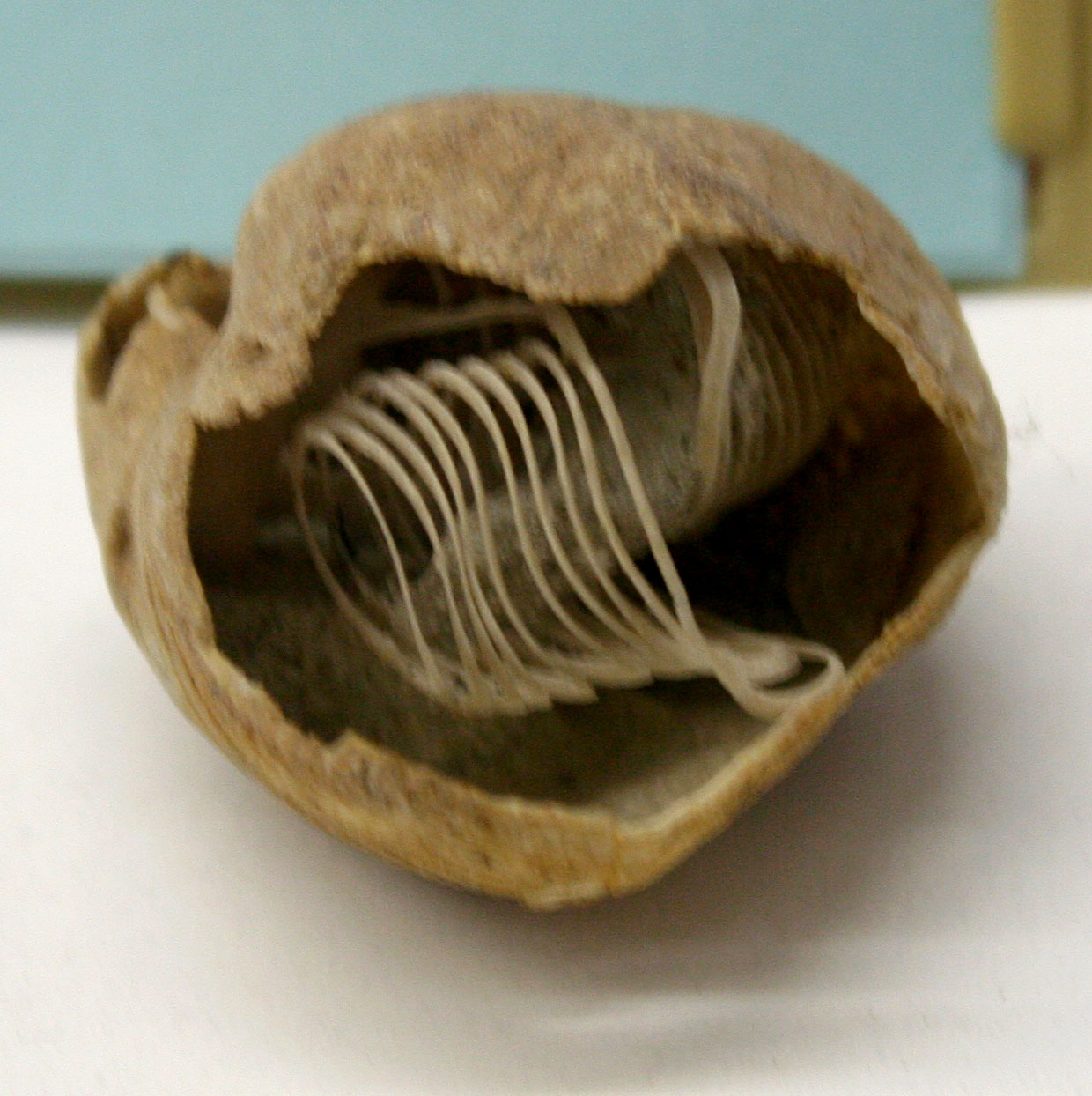
An Orthostrophia fornacula? brachiopod named by paleontologist James Hall of New York.  Fossil found in the Jeffersonville Limestone of Clark County, Indiana.  Specimen dates to the Middle Devonian Period.  The white coiled tube visible in images is the lophophore.  Fossil is 4.6 cm long, 3.8 wide, and 3.2 cm tall.  Weight is 37.7 g.

Learn more about the area's brachiopods from this Indiana State Parks document.


Thursday, July 2, 2009

More Devonian Coral Finds

I found this mineral deposit in a coral piece. It looks like pyrite but there is some green in this.

Some sort of hexagon type coral.


Here is a Devonian period coral call Favosites turbinatus or "knee cap" coral. This knee cap coral might be the biggest one I have found. It is about 11 cm in diameter.
Other side of the previous Favosites turbinatus coral shown.

Still wet from being cleaned but some delicate branching Devonian corals.


Unknown Devonian brachiopod embedded is the rock block. Nice view of its fossilized lophophore.

Here is a Devonian period horn coral with a budding daughter coral. It is probably a Cystiphylloides sp.

Here are some fragments of snail molds. The snail more than like was the Devonian period Turbinopsis shumardi.