Showing posts with label cornulites. Show all posts

Friday, December 12, 2025

Modiolopsis concentrica Pelecypod Fossil with Cornulites


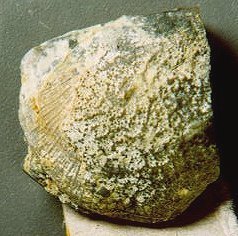
Above is a picture of a Modiolopsis concentrica (Hall & Whitfield, 1875) pelecypod fossil. Also the fossil has worm tubes called Cornulites (Schlotheim, 1820). These animals existed in the Ordovician Period. It was found in the Clays Ferry Formation of Robertson County, Kentucky USA. Thanks to Kenny for the image.

Tuesday, May 2, 2023

Isotelus Pygidium Fossil


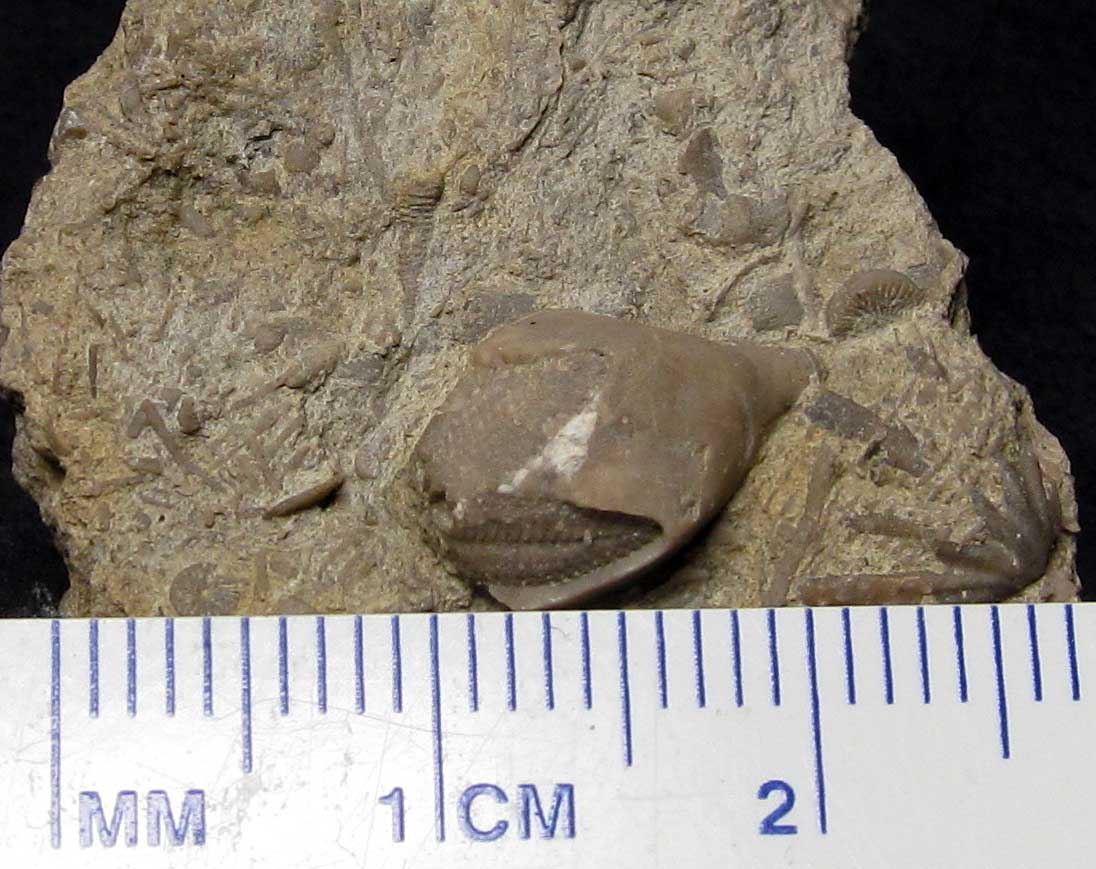
In this picture is an Isotelus (Dekay, 1824) trilobite pygidium fossil next to little ringed funnel shapes which are the fossilized remains of a worm called Cornulites (Schlotheim, 1820). The small brachiopods in the matrix are Zygospira (Hall, 1862) fossils. Fossil plate was found at a roadcut near Frankfort, Kentucky, USA. The fossils date to the Ordovician Period.

Thanks to Kenny for image.

Sunday, February 3, 2013

Mississippian Age Cornulites Fossil


Cornulites worm tube fossil found in the Indian Springs Formation of Crawford County, Indiana. The worm tube is located in the picture to the upper left of the blastoid. Fossil is dated to the Mississippian Period. 

Thanks to Kenny for the picture.

Tuesday, February 23, 2010

Cornulites

Cornulite worm tubes found in the Kope Formation. These small creatures existed in the Ordovician Period. Typically, I find them attached to brachiopod shells specifically in the ridges. So it was change to find them by themselves in the gravel I was screening for scolecodonts. Fossils found in Carroll County, Kentucky.


Sunday, February 14, 2010

Rafinesquina Encrusters

These Rafinesquina brachiopods from the Ordovician Period found in Kentucky have some encrusting creatures on them.

This first specimen I find the most interesting. It has a type of matting bryozoan and either a branching bryozoan like cyclostome or coral like Protarea richmondensis. See these nice pictures on the Kentucky Paleontological Society website: encrusting Protarea richmondensis coral on Rafinesquina and Cyclostome bryozoan and Cornulites worm tubes encrusting Rafinesquina
 

This next Rafinesquina brachiopod has imprints of the tubes of either a Cornulites worm or Tentaculites.


An inarticulate brachiopod has made its home on shell edge of this Rafinesquina brachiopod.


A number of bryozoan colonies can be seen on shell edge and shell body of this brachiopod.


Not really any visible encrustations on this brachiopod though an interesting indentation.


Thanks to Herb for the images of some of his brachiopod specimens.

Monday, November 23, 2009

Cornulites on Rafinesquina Brachiopod

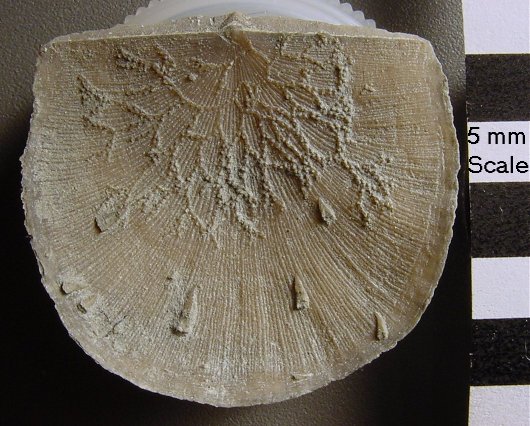
Interesting fossils in this picture of a brachiopod shell hosting a number of worm tubes. These fossils are from the Ordovician Period and were found in the Lexington Limestone(?) in Franklin County, Kentucky.

There appear to be 15 worm tubes (Cornulites) on the Rafinesquina brachiopod shell. Apparently the brachiopod was dead when the five attached themselves to the inside of the shell.

Approximately 10 Cornulites attached to the outside of the shell.


View of five worm tubes attached to inside of the shell.

Closeup of the shell edge with worm tubes.

Friday, November 6, 2009

Cornulites on Brachiopods

Cornulite fossils on Ordovician Period brachiopods. These brachiopods were found in eastern Louisville, Kentucky at road cuts. Green arrows are used in some pictures to help point out the worm tubes.


Monday, June 22, 2009

Devonian Clam/Brachiopod/Cornulite

Here is a Devonian clam and brachiopod fused together. They were found in the Jeffersonville Limestone in Clark County, Indiana. It looks to be that the clam and the brachiopod did not interact together. Looking at just the brachiopod side we see a Cornulites attached to one of the shell ridges and at the hinge point of the shell a hole. It is possible that a snail bore into the brachiopod shell.

Signs of beekite are on both sides of the brachiopod shell.


Sunday, May 17, 2009

Platystrophia Brachiopod with Cornulites

UPDATED: I originally posted this as a small horn coral attached to the shell but a series of anonymous comments set me on the correct course. What I thought was a horn coral was really a Cornulites. Thank you to the person(s) who gave me the correct identification.

All the heavy rains have provided great collecting at the road cuts outside the city. The Ordovician fossils that are the most common is the brachiopod. This brachiopod is a Platystrophia of some type. What I found interesting was this Cornulites that anchored itself in the groove of the brachiopod shell. It is thought to be a tubicolous annelid worm that orientated itself for feeding. Since this one was pointing toward the shell opening, it probably attached and grew there while the brachiopod was still alive.


This other Cornulites it placed in the opposite direction pointing toward the bottom of the shell.