Sunday, June 29, 2014

Elephas antiquus Tooth Fossil at Roma Italy


Here is a picture of an elephant tooth fossil housed in a display case at the Geologia building located on the campus of Sapienza University of Rome. The case can be found on the second floor of the building. The fossil is called Elephas antiquus and lived during the Pleistocene. The paleontology museum is on the 3rd floor of this building and houses a full skeleton of this ancient animal.


The university was founded in 1303 by Pope Boniface VIII. In 1870, it became a public university for the state of Italy.

Sources:
http://www.uniroma1.it/ateneo/chi-siamo/la-storia

Saturday, June 28, 2014

Erycites Fossil at Sapienza Università di Roma


Here is a picture of a fossil housed in a display case at the Geologia building located on the campus of Sapienza University of Rome. The case can be found on the second floor of the building. The ammonite fossil is called Erycites sp. and lived in the Lower to Middle Jurassic Period. The specimen was found in the Toarcian stage of the Umbro-Marchigiano-Sabina facies of central Italy near the village of Polino.


The university was founded in 1303 by Pope Boniface VIII. In 1870, it became a public university for the state of Italy.

Sources:
http://www.uniroma1.it/ateneo/chi-siamo/la-storia

http://tetide.geo.uniroma1.it/dst/grafica_nuova/pubblicazioni_DST/geologica_romana/Volumi/Vol%2016/GR_16_263_283_Nicosia%20et%20al.pdf

Friday, June 27, 2014

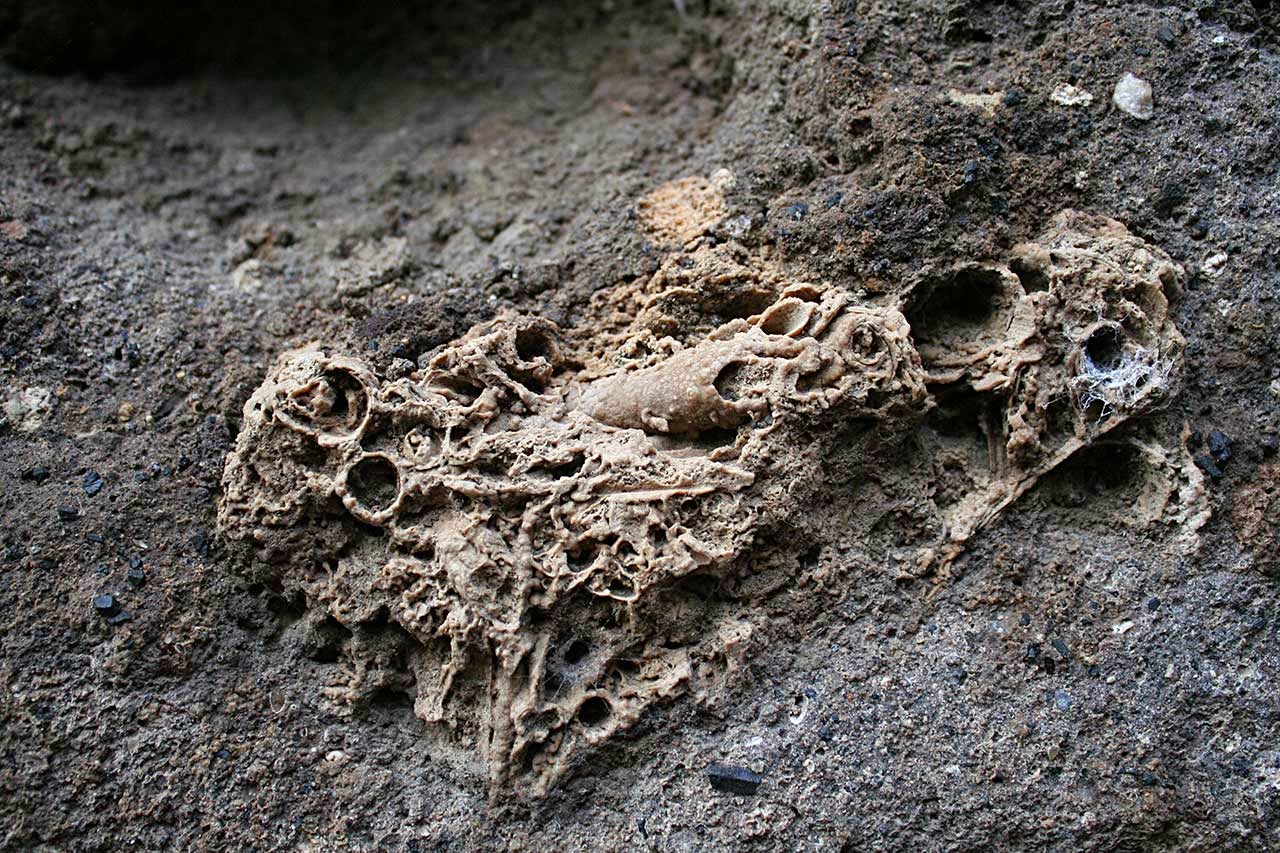
Pseudofossils at Pompeii Italy


When visiting the ruins of the ancient Roman city of Pompeii, study the details of some of the rocks that make up the walls. Some appear to be clusters of tube like shapes that resemble fossils. There are quite a few of these rocks to see in the numerous walls throughout the ruins.

What I would like to know is how did they form?

Are they a byproduct of the eruption of Mount Vesuvius?

UPDATE: I think these specimens are travertine (limestone concretions with remains of plant stems). They are not from the volcano. It would be nice to know where they originated though.


Example of walls found in the ruins at Pompeii.


What is left of some Roman columns at Pompeii.