This is a report about the GeoFest 2010 at the Indiana State Museum. Today is the last day of the GeoFest. The event seemed well attended the day I was there. Over 20 dealers appeared to be in attendance including a number of lapidary, fossil sellers from Crawfordsville, Indiana, a dealer from Morocco selling that area's fossils, and a number of mineral suppliers.
In addition to dealers, the museum provided an area for children's activities: making geodes, identifying fossils, tracing fossils, finding Salem Limestone microfossils and other exhibits. A number of groups were also exhibiting: Indiana 4-H, 500 Earth Science Club, Indiana Society of Paleontology, Indiana Geological Survey, Lost River Convervation Association, Indiana Academy of Science, and Friends of Mineralogy.
I had an interesting conversation with a geology teacher with the Indiana 4-H. He had a number of display examples from the Dunes State Park in northern Indiana. Two shown here are mica and quartz. A very dedicated educator who had been collecting for a number of years.
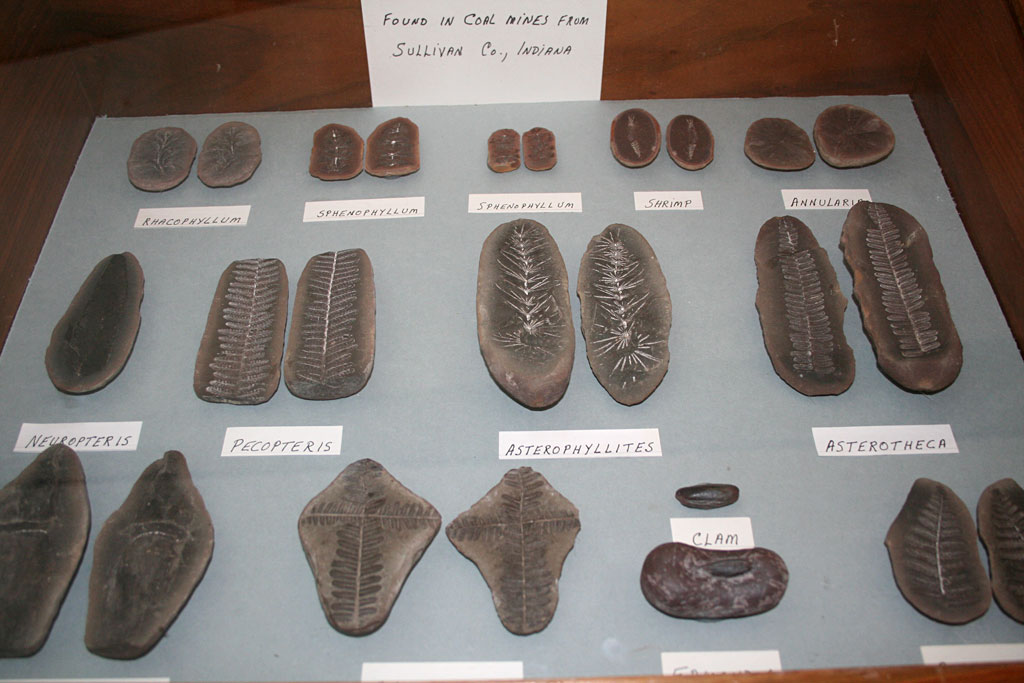
He also had some fossils on display he found in Sullivan County, Indiana in a coal mine. They appear to be Pennsylvanian Period plants and marine creatures.
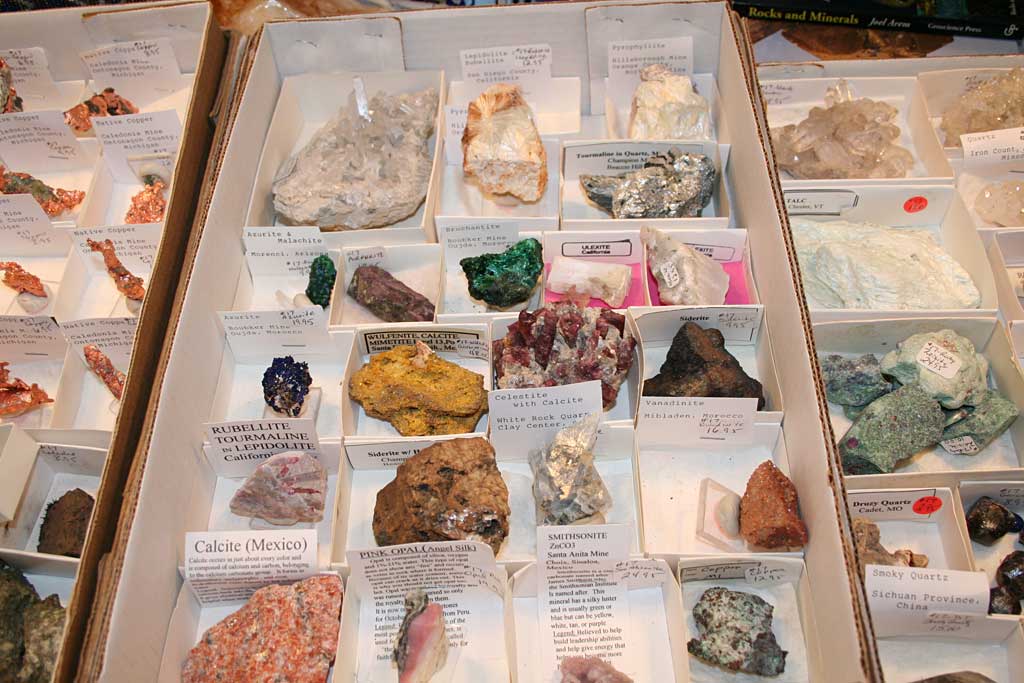
Here is a picture of minerals for sale from a dealer's table on the lowest level.
All and all a very nice festival where one can meet experts on Indiana geology and see geology specimens available for purchase. The added bonus is opportunity to tour the extensive mineral, rock and fossil displays at the museum.
Sunday, October 24, 2010
GeoFest 2010 Report
Labels:
geofest,
indiana,
indiana state museum
Saturday, October 23, 2010
Waldron Shale Fossils For Sale
While at GeoFest 2010 at the Indiana State Museum I got permission of one of the dealers to photograph some of his fossils. I was particularly interested in the Waldron Shale fossils. I regret not getting the dealer's name or contact information. He was located in the lobby across from the dealers from Crawsfordsville, Indiana with all the Mississippian Period crinoids.
This first fossil shown is a Dalmanites verruccosus trilobite cephalon of the Silurian Period found in Waldron, Indiana.
Second fossil shown is the cystoid Holocystites scutellatus from the same time period but found in Napoleon, Indiana.
Platyostoma sp. gastropod from Silurian Period and found in Waldron, Indiana. It appears to be with some sort of worm tube (Cornulites?).
Next fossil is the Platyostoma niagerensis from same location and time period as last fossil.
Last fossil is a combination of Platystoma sp. gastropod and Eucalyptocrinus sp. crinoid calyx cup found in Waldron, Indiana (Silurian Period).
American flag flying among grove of trees as found out front of Indiana State Museum.
This first fossil shown is a Dalmanites verruccosus trilobite cephalon of the Silurian Period found in Waldron, Indiana.
Second fossil shown is the cystoid Holocystites scutellatus from the same time period but found in Napoleon, Indiana.
Platyostoma sp. gastropod from Silurian Period and found in Waldron, Indiana. It appears to be with some sort of worm tube (Cornulites?).
Next fossil is the Platyostoma niagerensis from same location and time period as last fossil.
Last fossil is a combination of Platystoma sp. gastropod and Eucalyptocrinus sp. crinoid calyx cup found in Waldron, Indiana (Silurian Period).
American flag flying among grove of trees as found out front of Indiana State Museum.
Labels:
crinoid,
cystoid,
geofest,
indiana state museum,
silurian,
Trilobite,
waldron shale
Friday, October 22, 2010
Calymene Update Part 2
A Calymene trilobite I have been prepping for weeks now. Using a DSLR camera now but it needs a macro lens. Changes since last update used diluted hydrochloric acid on the limestone around the trilobite to smooth out engraver lines. Used a Dremel tool with two types of stainless steel brushes to clean limestone out of ridges in thorax. Also used brush to smooth out engraver lines. More touch up work using a needle tool and Dremel engraver to remove matrix around cephalon.
Labels:
indiana,
silurian,
Trilobite,
waldron shale
Subscribe to:
Posts (Atom)


