Monday, February 15, 2010

Peneroplis Foraminifera from Spain

Images of two different specimens for a foraminifera called Peneroplis planatus. These remains were found on Levante Beach, Benidorm, Spain. The creatures exist in present time.  Images taken with a Kodak Easyshare LS273 camera using an Orion microscope at 40x magnification.  While the microscope does not have model number on it, I believe it is the S400 which is listed on amazon.com for about $60.

 
Thanks to Michael Hesemann for the specimens and his great website that makes identifications a much easier task.


Sunday, February 14, 2010

Rafinesquina Encrusters

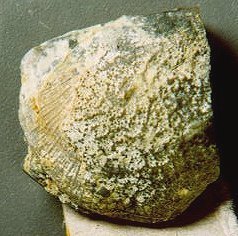
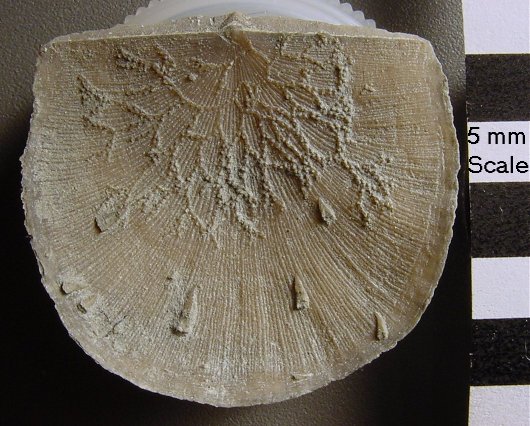
These Rafinesquina brachiopods from the Ordovician Period found in Kentucky have some encrusting creatures on them.

This first specimen I find the most interesting. It has a type of matting bryozoan and either a branching bryozoan like cyclostome or coral like Protarea richmondensis. See these nice pictures on the Kentucky Paleontological Society website: encrusting Protarea richmondensis coral on Rafinesquina and Cyclostome bryozoan and Cornulites worm tubes encrusting Rafinesquina
 

This next Rafinesquina brachiopod has imprints of the tubes of either a Cornulites worm or Tentaculites.


An inarticulate brachiopod has made its home on shell edge of this Rafinesquina brachiopod.


A number of bryozoan colonies can be seen on shell edge and shell body of this brachiopod.


Not really any visible encrustations on this brachiopod though an interesting indentation.


Thanks to Herb for the images of some of his brachiopod specimens.

Friday, February 12, 2010

Canadian Crinoid Calyx

In honor of the Winter Olympics now in Canada, we get to see a Canadian fossil image.

This crinoid calyx image was sent to me by Paul Racicot who has a blog at paulracicot.blogspot.com.  Do not fret if you cannot read French as translate.google.com can help you with automatic translation (go to the Google site and enter the website address and choose the translation type).

This calyx about 1 cm wide was found in L'Anse-McInnis, Gaspesia, Province of Quebec.  Not sure the exact time period but it appears to be either Devonian or Silurian.  Always good to find a crinoid calyx!

Thanks for the image Paul.