Showing posts with label precambrian. Show all posts

Monday, August 6, 2018

Precambrian Stromatolite Fossil


These images are of a 900 million year old stromatolite fossil from Atar rock formation of Mauritania, Africa. This fossil is from the low oxygen atmosphere Precambrian Period. Stromatolites are mats of aerobic cyanobacteria and anaerobic bacteria that grew under shallow water. It is thought that since an ozone layer had yet to form around the Earth at this time in history that water protected life from intense ultraviolet light but allowed energy from other wavelengths allowing growth.


The mats of bacteria formed colonies that stacked overtime to form columns with grey carbonate mud in between branches. The specimen was cross cut and polished to allow better viewing of layers. Second picture is of the outer surface of specimen.


Fossil on display at American Museum of Natural History, New York City, USA as of July 2018.

Wednesday, March 29, 2017

Stromatolite from Mauritania


This fossil stromatolite was found at Atar Mauritania. Fossil dates to the pre-Cambrian Period.

It was on display at the Musée de Mineralogie (Mineralogy Museum) located at the MINES ParisTech, 60 Boulevard Saint-Michel 75006 Paris France (August 2016).

Tuesday, October 14, 2014

Eozoon canadense Pseudofossil


Originally this fossil was identified in 1864 or 1865 by John William Dawson as a Precambrian foraminifera. As it turns out it was metamorphosed bands of calcite and serpentine thus a pseudofossil. Specimen can be seen at the Museo di Paleontologia at Sapienza University of Rome Italy.

Image was taken in June 2014.

Learn more at:
http://en.wikipedia.org/wiki/Eozoon_canadense

Thursday, January 12, 2012

Billion Year Old American Fossils

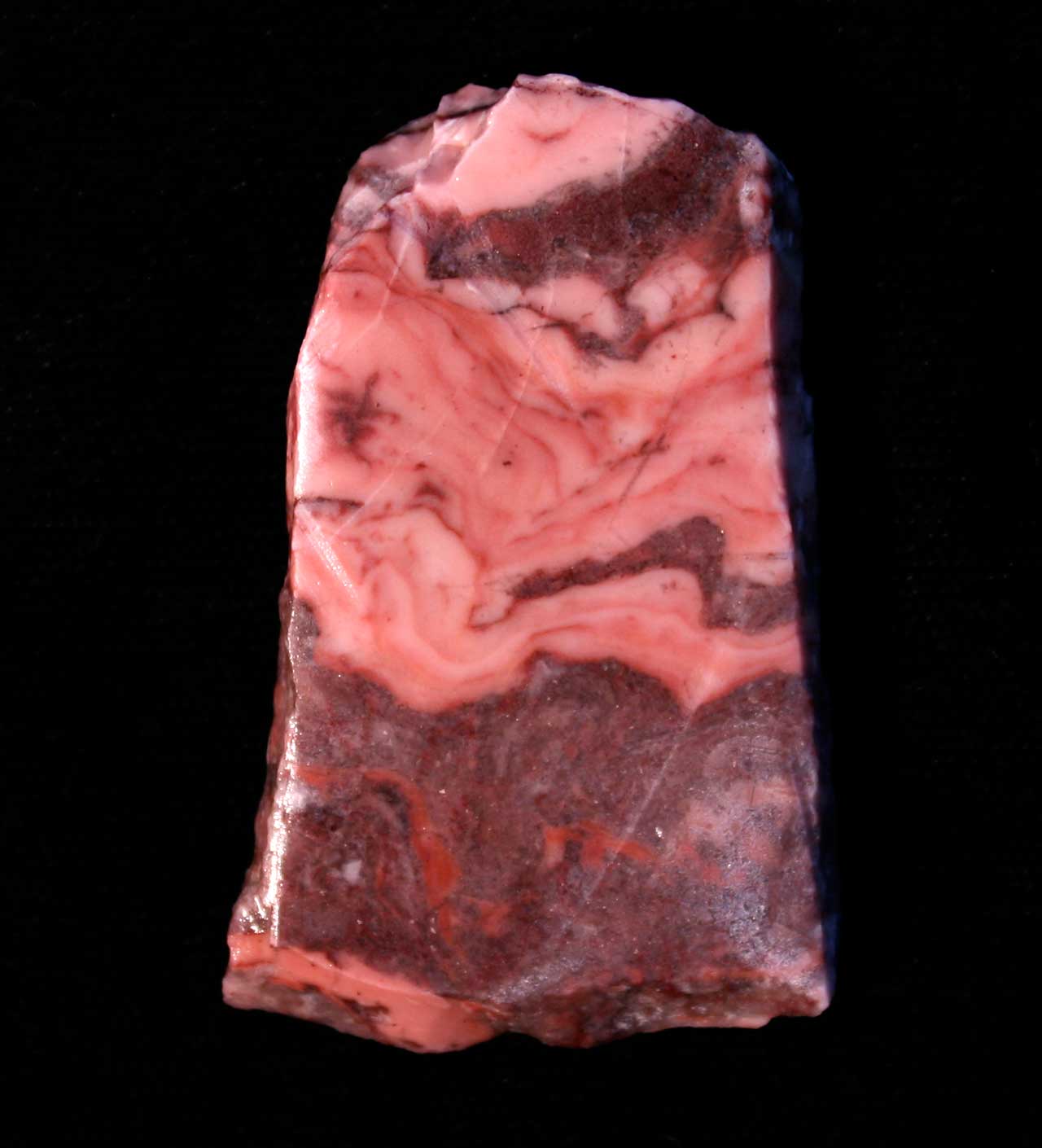
Kona Dolomite dated to over 2 billion years old.  Thought to be a cyanobacteria colony (stromatolite).  Found in the Kona Hills of Marquette County, Michigan.  These early oxygen producers paved the way for more advanced lifeforms of the future.


These pieces were cut off a larger block and have just been sanded down.  I started using a sanding wheel with a belt sander attachment for the first time.  Sure beats doing it by hand as I have done in the past! Next step is to hand sand these pieces with wet sandpaper and then polish it with the Dremel tool.


The slabs were photographed wet to bring out nice colors.

Thanks to Kenny for helping me cut the slab with a diamond saw.


Sunday, November 13, 2011

African Archean Fossil


This specimen is thought to be over 2.5 billion years old. Bacteria and algae appeared at this time in the water.  Volcanic activity produced increased atmospheric pressure and temperature.  The higher temperature caused serpentization of the sediments thus the green color. In between the layers the micro stromatolites (like algal mats).


This fossil was found in southern Africa's Greenstone Belt.  Its green color definitely matches the formation name.  Unique about the fossil material is it is called butterstone dated to the geologic eon Archean.
See more on eBay: CLICK HERE


In addition, here are pictures of oolitic agate formed on a Wyoming seafloor during the Eocene. Check it out on eBay: CLICK HERE


Wednesday, August 17, 2011

Archean Polished Butterstone


This rock was found in southern Africa's Greenstone Belt.  The color of the rock definitely matches the formation name.  What is special about this rock called butterstone dated to the geologic eon Archean.  Thus the material is thought to be over 2.5 billion years old.

Bacteria and algae appeared at this time in the water.  Volcanic activity produced increased atmospheric pressure and temperature.  The higher temperature caused serpentization of the sediments thus the green color. In between the layers the micro stromatolites (like algal mats).

This fossil is for sale on eBay: CLICK HERE and another is for sale (ending October 11, 2011): CLICK HERE


Thursday, April 28, 2011

Pre-Cambrian Cyanobacteria


Kona Dolomite dated to over 2 billion years old. Thought to be a cyanobacteria colony (stromatolite). Found in the Kona Hills of Marquette County, Michigan. These early oxygen producers paved the way for more advanced lifeforms of the future.

These small pieces were cut from a larger piece that was sent to me.  They were then hand sanded using a variety of grit papers. Finally polished with the Dremel tool.


Tuesday, November 16, 2010

Kona Dolomite

Kona Dolomite dated to over 2 billion years old.  Thought to be a cyanobacteria colony (stromatolite).  Found in the Kona Hills of Marquette County, Michigan.  These early oxygen producers paved the way for more advanced lifeforms of the future.

This specimen has finally been polished and buffed (thanks Kenny) after I cut it with the diamond saw and smoothed it with high grit sandpaper.  It is destine for the education collection of a local public institution.


Friday, September 18, 2009

Archean Butterstone

Here is a fossil that is sold in the United States described as an Archean butterstone from the Greenstone Belt of South Africa. The rock is over 2.5 billion years old and may contain blue-green algae stromatolites.