Monday, August 2, 2010

Megistocrinus rugosus Calyx


Megistocrinus rugosus crinoid calyx drawings seen in Plate 38 of Contribution to Indiana Palaeontology Volume I Part I to XX by George K. Greene.  [Side note: When George Greene died in 1916 his collection of over 400,000 specimens was shipped to the American Museum in New York by train.]  The crinoids are described as being found in the Upper Devonian beds at the Falls of the Ohio.


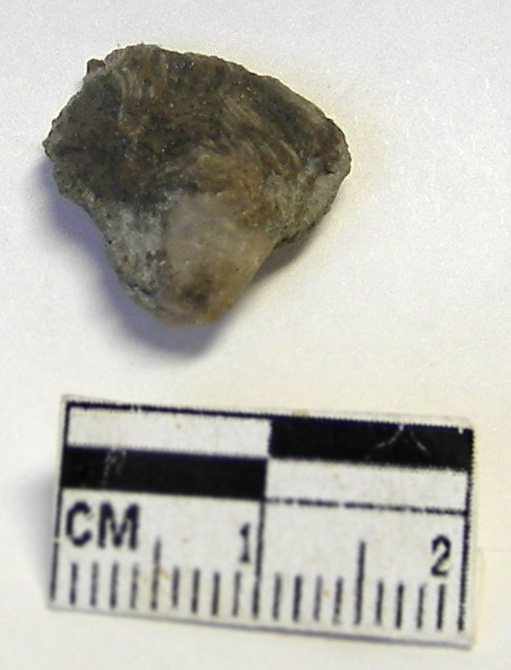
The pictures with blue backgrounds are of a fossil fragment I found in the Jeffersonville Limestone of Clark County, Indiana. It appears to be the base of a crinoid calyx Megistocrinus rugosus. Note how wrinkled its surface is. The last image is of the inside of the cup. The fossil is from the Middle Devonian Period.  Thanks to Alan for the identification.


Sunday, August 1, 2010

Pentremites with Brachioles


Certain areas of Crawford County, Indiana are famous for their Mississippian Period Pentremites blastoids.  What is somewhat rare is finding a blastoid with brachioles still attached.  Above is a picture of a very nice specimen with its brachioles and stem pieces pretty much intact.  The specimen is part of the invertebrate fossil collection at the Geier Collection Center of the Cincinnati Museum in Ohio.

The next Pentremites fossil shown in the following two pictures was found in Crawford County, Indiana in the Indian Springs Formation.  It has not been prepped yet but the base of the blastoid is visible along with the stringy brachioles.  Thanks to my cousin for providing the pictures.


Saturday, July 31, 2010

Indiana Silurian Period Fossils

This first fossil is a Platyostoma niagarense gastropod fossil from the Waldron Shale of Clark County, Indiana.  The creature existed in the Middle Silurian Period.  It is quite small at about 1 cm wide.


Next fossil I think is some sort of cystoid from the Waldron Shale. It has a four petal flower shape at its base? There are also five petal patterns on its surface.  Needs cleaning with air abrasion to reveal better surface detail.  Fossil is small at just over 1 cm long.

Last Waldron Shale fossil is odd shaped.  Sort of reminds me of an echinoid spine but I don't think those were around in the Middle Silurian Period.  Might be some sort algae but the pores do not look big enough.  The Indiana State Museum collection database has a Waldron Shale algae fossil specimen cataloged as a Receptaculites sp.

The fossil could be some sort of bryozoan in weird shape.  Fossil is over 1 cm long.