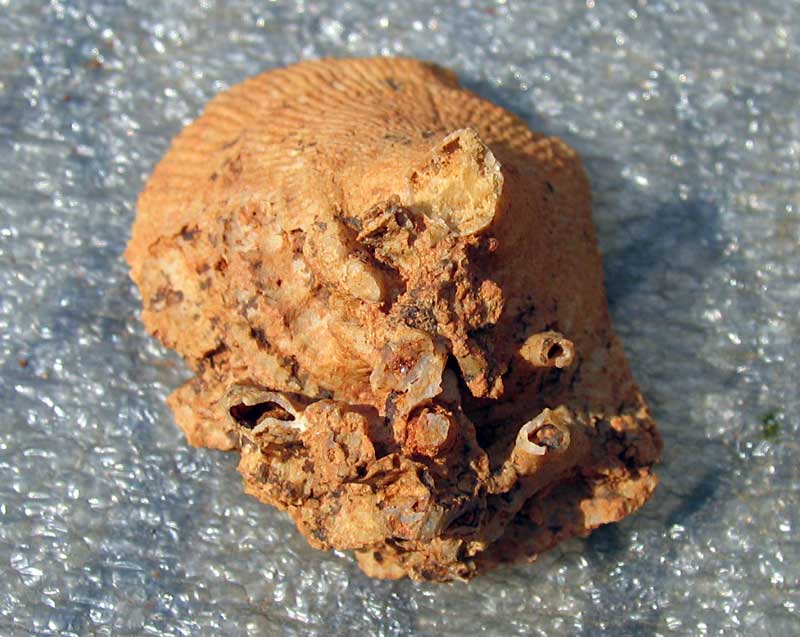
This first two fossil images are of the
Cystiphyllum horn coral and it is a textbook specimen. I mean that literally because this one matches up well with the images on pages 96-97 Plate 6 figures 23-25 of the
Cystiphyllum granilineatum. The book is Erwin Stumm's
Silurian and Devonian Corals of the Falls of the Ohio from 1964. To help re-enforce the horn coral was found with a chain coral shown later in the post dating it the Silurian Period and the Louisville Limestone of Louisville Kentucky. It is nice to see the holdfasts that grew on one side of the horn to help anchor it a seafloor base.
Next two pictures are of the Silurian Periods famous index fossil...
HALYSITES! Also so known as the chain coral with its distinctive pattern.
This last fossil is somewhat of a mystery to me. It appears to be brachiopod imprint but I am not sure about those divot marks (maybe 7 or so) that look like spines. Spines that size usually show up on snails so maybe they are some sort of boring marks? This fossil was found with the others but it could be from the Devonian Period Jeffersonville Limestone.